The True Cost of Sexually Transmitted Infections
Sexually transmitted infections cost the United States up to $16 billion in direct medical costs and millions of healthy years lost.
Read Time: 2 minutes
Published:
- Sexually transmitted infections are eroding individuals’ and society’s quality of life.
- Sexually transmitted infections are costing the American health care system billions.
Sexually transmitted infections (STIs) are far more common than you may realize. In the United States, 1 in 5 people currently has an STI, and many don’t know it. Chlamydia, the most frequently found bacterial STI, can be present without symptoms. Like chlamydia, many infections go undiagnosed or untreated, leading to serious health outcomes, such as infertility, chronic pelvic pain, and increased HIV transmission risk. Reported STI rates have increased by 13% over the past decade. Beyond the physical health impacts, STIs can erode quality of life.
In a recent study, Lao-Tzu Allan-Blitz and Jeffrey Klausner measured this erosion using quality-adjusted life years (QALYs). Losing one QALY is equivalent to losing one year of perfect health. Imagine someone who lives with increased sexual health anxiety, chronic pelvic pain, or infertility complications as a result of an untreated STI. That person is still working and going about daily life, but may be managing persistent discomfort or stress that reduces their overall well-being.
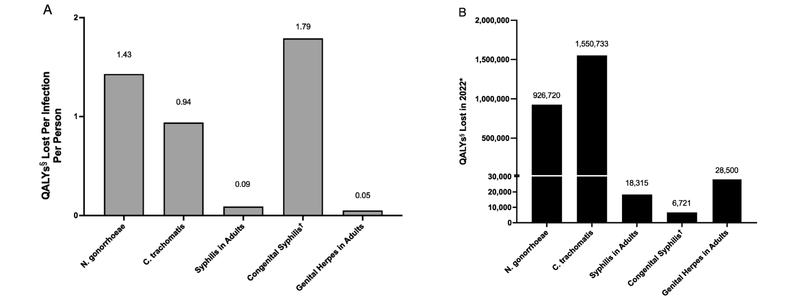
The researchers focused on STIs that begin as acute infections but can lead to chronic disease and lifelong health consequences. While each infection may seem to have a small QALY impact (graph A), the impact across the entire population of millions of persons with STIs is substantial (graph B), measured in healthy years lost.
When diagnosed, STI treatment translates into $16 billion in direct medical costs alone. These costs, which encompass doctors’ visits, lab tests, medications, and management of complications, are not evenly distributed. Women bear a significant load, largely due to complications such as pelvic inflammatory disease, ectopic pregnancy, chronic pain, and infertility.
Current interventions to prevent and treat STIs are often targeted at individuals. However, the researchers suggest shifting focus to community engagement and policy advocacy to promote sustained and dedicated funding for STI prevention and treatment.