Driving Care: How Transportation Influences Health Outcomes
Delays in care due to insufficient transportation increase mortality risk by 80% among people with diagnosed chronic health conditions.

Read Time: 2 minutes
Published:
- Poor access to transportation may increase the risk of death.
- People with chronic medical conditions are more likely to experience poor access to transportation.
In 2022, nearly 15 million Americans reported that inadequate transportation impeded their access to health care. Poor transportation availability can result from a lack of access to, or the unreliability of, personal vehicles and public transit services. The resulting limitations on health care visits can jeopardize the prevention and management of chronic medical conditions and be catastrophic. Approximately 5.8 million Americans delay medical care annually due to a lack of transportation.
Fangyuan Chen and colleagues analyzed data from the 2002-2018 National Health Interview Survey to examine the population health effects of transportation-related barriers to care. The researchers define these barriers as a participant’s report of at least one instance of delaying medical care in the previous year due to insufficient transportation.
The team found that the report of transportation barriers consistently elevated the risk of mortality for people in all age groups (ages 18-79). People who experienced transportation barriers also had up to 45% greater odds of needing to seek care at an emergency department than people without transportation barriers.
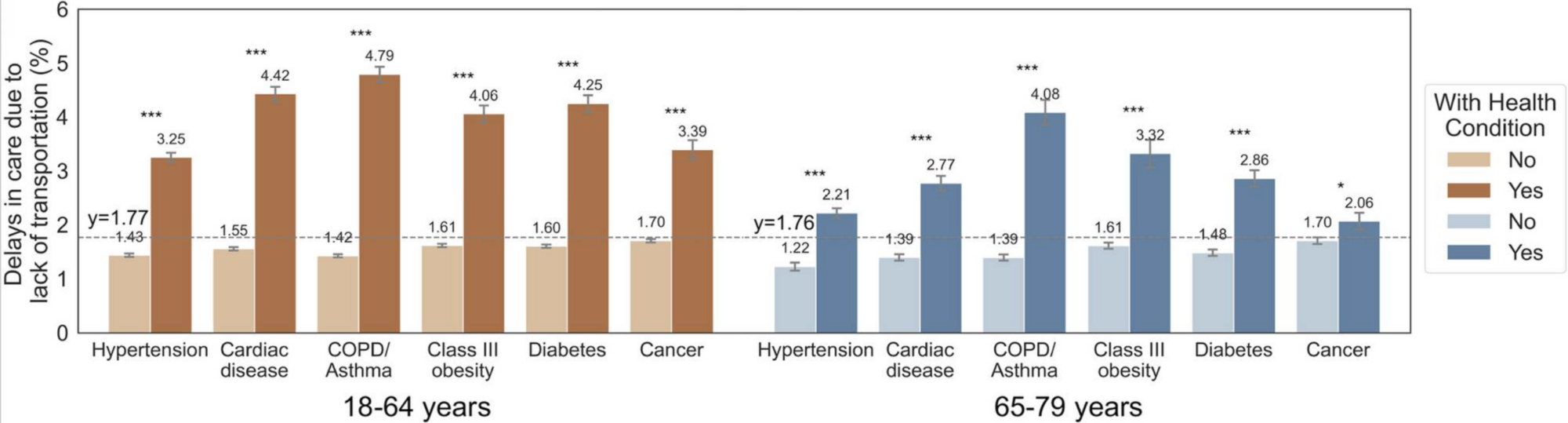
Transportation barriers particularly affected people living with chronic conditions such as hypertension, diabetes, and cancer. The figure below shows that delays in care due to lack of transportation were most common among people with diagnosed chronic conditions. Among all individuals with chronic conditions, those experiencing transportation difficulties were 62% more likely to seek care in emergency departments and had an 80% increased risk of death compared to chronic disease patients who reported reliable transportation.
This research highlights the importance of expanding access to safe, reliable transportation, especially for people living with chronic health conditions. Chen and colleagues urge public and private insurance plans to provide non-emergency medical transportation services for their patients. Transportation assistance benefits can include cab or bus services to shuttle patients between medical appointments and their homes. The authors also emphasize the role health care workers can take in screening patients for transportation needs.