How Strict Abortion Bans Harm Maternal Health
Abortion bans in Texas limit doctors' power to effectively treat pregnancy loss, increasing the need for life-saving blood transfusions.

Read Time: 2 minutes
Published:
- Total abortion bans may increase the risk of harm to the mother following pregnancy loss.
- Policies that restrict pregnancy care affect access to optimal medical care for anyone carrying a pregnancy.
Nearly 20% of pregnancies in the United States end with fetal death. In some cases, fetal death can cause severe maternal complications, including hemorrhage, infection, shock, and future infertility. Without proper treatment, pregnancy losses can also be fatal for the mother. Depending on the stage of pregnancy, dead fetuses are removed from the mother’s body using the same medications and surgical procedures employed to terminate pregnancies intentionally. As a result, in states with total abortion bans, physicians are often legally barred from providing necessary care to patients experiencing pregnancy loss. These delays or denials in medical care threaten to increase the need for blood transfusions and other life-saving interventions for women already suffering emotional trauma.
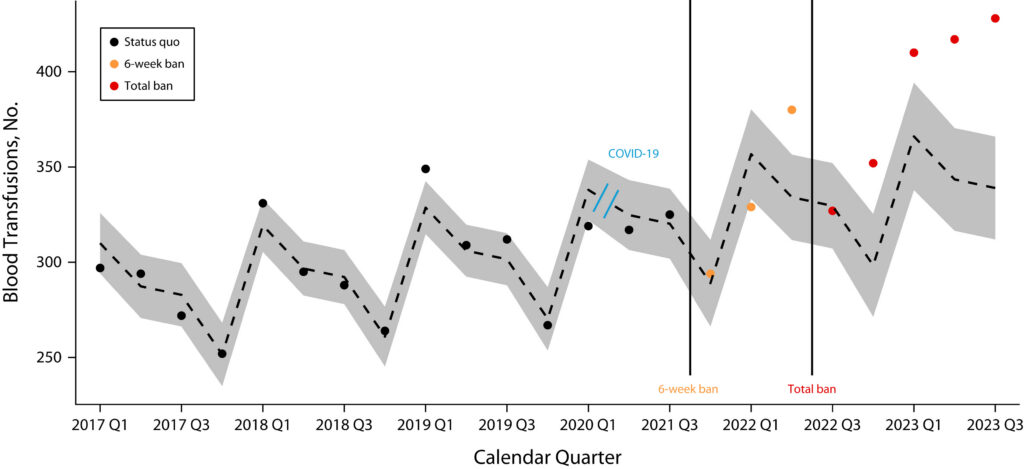
Amanda Nagle and colleagues measured the number of blood transfusions administered following pregnancy loss in Texas between 2017 and 2023. They used pre-abortion ban blood transfusion data to estimate how many transfusions would have occurred in 2022 and 2023 had there been no abortion bans implemented.
The team compared the observed and expected blood transfusion counts to analyze the impact of two key policy shifts in Texas pregnancy care: (1) the 2021 Texas Heartbeat Act, that banned abortion care past 6 weeks of gestation, and (2) the total ban on abortion care at all stages of gestation following the U.S. Supreme Court’s ruling in the Dobbs v. Jackson Women’s Health Organization case in 2022.
Nearly 321,000 fetal deaths occurred in Texas during the study period. Of these, 7,408 required blood transfusions. Pregnancy losses did not increase in frequency throughout the study period. However, as the red dots (compared to black dots) in the figure below show, the average number of transfusions rose sharply after the total abortion ban started limiting a doctor’s power to treat pregnancy losses.
Lack of abortion care limits the care a pregnant patient can receive, thereby jeopardizing the safety of all pregnant patients in Texas, not just those who seek to terminate their pregnancies. Such harms will continue to grow across the country, as twelve other U.S. states have joined Texas in implementing total abortion bans. The authors emphasize the importance of timely pregnancy care, including evidence-based practices to treat pregnancy losses before they become life-threatening.