From Rare to Rising: The Comeback of Preventable Infant Bleeding
A vitamin K shot at birth can prevent brain bleeds among infants, but since 2017, refusal of the life-saving shot is on the rise.
Read Time: 2 minutes
Published:
- The vitamin K shot prevents fatal brain bleeds in newborns.
- Rates of vitamin K refusal at birth are rapidly increasing.
Vitamin K is an essential nutrient for blood clotting. Adequate vitamin K supplies are typically obtained through diet, but only limited amounts cross the placenta from the mother to the fetus. As a result, most newborns are vitamin K-deficient at birth. Vitamin K deficiency in newborns can cause bleeding in the brain and even death in 0.25% to 1.7% of births. These extreme consequences are almost completely preventable with a single vitamin K shot at birth, which carries only a minuscule risk of negative effects.
The American Academy of Pediatrics has recommended the vitamin K shot since the 1960s, and it has prevented immeasurable disability and death. Infants who do not get the vitamin K shot at birth are 81 times more likely to develop brain bleeds than infants who get the shot. Even with this proven life-saving benefit, misinformation and fear cause some parents to refuse the vitamin K shot for their newborns altogether.
To measure the impact this medication skepticism is having on vitamin K shot administration, Kristan Scott and colleagues analyzed birth record data from a U.S.-based electronic health record database of over five million newborns. The researchers investigated the percentage of newborns who did not receive the vitamin K shot between 2017 and 2024.
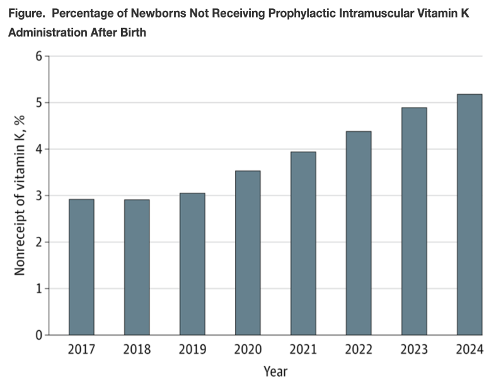
Throughout the study period, the percentage of newborns who did not receive the vitamin K shot rose 75%. Rates of vitamin K shot refusal were highest among non-Hispanic White parents and those who had a vaginal birth.
Other research points toward parental concern of harm from the injection and a desire for alternative, more “natural” sources of vitamin K for a newborn. However, no approved alternative treatment exists. This research also found that parents who had homebirths were also more likely to refuse the vitamin K shot at delivery than those with a hospital birth.
Without public health regulation at the state level and standardized clinician communication practices, refusal of vitamin K may continue to rise, leading to avoidable and devastating infant deaths nationwide.