Flip the Page, Protect Your Health
Reading has many health benefits. But rates of reading for pleasure among U.S. adults have decreased by about 3% per year since 2004.

Read Time: 2 minutes
Published:
- Rates of reading have steadily decreased over the past 20 years, especially among Black Americans and people with disabilities.
- Childhood reading is associated with better mental and physical health in adulthood.
Reading a good book feels almost like entering a new world. Flipping the last page is a bittersweet return to the tasks of the day. From fantasy to sci-fi and mystery, there’s a book out there for everyone. But with so many sources of entertainment at our disposal, reading seems to have lost its appeal. The number of Americans reading for enjoyment has dropped by 40% over the past 20 years.
To understand current reading patterns of Americans, Jessica K. Bone and colleagues analyzed self-reported data from 236,000 people who responded to the American Time Use Survey (ATUS). Reading a book, magazine, newspaper, e-reader (such as a Kindle), or listening to an audiobook was included under the ATUS definition.
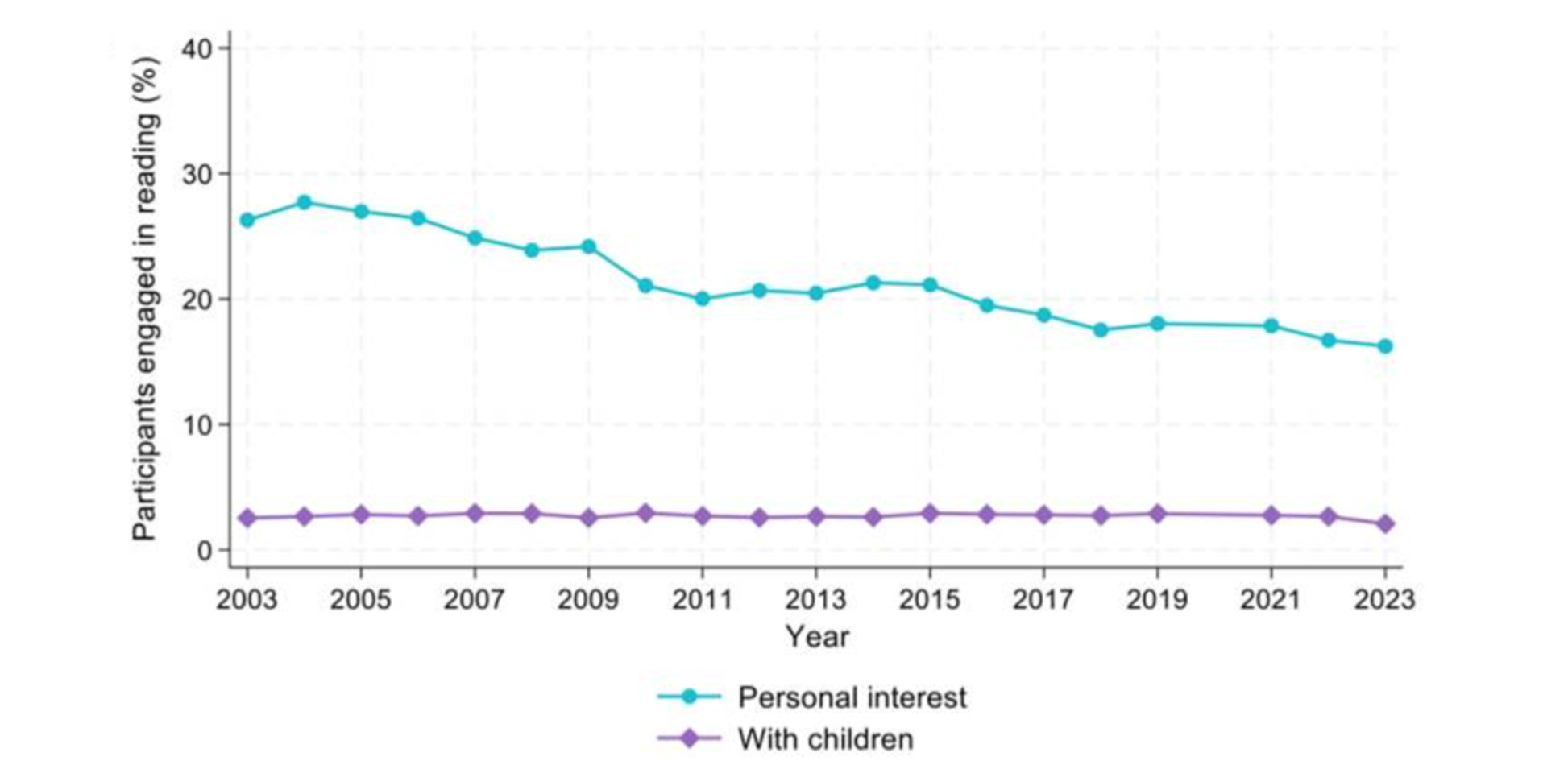
Rates of reading for pleasure have gradually decreased by about 3% per year since 2004 (as depicted by the blue line in the graph above). Among people who read, the average time spent reading also decreased. The authors suggest that reading has been replaced by other forms of entertainment, such as social media.
Rates of reading for pleasure also differed based on individual characteristics such as race, disability, and income level. Individuals of Black race (vs. White) and with a disability (vs. no disability) were less likely to spend time reading.
Beyond entertainment, reading has many health benefits. Childhood reading is associated with better mental and physical health in later life, and reading fiction is associated with increased empathy and improved social relationships. In older adults, reading slows cognitive declines by building what researchers call a cognitive reserve, or mental library, which can buffer against memory loss and dementia. Reading a book can also draw your attention from daily pressures and reduce stress and anxiety.
To support reading, the authors highlight the importance of the National Endowment for the Arts (NEA) Big Read, which provides grants to fund reading programs across the United States. Our Kids Read focuses on reaching African American, Latinx, and Indigenous people, providing books and pairing students with volunteers to encourage reading. Like any habit, reading is best built early, and its benefits only grow with time.