Late Diagnoses, Later Births: The PCOS Pattern
Women with PCOS were more than twice as likely to experience infertility and undergo IVF treatments than women without PCOS.
Read Time: 2 minutes
Published:
- Women with the combination of irregular menstrual periods, infertility, and obesity should ask clinicians about PCOS.
- Delayed PCOS diagnosis can lead to later-in-life conception and higher pregnancy risks.
One in ten women has polycystic ovary syndrome (PCOS). PCOS is a hormonal balance disorder characterized by irregular menstrual periods, infertility, and obesity. Although PCOS is relatively common, up to 70% of women go undiagnosed. Women with PCOS have on average endured more than three years of doctor appointments and tests before receiving their diagnosis.
Infertility among women with PCOS is widely studied among women under age 35 but less is known about effects among older women. As women with PCOS age, their cycles may become more regular, and fertility may seem to improve as a result even if undiagnosed, leading to later pregnancies.
Maria Forslund and colleagues investigated fertility patterns and age of first childbirth among women with PCOS compared to those without the condition. Using survey responses across a 30-year period, the researchers analyzed childbirth histories for women with PCOS between age 18 and 48. They also explored difference in maternal age compared to the age of PCOS diagnosis.
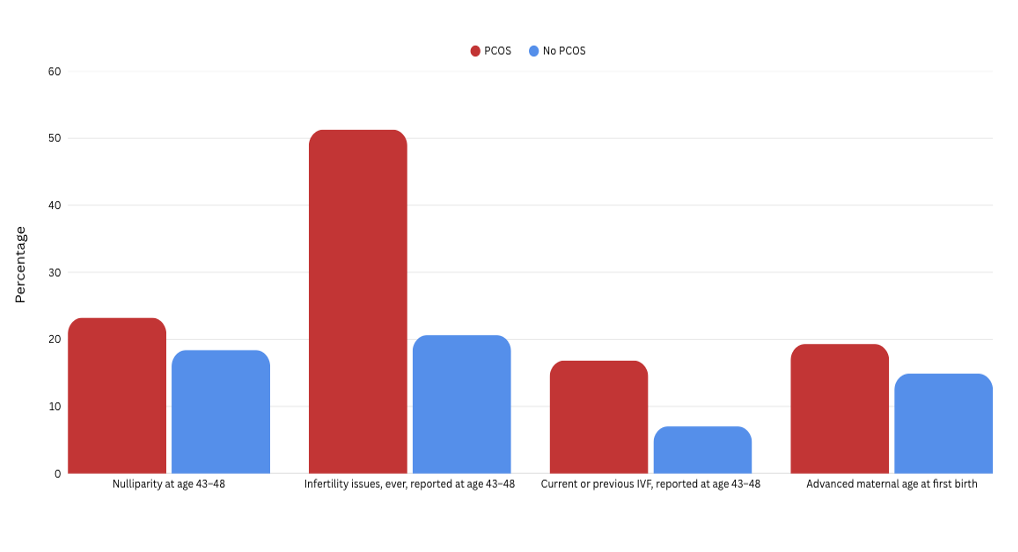
Women with PCOS were more than twice as likely to experience infertility and undergo in vitro fertilization (IVF) than women without PCOS. Moreover, women with PCOS were 30% more likely to have their first child after age 35. Moreover, PCOS diagnosis later in life, after age 31, was associated with double the rate of advanced maternal age at birth.
One in five women in their U.S. have their first child after the age of 35. For women who spend years trying to conceive, the opportunity to have a child can feel far more significant than the timing of the pregnancy. However conception after age 35 is associated with an increased risk of pregnancy and birth complications, including preeclampsia, high blood pressure, miscarriage, stillbirth, and low infant birthweight.
Delayed diagnosis of PCOS can have lasting reproductive consequences. When women go years without answers or treatment, they miss opportunities for symptom management and fertility support. The authors emphasize that improving outcomes for women with PCOS requires earlier diagnosis through standardizing diagnostic guidelines, more consistent screening, provider awareness, and improving access to reproductive care.