The Power of Family Meals
Bite-sized portions and just 10 more minutes at the dining table with family can improve some kids’ diets and eating habits. (From 2023)

Read Time: 2 minutes
Published:
This piece was originally published in June 2023. It is being republished for relevance.
When I was a kid, my family had dinner together every night. Sitting down to eat with my parents was ingrained in my daily schedule, but until recently, I didn’t understand the importance of our ritual.
Mattea Dallacker and colleagues conducted a trial to observe how the length of a family meal affected children’s fruit and vegetable intake. Each family in the study was observed eating two meals. Their first observed meal was the typical length of each family’s regular meal. During their other observed meal, the family’s mealtime was extended by 50%, giving them, on average, an extra 10 minutes at the table.
The families were fed a meal of bread, cheese, meat, fruits, and vegetables. All fruits and vegetables were pre-cut into bite-sized pieces. They were also offered a dessert at the end of the meal.
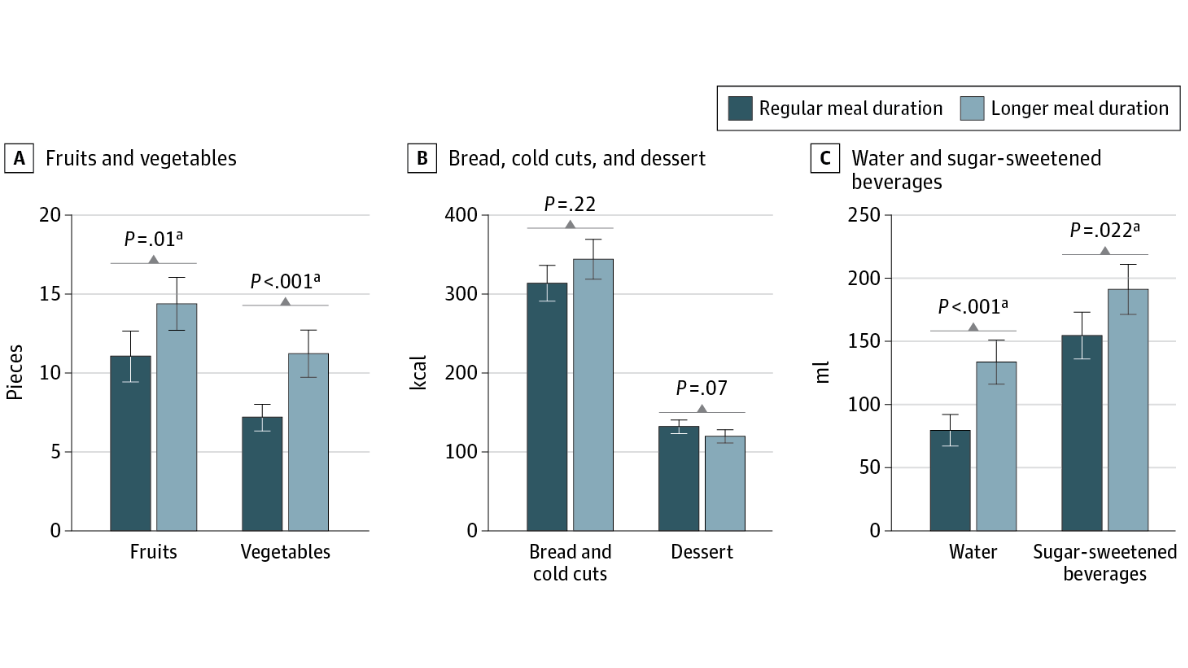
As shown in the graphs above, children ate seven more pieces of fruit and vegetables during the longer mealtime, on average, which is roughly equal to one portion of fruit and vegetables. However, children did not eat significantly more bread, meat, or dessert during the longer meal.
The researchers suggest that extra time alone didn’t entirely account for the difference. The convenience of the fruits and vegetables, which were cut into bite-sized pieces, contributed, as well. Kids didn’t eat more of the other meal components, perhaps because they weren’t portioned in a way that made them easy to eat.
Most kids in the United States do not get enough daily fruits and vegetables. Nearly half of kids between 1 and 5-years-old are not eating a single daily vegetable, and one-third are not eating a single daily fruit. Without enough fruits and veggies, children are at higher risk for diabetes and heart disease later in life; just one additional daily portion of fruits and vegetables reduces the risk of cardiometabolic disease by 6%.
Kids can be picky, and parents know how hard it can be to have their children eat a balanced diet. Just 10 more minutes at the dinner table plus bite-sized portions can be a simple way to improve some kids’ diets and eating behaviors.