Work Out Harder (Not Longer)
Incorporating even small amounts of vigorous activity into your exercise routine can lower the risk of chronic disease and early death.

Read Time: 2 minutes
Published:
- Intensity of physical exercise lowers the risk of cardiovascular events, chronic respiratory disease, dementia, and early death.
- Even small amounts of vigorous exercise can be beneficial to health.
We’ve all heard the phrase “work smarter, not harder.” But when it comes to working out, maybe harder is a smart choice. Staying active consistently is recommended for people of all ages and health conditions. Exercise helps maintain weight and reduces the risk of conditions such as diabetes and heart disease.
To compare the effect of exercise intensity and duration on chronic disease, Jiehua Wei and colleagues analyzed U.K. Biobank physical activity data from 100,000 participants aged 40 to 69. Physical activity was classified as light, moderate, or vigorous. For example, washing dishes would be considered a light activity, a brisk walk as moderate, and running as vigorous.
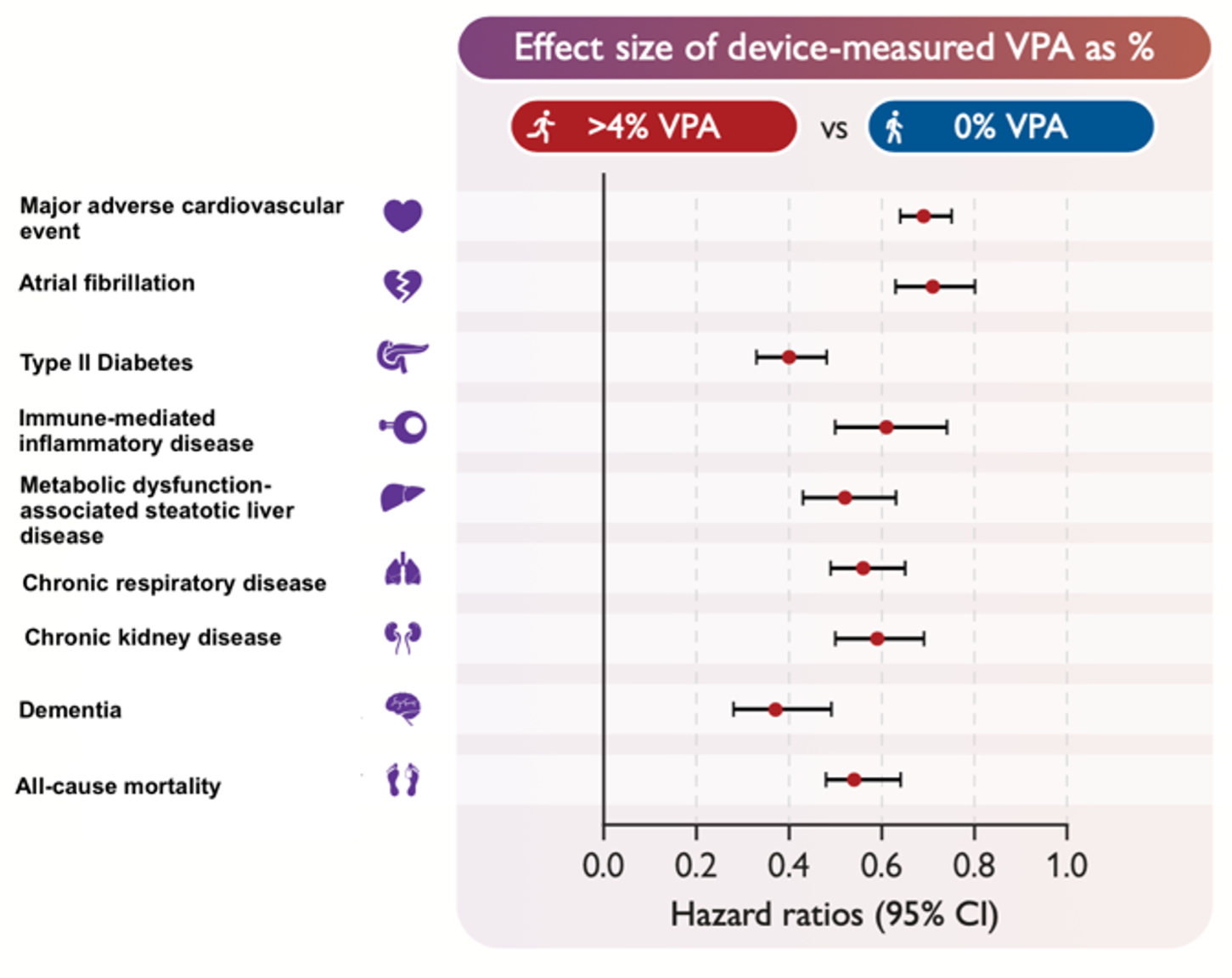
The figure above shows the risk (described here as a hazard ratio) of experiencing an adverse health outcome based on participation in vigorous physical activity (VPA). For all outcomes, the hazard ratio is below 1, indicating an individual’s reduced risk for a given outcome if at least 4% of their activity is considered vigorous. People who exercised vigorously had a lower risk of cardiovascular events, chronic respiratory disease, dementia, and mortality compared to those who did not exercise vigorously.
Even small amounts of high-intensity exercise were beneficial. People who exercised vigorously just 1-2% of the time—for example, adding a minute of running to a daily walk—experienced improvements in their health. If you’re short on time, more intense exercise can be a way to gain the same benefit as a longer workout. One minute of vigorous physical activity is estimated to be equivalent to two minutes of moderate-intensity activity.
The authors suggest an emphasis on intensity rather than just the duration of exercise to preserve health. For anyone who may not be able to perform intense physical activity, movement at any level is still beneficial for health and well-being.