Unmet Mental Health Care Needs for Gender-Diverse Adults
Gender-diverse adults report more mental distress than their cisgender peers, with 67% citing that they often felt anxious or depressed.

Read Time: 2 minutes
Published:
- Transgender and gender-diverse adults have higher rates of mental distress and unmet mental health needs than cisgender adults.
- Reducing barriers to care may help improve mental health outcomes among transgender and gender-diverse adults.
Over 2.8 million people in the United States are creating art or engaging in advocacy work while identifying as transgender. Decades of the queer community’s activism and resilience had slowly started to penetrate entrenched social stigmas around gender identity before 2025. This progress took a nosedive after the Trump administration reignited debates about the recognition of gender diversity and enacted policies to erase trans and nonbinary identities.
Faced with constant upheaval and discrimination, transgender and gender-diverse adults experience much higher rates of depression, anxiety, and suicidal ideation than cisgender adults. Frequent mental distress is also on the rise among people who identify as transgender. Although independent organizations like The Trevor Project attempt to fill gaps, mental health care systems throughout the U.S. are failing to meet the needs of gender-queer adults.
J. Wyatt Koma and colleagues analyzed data from the 2022 KFF/The Washington Post Trans Survey to better understand the mental health conditions and needs of transgender and gender-diverse adults. Participants were categorized as experiencing frequent mental distress if they reported 14 or more “bad mental health days” in the past month. Unmet needs were counted by the number of participants who reported needing but not receiving mental health services or medications in the previous year.
A greater proportion of transgender and gender-diverse adults experienced frequent mental distress compared to their cisgender counterparts (shown in the figure below), with 67% reporting that they always or often felt depressed or anxious. Transgender and gender-diverse adults also reported more unmet needs for mental health care compared to cisgender adults with similar mental health complaints.
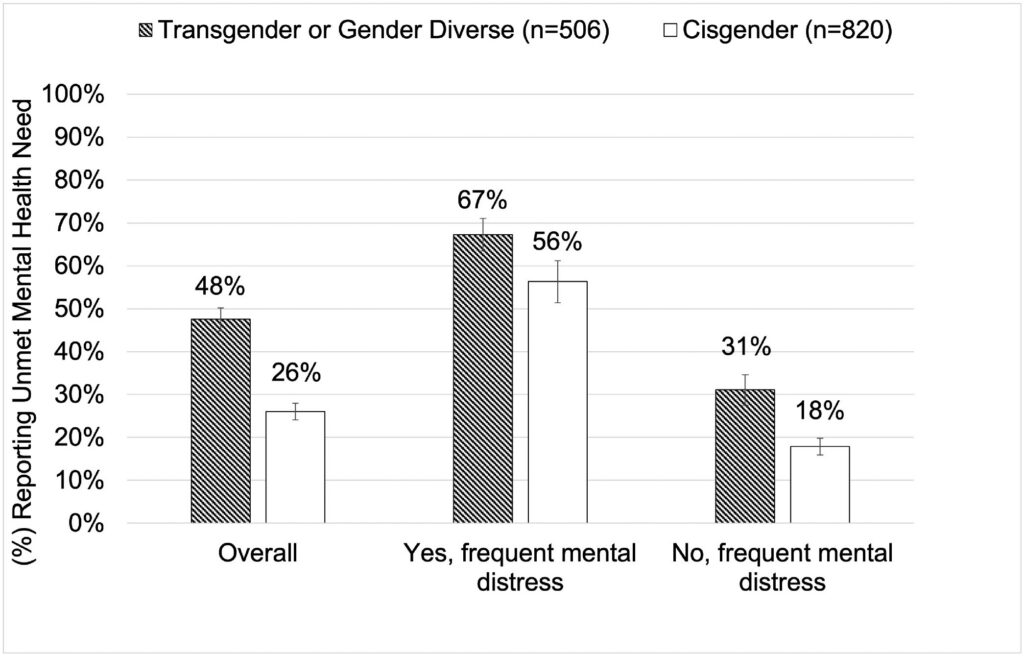
Cost was the most common barrier to accessing mental health services, with transgender and gender-diverse adults having over thrice the odds of cost-related barriers to care than cisgender adults.
The authors warn of recent policy decisions that may exacerbate this public health problem, from efforts to restrict gender-affirming care to shutting down the National LGBTQ+ Suicide Hotline. In lieu of policy changes that seem unlikely in the political present, the authors urge other allies and advocates to help improve care delivery. For example, employers can add gender-affirming care and mental health care coverage to their insurance plans, and medical schools can adjust medical training to fight transphobia and improve clinical knowledge of gender-related care. Increased investments in mental health professional training are also essential to strengthen expert care across the country.