Health Care Bias: The Case of Sickle Cell Disease
Black sickle cell patients with concurrent opioid use and chronic pain had negative descriptors in 20% of medical notes versus 3% for other patients.

Read Time: 2 minutes
Published:
- Patients with sickle cell disease experience disproportionate bias in health care.
- Hospital staff training should increase awareness of conditions like SCD to prevent biases in administering patient care.
Sickle cell disease is a genetic blood disorder that causes extreme pain throughout the body and can be fatal without treatment. Sickle cell pain crisis events are the main reason affected patients seek emergency room care and are often treated with opioid medications. The condition primarily afflicts individuals of African descent. Black race, opioid use, and chronic pain are all stigmatizing factors that intersect in sickle cell patients and can lead to high rates of discrimination in health care settings.
Austin Wesevich and team conducted a study to better understand how 18,326 University of Chicago patients were perceived by medical staff during outpatient, inpatient, and emergency department care. They analyzed electronic medical records for seven negative patient descriptors (aggressive, agitated, angry, non-adherent, non-compliant, non-cooperative, and refuse) to detect medical bias. Rates of medical bias for patients with sickle cell disease, chronic pain, and/or opioid use disorder were compared to patients with none of these conditions.
As the figure below shows, a substantial number of sickle cell patients experienced medical bias, with the highest rate among Black patients with sickle cell disease (SCD), chronic pain, and opioid use disorder (OUD). Health care workers entered negative descriptors in nearly 20% of visit notes for Black patients with all three conditions, compared to only 3% of notes for non-Black individuals with no conditions. Further analysis showed Black patients with all three conditions had over 14 times the odds of being negatively perceived by health care employees than non-Black patients with no diagnoses of interest.
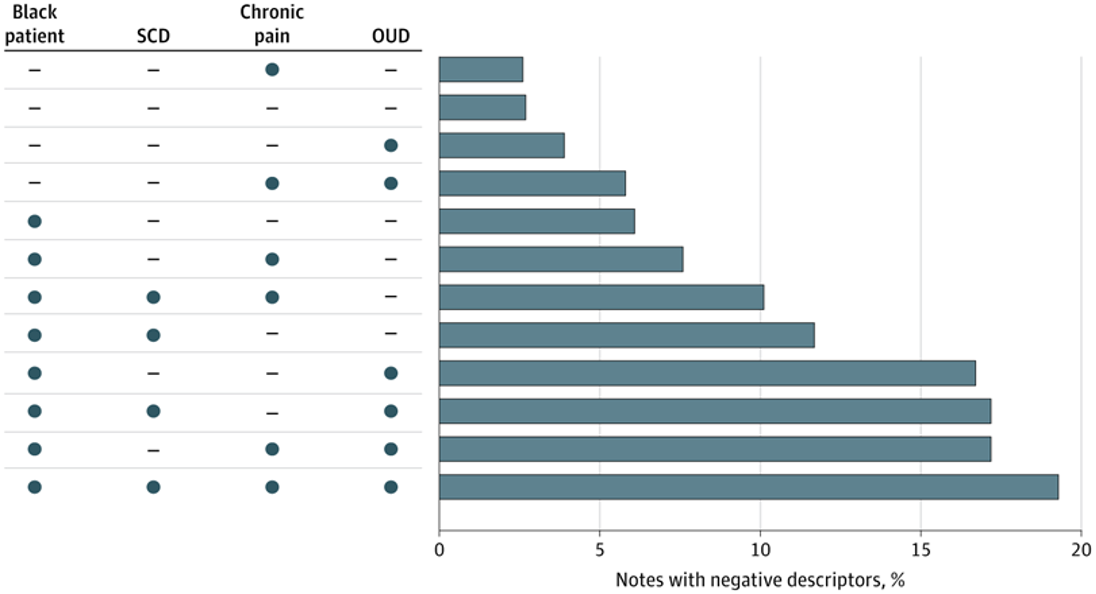
Negative bias in health care settings is disproportionately directed towards Black patients and can negatively impact outcomes due to poor screening, delayed diagnoses, and poor care coordination. This study shows that bias is further intensified among Black SCD patients with opioid use. However, most SCD patients in this study did not have an opioid use disorder, suggesting that health care workers who perceive SCD pain crisis patients as “drug-seeking” may be affected by implicit racial bias.
The authors highlight the importance of increasing health care worker awareness of SCD and providing resources to allow health care workers to better understand the experiences and needs of SCD patients. Prioritizing anti-bias training in medical education and clinical professional development settings may also improve care.