AI-Generated Depression
People who use generative AI at least once a day for personal tasks report greater depressive symptoms than those who use AI less often.

Read Time: 2 minutes
Published:
- Using generative AI daily has been linked to symptoms of depression.
- Among daily generative AI users, depression is most common if AI is used for activities outside of school or work.
These days, it feels like artificial intelligence is inescapable. Data from 2025 shows that worldwide, people are growing more optimistic about the benefits of AI products and services. But recent incidents have revealed the emergence of users experiencing mental health problems. In the past year, over 50 cases of mental health crises associated with AI use were documented by The New York Times, including suicidal thoughts, delusions, and psychosis. Nine people were hospitalized, and three died because of these crises. New research adds to a growing body of evidence that suggests generative AI is associated with symptoms of depression.
Roy H. Perlis and colleagues surveyed over 20,000 participants across the United States to assess the frequency of the use of generative AI, a type of artificial intelligence capable of creating novel text, images, video, and music. Participants’ mental health was assessed using common screening questions for anxiety and depression.
Ten percent of participants reported they used AI daily, and over 87% of daily users said they used AI for tasks in their personal lives. People who use generative AI at least once a day reported notably greater depressive symptoms, such as thoughts of death or suicide, compared to participants who use the technology less frequently (as shown in the graph below).
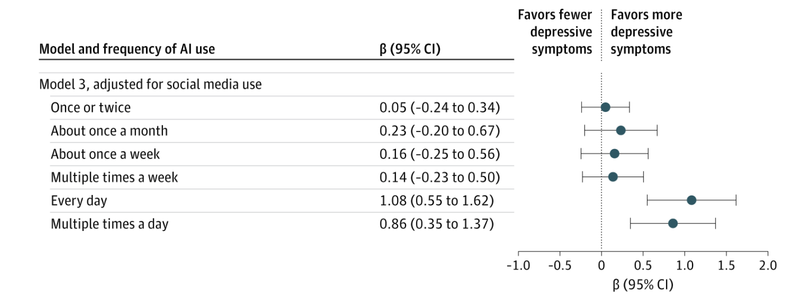
Use of AI for personal tasks outside of school and work was found to have the greatest association with an increase in depressive symptoms. Additionally, the highest reports of depression were reported by daily AI users aged 45 to 64, who were 50% more likely to experience symptoms than peers who did not use the technology as often.
The authors stated that this emerging pattern matches trends in negative moods observed after social media use. The Perlis study did not find associations between how frequently participants use AI and how frequently they post on social media. But recent integration of AI features on Instagram, X, and TikTok means that social media users now interact with AI every time they scroll. As generative AI continues to evolve and expand, all social media platforms need to consider the mental health of their most vulnerable users.