Energy Drinks: An Unrestricted Market for Teens
Adolescents who consumed energy drinks daily were more likely to report alcohol consumption, vaping, and violent behaviors.
Read Time: 2 minutes
Published:
- Energy drink consumption is common but unregulated among adolescents in the United States.
- Adolescents who consumed energy drinks daily were 20 times more likely to report alcohol use and were more likely to report bringing a weapon to school and suicide attempts.
Just one sip of a Redbull or Monster is enough to wake you up. Among teens, energy drinks have become the new coffee. With so many colors and flavors to choose from, there’s a favorite for everyone. Studies have found that one-third of 12- to 17-year-olds consume energy drinks on a regular basis.
For adolescents, caffeine intake should be limited to 100 mg per day. Yet a single can of Celsius, a common choice among teens, contains double that amount. Energy drinks have also been linked with an increase in substance use, nicotine use, and violent behaviors.
To examine the effects of energy drink consumption on youth behavior and mental health, Surya Suresh and Jennifer L. Temple used data from the 2019 Youth Risk Behavior Surveillance System (YRBS) survey of over 10,000 adolescents between the ages of 13 and 19. Participants were grouped based on energy drink intake: no consumption, occasional consumption (1 to 6 times per week), and daily consumption (1 or more times per day).
Adolescents who consumed energy drinks daily were almost 11 times more likely to report daily vaping compared to those who did not. They were 20 times more likely to report daily alcohol consumption and two times more likely to report bringing a weapon to school in the past month. Daily consumption was also linked with increases in the number of suicide attempts and fast-food intake.
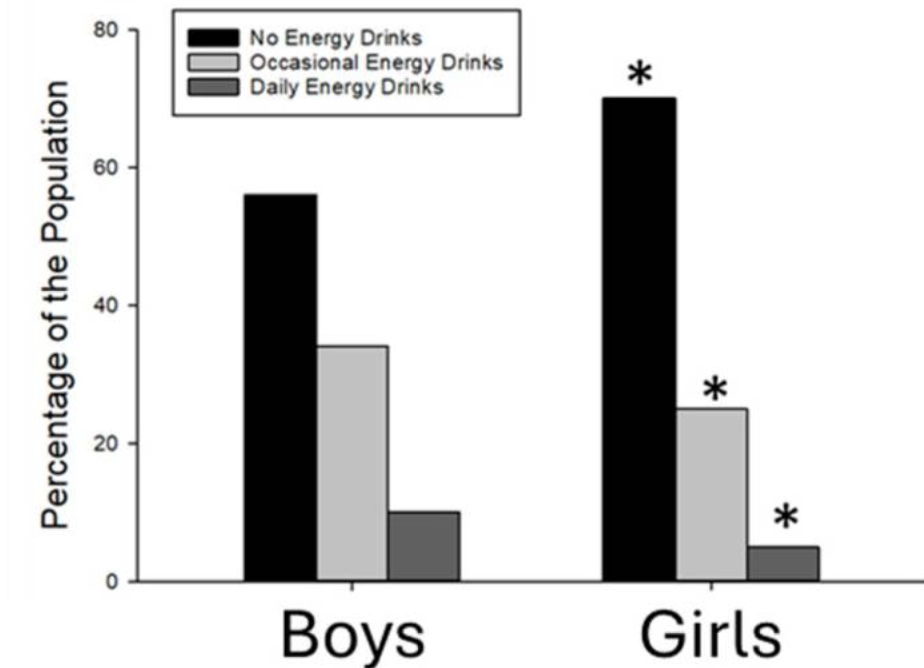
The researchers note key differences in consumption by sex. Overall, girls reported drinking fewer energy drinks than boys. However, girls who did report drinking energy drinks daily were more likely to drink alcohol and get in physical fights than boys with the same level of consumption.
Regulation of the marketing and sales of these beverages remains limited. Across 75% of school districts nationwide, there is no policy limiting the sales of energy drinks in schools. Notably, some districts, including the Purdy School District in Missouri, have banned these drinks on school grounds.
Nationwide, protective measures may include implementing bans on the sales of these products to individuals under the age of 18, as countries such as Latvia, Lithuania, and Turkey have done.