The Cost of Saving on Skincare
Shopping for skincare on a budget can be difficult, especially when only 4% of skincare products sold in discount stores are allergen-free.
Read Time: 2 minutes
Published:
- Only around 4% of personal care products at dollar stores are allergen-free.
- Dermatologist-recommended allergy-friendly products are often four times more expensive per ounce than products sold at discount stores.
Cleanser. Toner. Moisturizer. Sunscreen.
The average American spends $500 a year to keep their skin dewy, glass-like, and youthful. As social media rapidly cycles from trend to trend, it seems like every week, a new serum or gel is deemed essential for healthy skin.
High prices for luxury products may cause customers to seek out less expensive skincare dupes— products that look and work like top-of-the-line skincare at a fraction of the price. But for the 20% of the population with contact dermatitis, using the wrong dupe can cause an itchy, painful rash. People with a history of skin reactions should be particularly careful to avoid products that can cause skin allergies, but doing so on a budget can be difficult.
Sarah Karels and colleagues analyzed the ingredient lists of over 330 personal care products on sale for $2 or less at Dollar Tree, Family Dollar, and Dollar General. The lists were reviewed to determine whether they contained any of the 10 most common chemicals that cause allergic reactions identified by the North American Contact Dermatitis Group.
Just 4% of personal care products sold in discount stores were allergen-free, as shown in the graphs below. Even products labeled as “hypoallergenic” were found to contain at least one of the top 10 offenders. Every hair care product, soap, body cleanser, and laundry product that was included in the study contained at least one allergen. None of the products marketed for children were allergen-free.
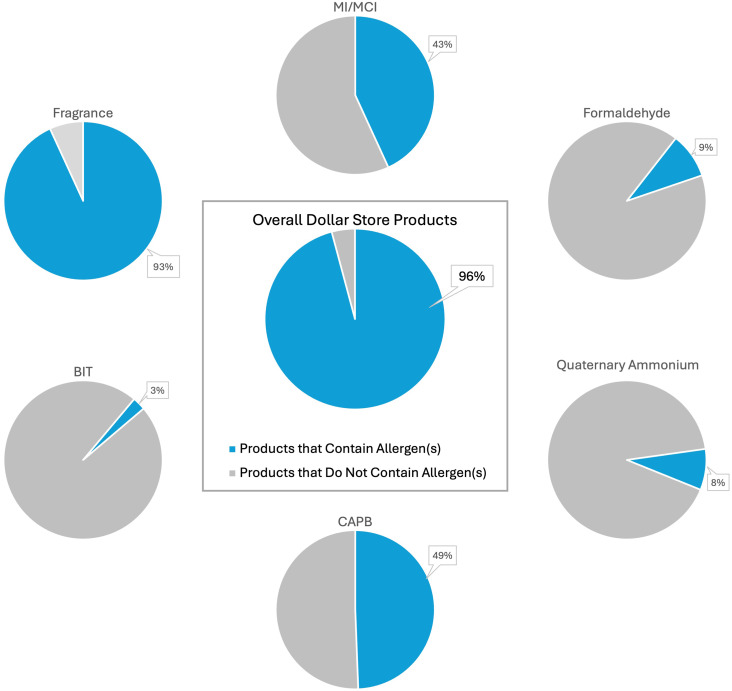
Fragrance was the most commonly cited allergen. But fragrance is not a single ingredient; rather, it is a category that includes thousands of chemicals, making it difficult to know what exactly is leading to an allergic reaction.
Dermatologist-recommended products for people with a history of skin reactions often cost four times more per ounce than products sold at Dollar stores. The authors urge dermatologists caring for people with allergic skin reactions to be more aware of the range of products accessible to patients and alert them to their risks during office visits, especially as social media creates an artificial need for whichever product is currently trending.