Is Public Health on the Ballot in the 2026 Midterm Election?
A political scientist's perspective on the case for and against the 2026 midterm election as a health policy referendum.
Read Time: 5 minutes
Published:
Health policy is in the news these days. A lot.
From federal efforts to overhaul the childhood vaccine schedule to Medicaid benefit cuts and disenrollment, and even concerns about whether people should be allowed to gamble on the outcomes of drug trials, it’s fair to say that health policy stories dominated headlines this summer.
Whether or not health policy will shape how people vote in the upcoming midterm (congressional) elections is an open and very different question.
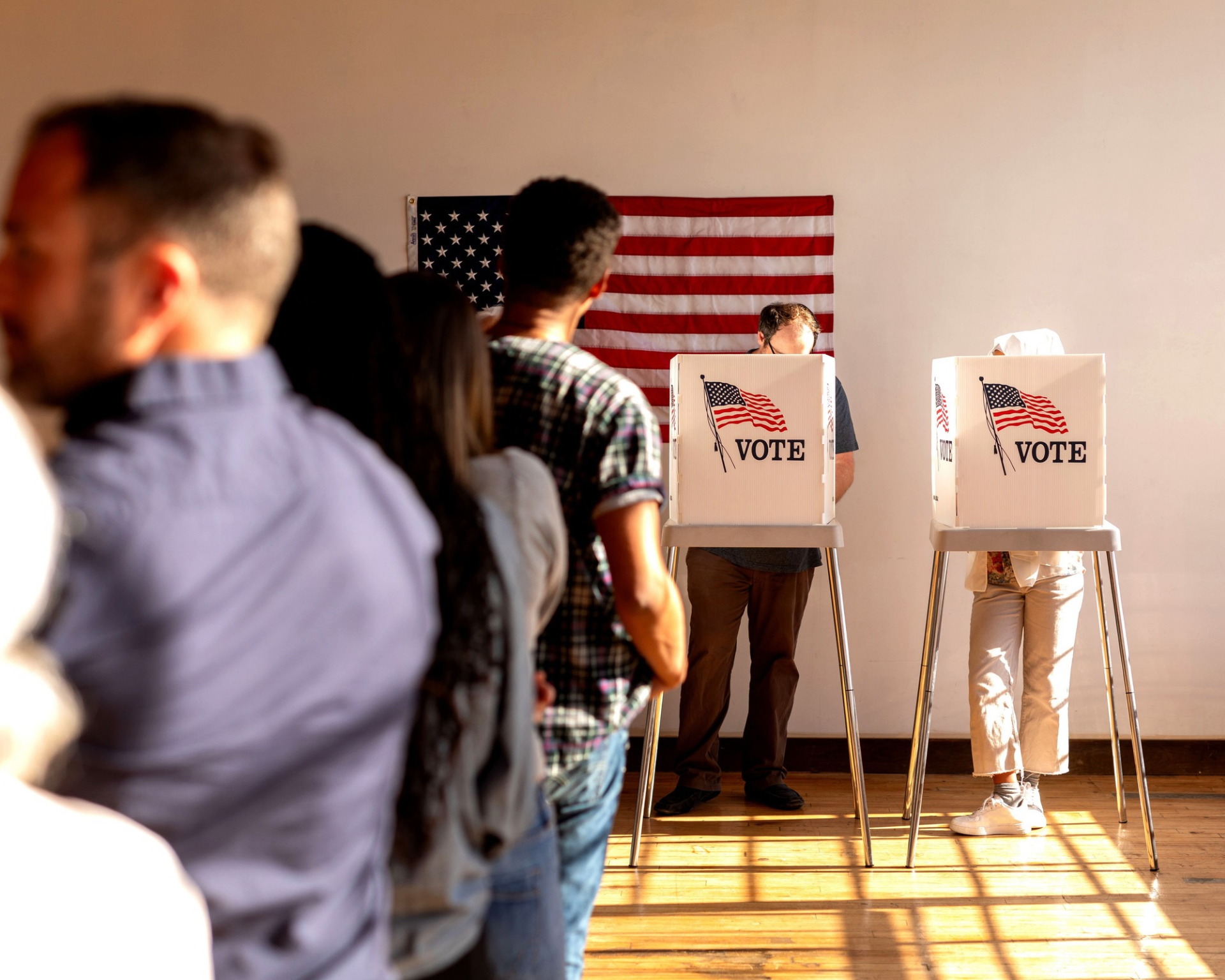
In this piece, I offer a political scientist’s perspective on the case for and against the 2026 midterm election being a “referendum” on the second Trump administration’s health policies.
Why the 2026 Midterms Might Be a Health Policy Referendum
If you’re a political nerd like I am, you may have noticed something interesting about recent midterm election contests. Every time there’s been a change in the partisan composition of the White House (Barack Obama in 2009; Donald Trump in 2017; Joe Biden in 2021), the following midterm contest has been heavily focused on health policy.
The 2010 midterms, for example, were dominated by concerns about the passage and implementation of the Affordable Care Act (ACA, otherwise known as “Obamacare”). ACA opponents on the political right earned historic gains in that contest, buoyed by the ascendence of TEA (“Taxed Enough Already”) Party Republicans who railed against the ACA as “socialized medicine.”
The 2018 midterms were also dominated by concerns about the ACA. This time, however, voters were concerned about the newly elected Trump administration’s promise to repeal the health care law without a potential replacement. Democrats easily won both chambers in that contest.
Most recently, the 2022 midterms were the first elections held following the Supreme Court’s overturning of Roe v. Wade. Although voters typically reward the party that does not control the White House in midterm elections, Republicans only narrowly won control of the House during the Biden administration and failed to win the Senate. Recent research suggests that concerns about abortion access and abortion-related ballot questions in several states may have energized Democrats to turn out to vote in that cycle.
Whether or not the 2026 Midterms will continue this pattern remains to be seen. But, some early indicators suggest that it might.
Public opinion polling shows the economy dominating Americans’ attention. And recent data from the Pew Research Center show that concerns about the rising costs of health care are the most prominent economic concern on Americans’ minds right now. Nearly 7 in 10 (69%) of Americans said in July that they were “very concerned” about “the cost of health care.” By contrast, concerns about the price of gasoline (56%) and jobs (44%) garnered significantly less public attention in the July poll.
Consistent with these data, a recent survey from the Kaiser Family Foundation (KFF) Health Tracking Poll shows that over 6 in 10 voters say that health costs will have a “major impact” on how they vote in 2026. About 4 in 10 say the same about other health issues, including food and vaccine policy.
Taken together, these data offer many reasons to suspect that the 2026 midterms could be a referendum on health policy.
Why the 2026 Midterms Might Not be a Health Policy Referendum
While concerns about health care affordability loom large in 2026, an equally compelling case can be made that health policy concerns may not factor into how Americans vote in November.
First (and perhaps most obviously), many other important issues are commanding the public’s attention right now. Concerns about the War in Iran, election security, and allegations of corruption in the Trump administration have dominated headlines in recent weeks.
Moreover, decades of political science research have cast doubt on the degree to which policy concerns shape voter choice at all. Americans’ stances on even their most pressing issues are thought to play a modest role (at best) in shaping how they vote in elections. Studies also show that Americans are far more likely to cast ballots for candidates who share their party identification, irrespective of where those candidates stand on the issues. In fact, considerable evidence shows that Americans first decide who they want to vote for, and then decide where they stand on the issues.
Finally, the Trump administration does not appear to view the 2026 midterms as a referendum on some of its most divisive health policies. For example, the president recently issued an executive order directing the Secretary of Health and Human Services, Robert F. Kennedy Jr., to revise the childhood vaccine schedule, in defiance of a recent federal court ruling to do otherwise. In doing so, Trump defied advice from his top pollster, who advised him to forgo changing the childhood vaccine schedule out of fear that doing so would be unpopular with midterm voters. The president’s decision to do so anyway may suggest that he does not view vaccine-related issues as a top concern in the Midterms.
The Bottom Line
The political scientist Harold Lasswell famously defined politics as “who gets what, when, and how.” There is perhaps no more important “what” in these times than policies impacting our bodies and our health. In that sense, health policy is, to some degree, always on the ballot.
But it’s unclear whether public health will dominate concerns in the midterms in the way it has in past elections. If it does… I would expect Democrats to win. Americans currently place more faith in Democrats’ handling of health policy issues than they do in Republicans’; potentially due to disapproval of recent administration actions to shrink Medicaid, divest from medical research, and revise the childhood vaccine schedule.
We’ll find out whether or not that comes to pass in just a few weeks.