How Incarceration Affects Community-Wide Health
Incarcerated people had a 40% higher risk of premature death than those who were not in jail. They were also 3 times more likely to overdose.

Read Time: 2 minutes
Published:
- Incarceration may raise the risk of early death for affected individuals and others in their communities.
- Better medical care in jails and family support in communities with high incarceration rates may reduce adverse mortality outcomes.
Roughly 22% of all incarcerated people across the globe are in U.S. prisons and jails. The United States incarcerates a higher percentage of its population than any other country in the world. These staggering rates are a product of decades-long political decisions that criminalize vulnerable populations and withhold social support from people at risk. Incarceration experiences are destabilizing for people in jail, as well as for their families and communities. New research suggests incarcerated individuals and other residents from their communities may, in fact, be at a greater risk for early death.
Utsha G. Khatri and colleagues studied nearly 3.26 million adults between 2008 and 2019 to understand how a person’s incarceration status affects their risk of premature death. The team compared mortality rates between individuals who were incarcerated at the start of the American Community Survey study in 2008 (45,000 individuals) and those who were not. In a secondary analysis, Khatri and colleagues obtained county-level incarceration rates from the Vera Institute of Justice Incarceration Trends Dataset and analyzed their association with county-level mortality.
Across the study period, individuals in jail at the start of the survey had an overall risk of death 40% higher than people who were not in jail (top figure). People incarcerated at the start of the study were also 3 times more likely to die from overdoses during or after their release than their non-incarcerated counterparts (bottom figure).
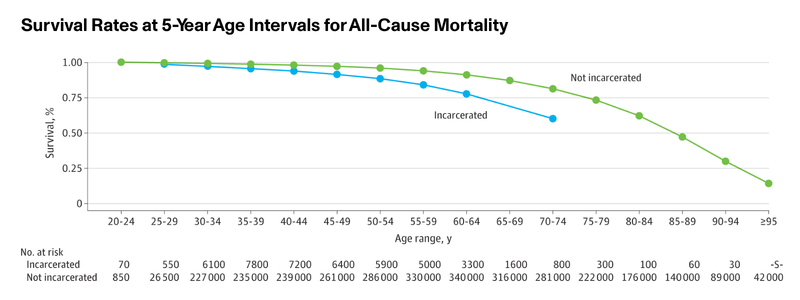
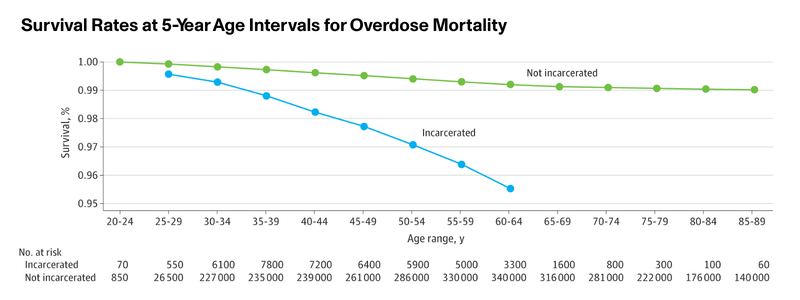
The team also found that populations living in counties with a high incarcerated population were at a particularly elevated risk of death. In fact, population death rates grew alongside incarceration rates in all counties. This suggests the consequences of incarceration, including disrupted social dynamics and financial and legal burdens for affected families, may harm long-term health outcomes for the broader community. Communities of color or low-income communities may experience a self-reinforcing cycle, in which their residents face high incarceration rates and subsequent public health consequences that deepen vulnerabilities.
The authors recommend that U.S. jails prioritize access to evidence-based health care for their incarcerated population. Currently, nearly 50% of people in jail have a substance use disorder, but most U.S. jails do not offer medications for opioid use disorder. Sustained medical care during and after incarceration may help improve survival rates among people who serve jail sentences. Additionally, counties that face high incarceration rates should implement policies to support families of people in jail and alleviate disruptions that could affect their health.