The ISS Was a Public Health Laboratory. What's Next?
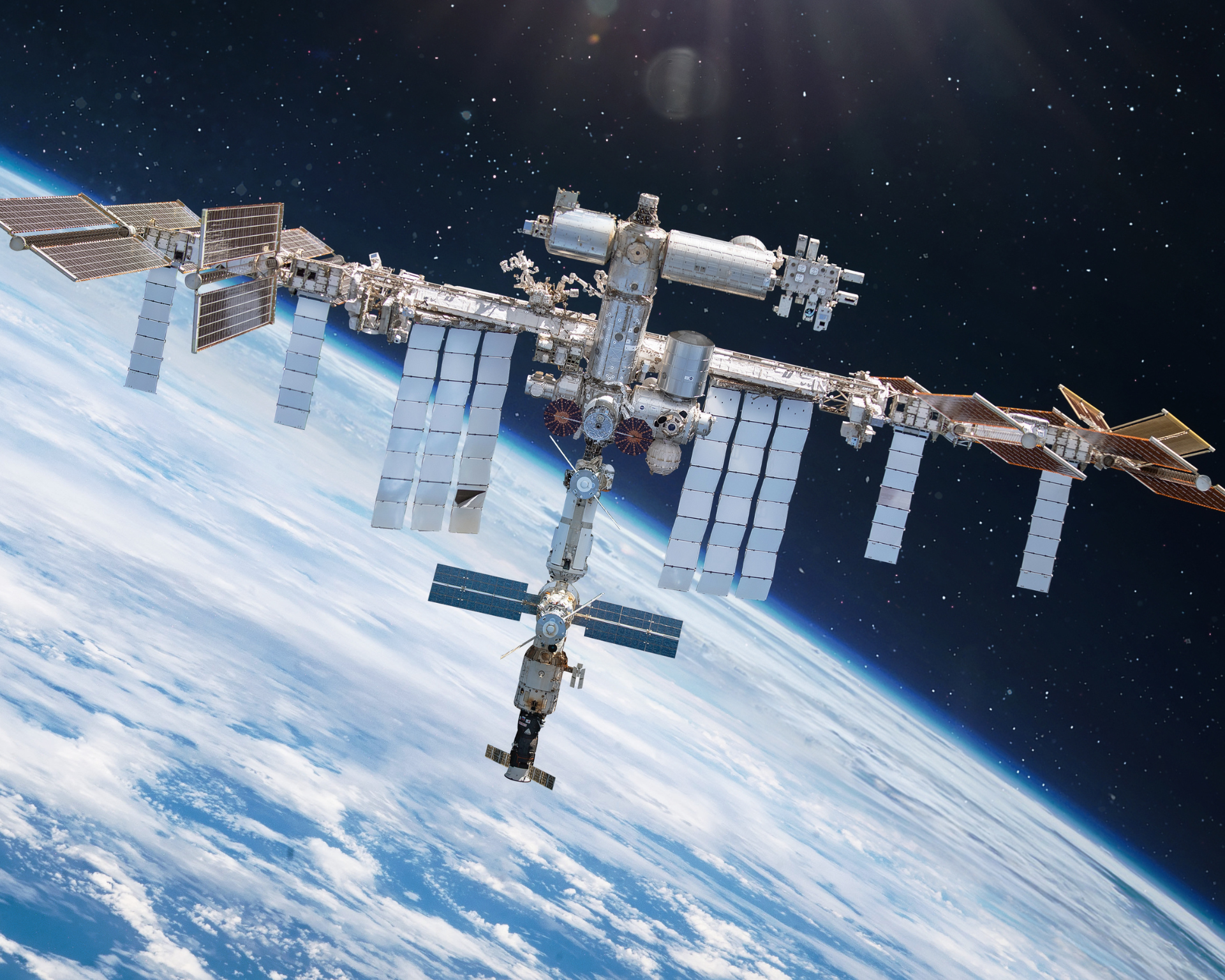
In 2030, the International Space Station will end. And with it, the fate of public health research conducted there hangs in the balance.
Read Time: 5 minutes
Published:
In 2030, one of humankind’s most remarkable achievements, the International Space Station (ISS), will end. And with it, the fate of public health and biomedical research conducted in space hangs in the balance.
For more than two decades, the ISS has functioned not only as a symbol of international cooperation, but also as a biomedical laboratory unlike any other. Research conducted aboard the ISS and across National Aeronautics and Space Administration (NASA) missions has contributed to remote patient monitoring, improved our understanding of aging and Alzheimer’s disease, and expanded knowledge about how isolation and extreme environments affect human health. These findings have broad implications for the public health challenges facing us here on Earth, from caring for aging populations to improving health monitoring in remote or resource-constrained settings.
When the ISS disappears, it will not be replaced by another publicly operated international laboratory. Instead, a new generation of commercial space stations owned and operated by private companies will take its place. That transition could fundamentally reshape who gets to conduct health research in space and whether public-interest science survives there at all.
Conceived during the Cold War and constructed through an unprecedented international partnership between the United States, Europe, Japan, Canada, and Russia, the ISS was built around principles of scientific collaboration, open exchange, and long-term public investment.
The ISS builds upon a much longer history of biomedical innovation by NASA. Some of NASA’s earliest health-related breakthroughs involved biomedical telemetry, or remote patient monitoring. Technology originally developed to monitor astronauts’ vital signs during space flight in the Gemini missions of the 1960s laid the groundwork for today’s telemedicine and remote health monitoring systems, which are now widely used in hospitals and homes across the country (think: blood pressure cuffs and glucometers).
The future of space research may increasingly be dictated by private wealth and geopolitical competition rather than scientific or public health priorities
These breakthroughs have been made possible because of space’s unique microgravity environment. They’re also thanks to the enduring international partnerships that have ensured information exchange and scientific advancement for all.
That model is now about to change fundamentally.
Without the ISS (and its international commitment), we’ll be left with a commercialized space station landscape focused on profit. As a result, we risk ceding the responsibility and decision-making for what kind of research is conducted in space (if at all) to Jeff Bezos, Elon Musk, and other billionaire space CEOs.
Large pharmaceutical companies will likely continue conducting orbital research because they can afford access to commercial space stations. But smaller start-ups, university research teams, and individual researchers pursuing more fundamental science questions may struggle to finance and compete for limited (and expensive) laboratory space and resources.
Work already done in space on aging, cardiovascular disease, and isolation has enabled public health advances here on Earth. But that work doesn’t always have immediate return on investment, which may make it less attractive to commercial space station operators looking to turn a profit.
The decisions we make over the next several years will determine whether low-Earth orbit remains a shared scientific laboratory or becomes simply another commercial marketplace (with space hotels!). Preserving research in space will require NASA, Congress, and international partners to actively shape the incentives governing this new era of commercial space.
Without active leadership from NASA and its international counterparts, one of humanity’s greatest scientific and collaborative achievements risks becoming just another pay-to-play marketplace in orbit.
There are a few practical ways to do this.
First, NASA remains the most important source of funding, prestige, and long-term business in space. While NASA will shift from owning and operating space stations to becoming a customer, it should use that existing leverage to reserve laboratory space, astronaut support, and mission time for public health research.
NASA and its international partners should also establish updated agreements governing data-sharing, research access, and scientific collaboration aboard commercial space stations to preserve the cooperative spirit and the investment in research that made the ISS so successful. Those agreements should include those international partners and the commercial stations that will house them.
Maintaining NASA’s influence over biomedical space research will also require sustained federal investment. Without strong public funding, the future of space research may increasingly be dictated by private wealth and geopolitical competition rather than scientific or public health priorities that don’t necessarily translate into profit.
NASA should continue to provide grant funding for universities and smaller research groups seeking access to these new commercial space stations. Recently, the Trump administration has moved to cut NASA’s science funding in half in favor of sending astronauts to the Moon and Mars. But we should do both – we should maintain funding for basic research while also funding exploratory astronaut missions that drive us deeper into space.
The International Space Station has demonstrated that space serves as a site of exploration and as a shared laboratory for promoting health on Earth. The commercial era of space flight may bring innovation, but innovation alone will not protect public-interest science and foundational public health priorities. Without active leadership from NASA and its international counterparts, one of humanity’s greatest scientific and collaborative achievements risks becoming just another pay-to-play marketplace in orbit.
The views expressed here are the author’s own and do not necessarily represent the views of Public Health Post or Boston University School of Public Health.