Closing the Distance Between Public Health and the Public
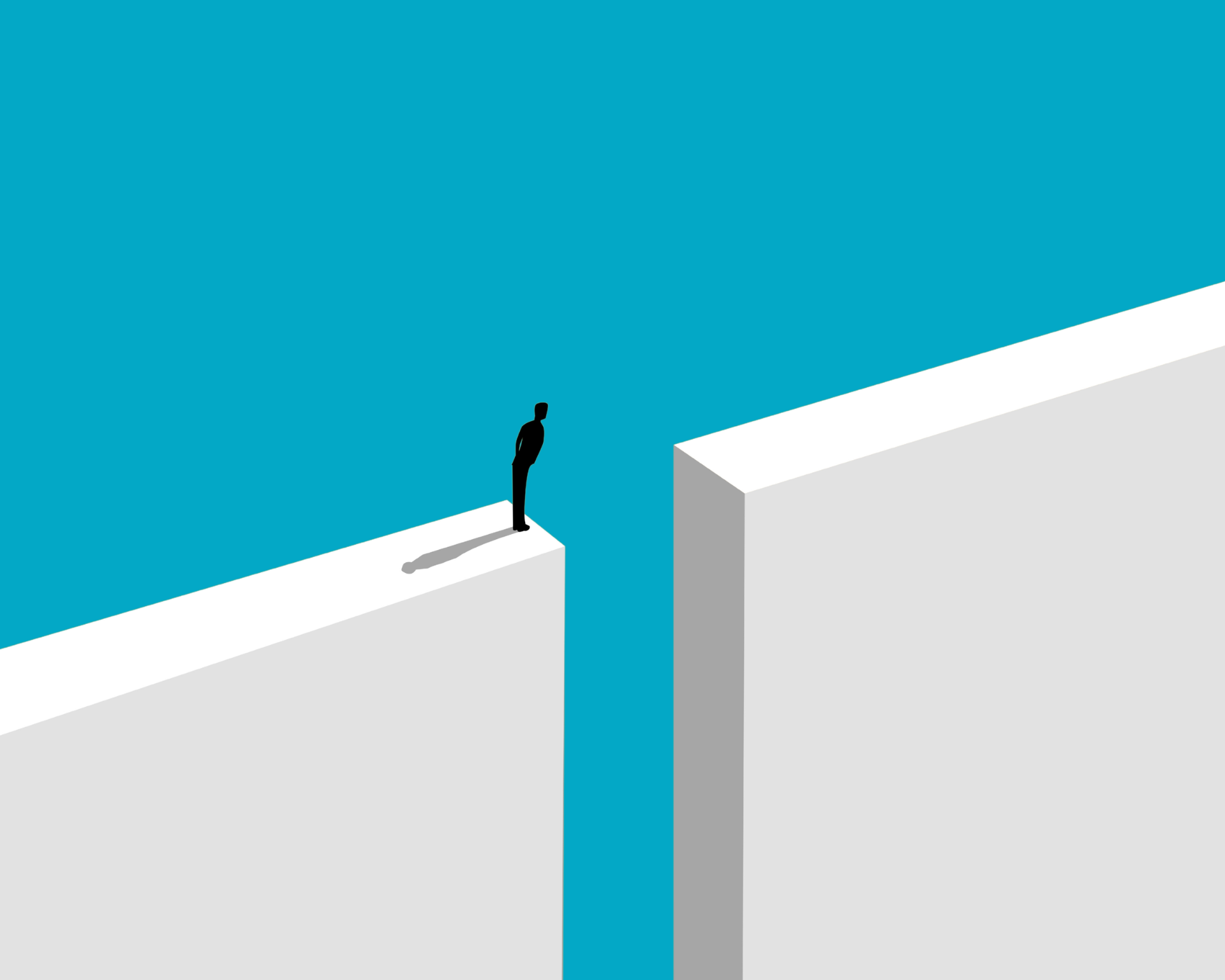
Public health doesn't have a messaging problem. It has a proximity problem, rooted in the gap between lived experience and evidence.
Read Time: 6 minutes
Published:
I recently invited a group of Make America Healthy Again (MAHA)-affiliated community leaders from Ohio into my public health classroom in Boston to share their work on healthy food access and environmental exposures. My goal was for my students and me to better understand the movement through a grassroots organizing lens.
I also witnessed something else: two different ways of understanding health—and deciding who and what to trust—playing out side by side, along with very different ideas about what public health is.
The speakers told stories, including about the 2023 train derailment in East Palestine, Ohio, where a “vent and burn” of vinyl chloride raised concerns about communities’ cancer risk; about orphan wells left behind by bankrupt companies, leaching contaminants into waterways; and about proposed data centers that would strain local water supplies. They spoke with urgency and moral clarity, naming companies, decisions, and consequences. Their accounts were rooted in place and lived experience, tracing harms that felt immediate and unresolved.
Across these examples, a pattern emerged. Environmental exposures, economic decisions, and health outcomes were not treated as separate issues, but as part of the same story—one shaped by industry, policy, and place, and grounded in a desire for accountability, transparency, and for communities to have a voice in decisions that affect their health.
My master of public health (MPH) students noticed something else: the presentations included little data or citations, a sharp departure from academic norms.
But what stayed with us wasn’t just a difference in communication style. It was the distance between how public health professionals understand their work and how communities experience it. At one point, a speaker assumed that many MPH graduates would go on to work for pharmaceutical companies, a statement that was met with puzzled glances across the room. That moment made the gap visible.
Public health doesn’t just have a messaging problem. It has a proximity problem.
Academic public health is structured around careful evidence generation. It speaks in aggregates, time trends, causal inference, and uncertainty, and it is often cautious about naming responsibility. From an academic viewpoint, this reflects rigor and a commitment to getting the science right. But much of public health communication is written and formal, limiting how far it travels beyond academic and institutional settings. As a result, it can feel distant by describing patterns without making clear what can be done, by whom, and on what timeline.
The gap between lived experience and formal evidence is where misunderstanding can take root.
In contrast, the speakers centered local experience. They spoke in terms of people, place, and consequence, naming actors and decisions directly, whether it was a train company’s response to a derailment, the proliferation of pill mills in communities hit hard by the opioid epidemic and the treatment industry that followed, or local officials navigating agreements tied to new development. Their accounts may not have been as academically precise, but they were proximate.
When people say they don’t know what public health is, they are often saying something more specific: I don’t see it in my community, in real time, responding to what I’m living through.
Another student observed that what they heard wasn’t a single, concrete story but a broader narrative stitched together from multiple concerns. Rather than presenting a set of data, the speakers offered another way of making sense of what was happening around them.
Public health, by contrast, trains students to look for specificity and clearly defined and measured outcomes. But many communities experience health as an accumulation of exposures and decisions that feel connected long before the evidence is fully established. As one speaker put it, a study may not show a statistically significant increase in cancer, but that doesn’t mean people in the community aren’t getting cancer. That gap between lived experience and formal evidence is where misunderstanding can take root.
Another part of what I witnessed reflects a deeper structural reality. Academics are constrained by rigorous methods, peer review timelines, and institutional expectations. Public health agencies are constrained by politics, bureaucracy, and budgets. In some cases, the speakers described local officials operating under nondisclosure agreements tied to development projects, further narrowing what could be communicated to communities.
Activists are not bound in the same way. They can ask sharper questions, move faster, and name entities causing harm more directly. When institutions move slowly or speak cautiously, communities don’t stop asking questions. They step in to define the story or find other messengers.
If public health wants to rebuild trust, it has to do more than improve its messaging.
Some of my students were struck by how the speakers seemed to misunderstand public health, assuming, for example, that public health graduates primarily work in industry, or overlooking that community-engaged research and advocacy are core parts of the field.
But stepping back, a different question emerges: why would they know?
Public health spans research, advocacy, policy, community-based work, and more. Yet much of it remains invisible outside academic journals, grant reports, and institutional settings. The most visible public health messengers tend to be physicians like Dr. Anthony Fauci during COVID, the surgeon general, or medical organizations issuing national guidance. Meanwhile, the broader work of public health on housing, environmental exposures, food systems, and community conditions is rarely communicated in ways that travel beyond these spaces or carried by trusted local messengers.
Finally, one speaker reflected on how communicating evolving evidence means something very different depending on who you are and what you represent. In science, changing guidance reflects new data and signals that the process is working. But without a clear narrative, those same changes can feel like inconsistency or “flip-flopping” to the public. Trusted community liaisons can help bridge that gap by interpreting new scientific findings and connecting them to lived experience. Without that bridge, updates meant to reflect progress can instead erode trust.
If public health wants to rebuild trust, it has to do more than improve its messaging. It needs to change how evidence is translated, shared, and used by investing in relationships and showing up more visibly in the spaces where people are already making sense of their health.
The views expressed here are the author’s own and do not necessarily represent the views of Public Health Post or Boston University School of Public Health.