Improving Care After Foster Care
Youths who have experience in the foster care system have higher mortality rates than their peers who have no experience with foster care.

Read Time: 2 minutes
Published:
- The risk of death is elevated among foster youth, especially following their final episode of foster care.
- Extended social services may protect foster youth from an elevated risk of death as they transition out of care.
On any given day in the United States, approximately 400,000 children and youth are living with foster families. Temporary home placements are dynamic, with children cycling in and out of care for years. Some children remain in care until they age out of the system or are able to return home. Others legally emancipate themselves from their parents and leave the foster care system behind. International studies show that the period of transition when a young person leaves foster care is associated with heightened risk for early death.
Claire R. McNellan and colleagues conducted the first study in the U.S. to examine patterns of death among foster youth. The team used data from the California Department of Public Health to count deaths in over 144,000 California youth who had foster care experiences after their 16th birthday. Death counts and causes of death were also measured among the general California youth population for comparison.
Homicide was the most common cause of death among all current and former foster youth in the study. Suicides and unintentional injuries, such as transportation accidents and accidental overdoses, were also frequent. As the figure shows, youths who had experienced foster care had substantially higher mortality rates (SMR on the y-axis) than their peers in the general California population, regardless of cause of death.
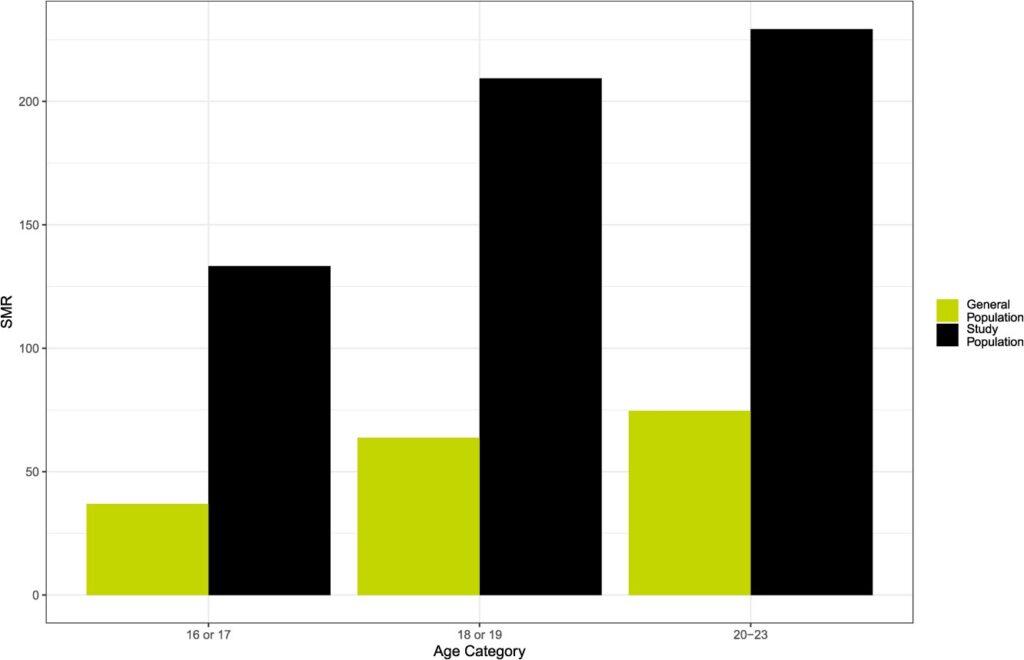
The team found elevated risks of death for youth in the first four months after transitioning out of care compared to youth who were still in foster care. The risks also varied by age. For example, 18 to 19-year-olds in the transition period were roughly 50% more likely to die than their peers remaining in foster care. That risk jumped to over 210% for 16 and 17-year-olds in the transition period.
The authors recommend that states invest in cost-free services for foster youth transitioning out of care. Investments in ensuring health coverage or supporting individuals as they find housing may prove protective. For example, mental health care usage declines by roughly 60% in the first month after foster care. Policies to keep such care available and affordable for foster youth may reduce fatalities from suicide or drug use. As mortality risk is particularly elevated among younger groups, continued support from social workers after youth leave foster care may provide supportive resources that can lower the risk for early death.