Ripples of Trauma: The Indirect Harms of Gun Violence
Children whose parents experienced gun injuries had 42% more psychiatric diagnoses than children who were not exposed to such violence.

Read Time: 2 minutes
Published:
- Gun violence claims more victims than just those who are injured or killed.
- Children whose parents experience gun violence may be at greater risk for trauma and mood disorders.
- Supportive post-gun violence care is an important public health intervention for children.
Over 48,000 people in the United States die every year from gun-related homicides and suicides. Every death from gun violence is matched by an additional 2.4 injuries that require hospital care. But deaths and injuries capture only a piece of the total burden. People who do not witness gun violence firsthand may still be affected by gun-related homicides, suicides, and accidents in their schools, neighborhoods, and homes. These indirect experiences can lead to lasting emotional and psychological harm.
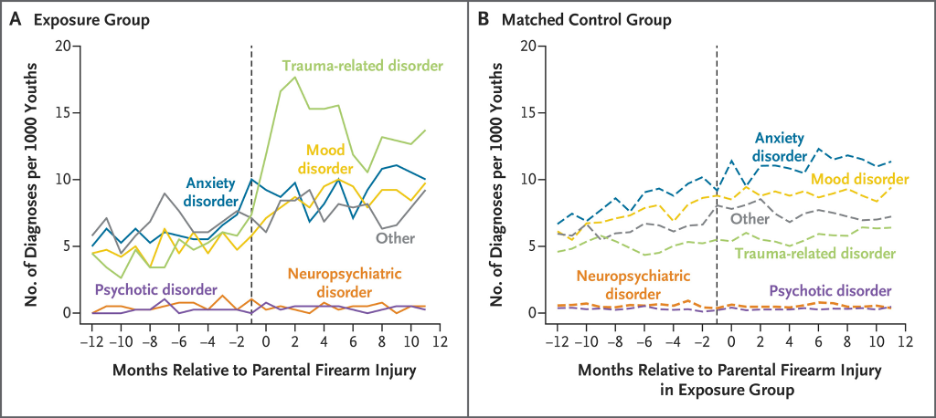
George Karandinos and colleagues used health insurance data to determine whether the indirect experience of gun violence contributed to worsened mental health outcomes among children aged 1 to 19 years. They compared rates of post-exposure psychiatric diagnoses among 3,790 children whose parents had been injured with a gun with the rates among 18,535 children whose parents were unaffected by gun violence.
Children whose parents experienced gun injuries had 42% more psychiatric disorder diagnoses than children without the exposure. Psychiatric disorder diagnoses were the highest among children whose parents had severe gun injuries that required care in hospital intensive care units.
Diagnoses for trauma-related disorders, including post-traumatic stress disorder, increased by nearly 180% in children with a parent injured by a gun compared to unexposed children. The green line in the left-side panel of the figure shows this sharp increase among the exposed children in the months directly following parental gun injury.
Findings from this study emphasize the importance of supporting children who are indirectly affected by gun violence. Evidence shows that gun safety measures taken at the state and federal levels could substantially reduce gun-related injuries and deaths. However, given the contentious and delayed nature of such policies, it is also important to mitigate the indirect harms of gun violence. Karandinos and colleagues recommend mental health care coordination between hospitals, community health workers, and schools to increase support for children whose families are victims of gun violence.