A Steep Decline: Dental Care After Incarceration
Older adults who were incarcerated for more than one month in their lifetime have a 1.52‑times higher risk of poor dental care as they age.
Read Time: 2 minutes
Published:
- Older adults who are formerly incarcerated are more likely to experience a decline in dental health as they age.
- Incarceration for longer than one month puts older adults at 1.52 times higher risk of poor dental care in their 70s.
Many older Americans struggle with dental health. According to the CDC, one in six adults over age 65 has untreated cavities, and 13% have lost all their teeth. The situation is even more dire for older adults who have been incarcerated.
Alexander Testa and colleagues created a model using data from the nationally representative Health and Retirement Study to estimate dental care patterns among adults aged 55 and older from 2012 to 2020. Nearly 6,000 participants reported whether they had ever been incarcerated and if they had received dental care in the past two years.
Based on the survey response data, the model forecast three different trajectories for dental care in aging adults, as shown on the graph below. The model predicted that half of all older adults would continue to receive regular dental care every six months. Just over a quarter were predicted to experience a decline in regular care starting in their mid-70s, and 24% of older adults would receive little or no care over the course of their lives.
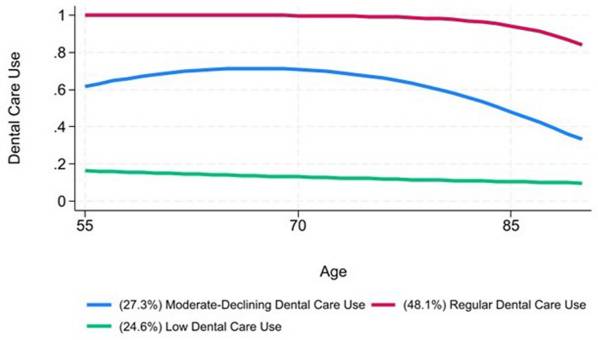
Dental care trends for adults who have ever been incarcerated, especially for longer than one month, are particularly concerning. The study found that, compared to people who have never been incarcerated, they are over one and a half times more likely to fall into the category of adults who receive less dental care as they age.
Declining rates of dental health after a period of incarceration are often rooted in a lifetime lack of access to consistent care, according to the researchers. While incarcerated, individuals receive insufficient and inconsistent dental care. Although prisons are required to treat dental issues causing pain, wait times are often long, and the staff may opt to remove teeth entirely instead of pursuing restorative procedures, such as crowns.
The researchers note that a history of incarceration can result in mistrust, discouraging patients from going to the dentist once they are back in the community. As older adults are at particularly high risk for having dental infections, causing serious illness in other parts of the body, the authors highlight the need for opportunities to provide dental care before, during, and after incarceration.