Naloxone, Needles, and the Neighborhood: When Evidence Meets Values In the Opioid Crisis
Can a community insist on safety without turning away from people in crisis, and insist on mercy without asking neighbors to accept chaos?
Read Time: 6 minutes
Published:
At an American town hall, two people can describe the same policy as either “lifesaving” or “community-breaking.” A parent whose child survived an overdose pleads for easier naloxone access. A neighbor who keeps finding syringes near the playground pleads for order. Both are reasonable, and both want public health to pick a side.
The evidence is strong. Preliminary data from the U.S. Centers for Disease Control and Prevention (CDC) estimate that 71,542 people died from drug overdoses in the United States in the 12-month period ending in October 2025. This is a 17.1% decline from the year before, but still nearly 200 deaths a day. Against that backdrop, the case for harm reduction remains substantial. Syringe services programs (SSPs) are community-based prevention programs that provide sterile syringes, safe disposal of used equipment, and links to other health services. SSPs are associated with an estimated 50% reduction in HIV and hepatitis C incidence, are cost-saving, and do not increase illegal drug use or crime.
Naloxone, the medicine in Narcan nasal spray, rapidly reverses an opioid overdose. On March 29, 2023, the Food and Drug Administration approved over-the-counter Narcan, the first naloxone product available without a prescription. A 2025 systematic review and meta-analysis found that community naloxone distribution programs can be effective in preventing opioid overdose deaths.
So why does the argument keep coming back? Because the disagreement is not just about whether harm reduction works. It is about what “working” is allowed to mean.
People may be arguing in different moral vocabularies. If public health speaks only one of them, half the room feels dismissed before the first slide appears.
One set of values starts with immediate dignity and survival. If someone is using drugs today, the moral priority is preventing death today. In that view, a clean syringe and a naloxone kit are not endorsements. They are a refusal to treat preventable infection and death as acceptable consequences.
Another set of values starts with responsibility, public order, and the protection of shared space. People worry that the government is normalizing illegal behavior, shifting burdens onto neighborhoods, and asking families to accept visible disorder as the price of compassion. These concerns are not imaginary. In a 2024 qualitative study in Kanawha County, West Virginia, participants sharply disagreed about whether needs-based SSPs contributed to discarded syringes in public spaces. Those views tended to track whether participants supported or opposed the programs.
Public health loses ground when it treats either side as ignorant or immoral. What looks like “denying science” is often a community defending its definition of safety. What looks like “enabling” is often a family defending its definition of mercy.
Moral psychology helps explain the stalemate. A 2019 survey of 5,369 respondents found that opposition to needle exchange was most strongly linked to purity concerns, whereas support was most strongly linked to care concerns. In plain language, care asks whether people are being hurt and whether suffering can be reduced. Purity asks whether something feels contaminating, degrading, or morally out of bounds. People may be arguing in different moral vocabularies. If public health speaks only one of them, half the room feels dismissed before the first slide appears.
Moving forward does not require erasing those differences. It requires policies that can hold both concerns at once.
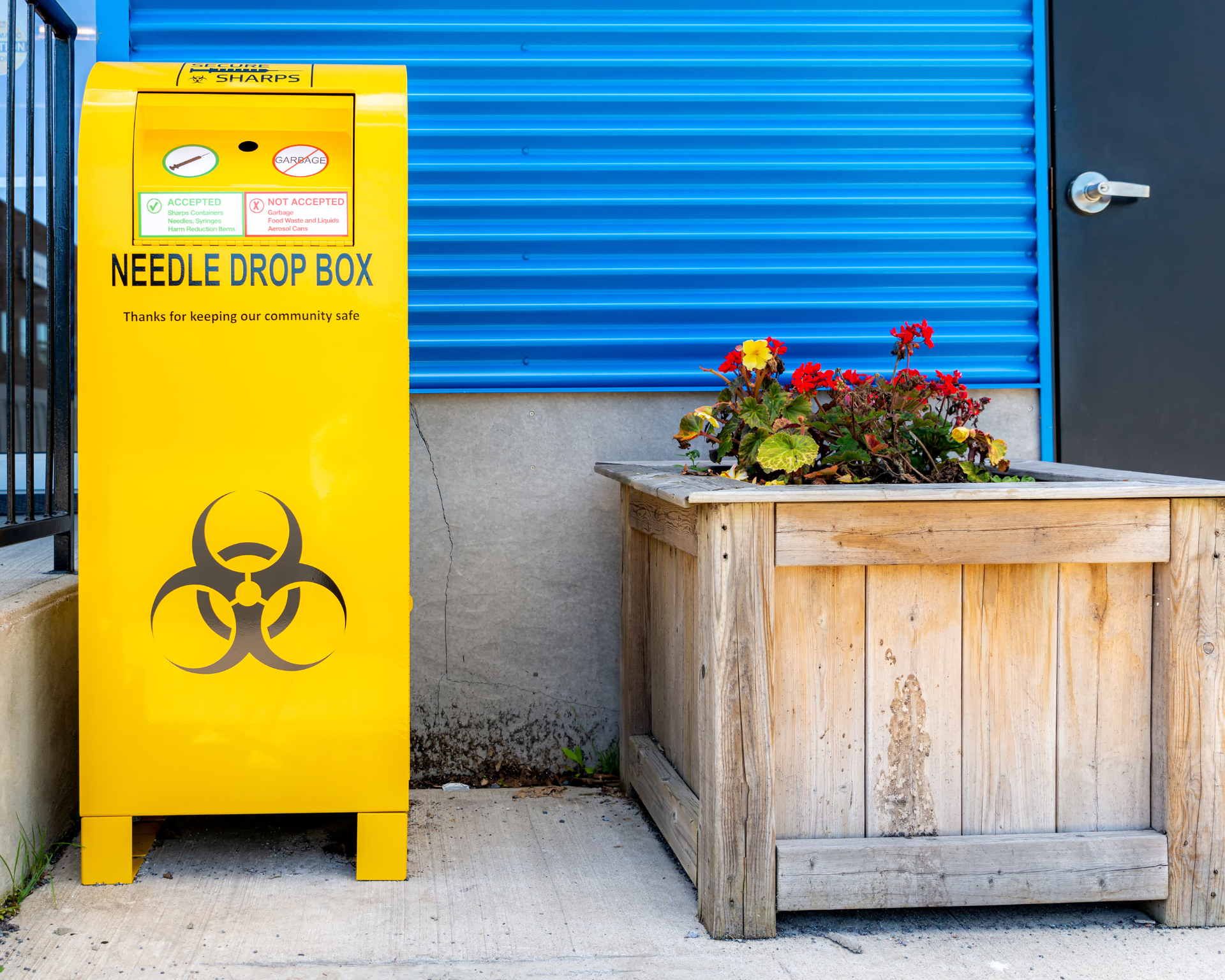
Start with shared goals and shared scorecards. Most communities want fewer deaths and fewer hazards in public spaces. So measure both. The CDC describes SSPs as programs that provide sterile syringes and safe disposal of used injection equipment. That matters for neighborhood concerns. Harm reduction should be paired with visible disposal and sanitation measures. The CDC includes safe disposal as part of SSPs, and the Kanawha County study suggests expanding syringe-disposal efforts in response to community concerns.
Next, make harm reduction an on-ramp to treatment, not a cul-de-sac. A 2017 BMJ systematic review and meta-analysis found that staying in methadone or buprenorphine treatment was associated with substantial reductions in all-cause and overdose mortality. Federal law has also lowered one barrier to care. Section 1262 of the Consolidated Appropriations Act, 2023, often described as the Mainstreaming Addiction Treatment (MAT) Act change, eliminated the federal waiver requirement for prescribing buprenorphine for opioid use disorder. So SSPs and naloxone distribution sites should be judged by the connections they build as well as the supplies they provide: same-day treatment starts, warm handoffs, and follow-up after an overdose. A warm handoff means directly connecting a person to the next provider by phone, video, or in person while that person is still present, instead of simply handing over a number and hoping they call.
The next step is making progress feel shared: fewer funerals, fewer needles on sidewalks, and more communities convinced that mercy and order can be built together.
Finally, bring public safety partners into the work. People may disagree about the morality of drug use while still agreeing on the morality of saving a life. A 2022 study of law enforcement officers found that attitudes toward naloxone changed after training and after officers experienced a successful resuscitation. That suggests overdose-response partnerships between public health and public safety may be easier to build when agencies train together and share protocols.
Can a community insist on safety without turning away from people in crisis, and insist on mercy without asking neighbors to accept chaos? The town hall question is not whether to choose harm reduction or accountability. It is whether we can design systems that are compassionate and visibly responsive to community safety, without requiring anyone to surrender their values.
There is room for optimism. Provisional national data suggest overdose deaths are declining, and naloxone is more accessible than it was a few years ago. The next step is making progress feel shared: fewer funerals, fewer needles on sidewalks, and more communities convinced that mercy and order can be built together.
Congratulations to Brandon Huynh for being selected as this year’s student essay contest winner! Thank you to all the students who took the time to enter this year’s contest. The views expressed here are the author’s own and do not necessarily represent the views of Public Health Post or Boston University School of Public Health.