Hormonal Hunger: How Birth Control Drives Emotional Eating
Emotional eating among women on combined oral contraceptives is higher during active hormone pill days compared to inactive pill days.

Read Time: 2 minutes
Published:
- Women taking active combined oral contraceptive pills reported higher rates of emotional eating than when taking inactive placebo pills.
- Synthetic estrogen and progestin may influence binge-eating risk.
Emotional eating—eating in response to emotions such as stress, sadness, or boredom—is common among women. Beyond emotional responses, fluctuations in the reproductive hormones estrogen and progesterone across the menstrual cycle can also shape appetite and eating behaviors. By providing synthetic forms of estrogen and/or progesterone, hormonal contraceptives can also influence appetite, food intake, and emotional eating.
To investigate the impact of hormonal contraceptives on eating behaviors, Kelly Klump and colleagues followed 422 women ages 15 to 30 who were already using monophasic combined oral contraceptives (COCs). Monophasic COCs provide a consistent dose of synthetic estrogen and progestin during active-pill days and are typically packaged with 21 active hormone pills followed by 7 inactive, or placebo, pills. Over 49 consecutive days, participants completed daily surveys assessing emotional eating and mood while researchers recorded whether they were taking an active or inactive pill.
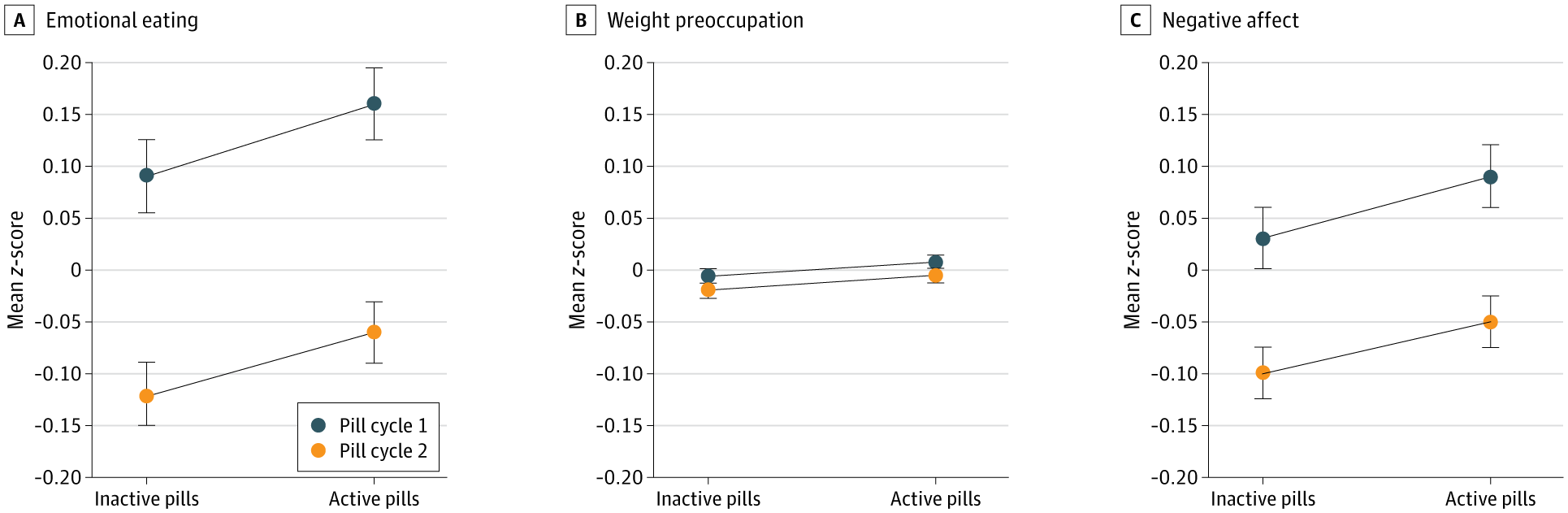
The researchers found that emotional eating was consistently higher during active hormone pill days compared to inactive pill days. The researchers also accounted for daily changes in negative mood (which may also be related to hormonal variation) and found that emotional eating remained significantly higher during active-pill days across two pill cycles. The research team did not observe meaningful changes in weight preoccupation, suggesting that active hormone exposure may influence eating behaviors without affecting concerns about body weight or shape.
Although emotional eating and binge eating are distinct behaviors, emotional eating can be associated with binge eating, particularly when people respond to negative emotions by eating large amounts of food. The similar pattern among women with binge-eating episodes suggests that hormonal changes related to oral contraceptives may play a role in both emotional eating and the more clinically significant binge eating.
Approximately 85% of women who use hormonal contraception rely on combined oral contraceptives. These findings raise important questions about how hormonal contraception may influence appetite, food cravings, and food intake. Future research is needed to identify which women may be most susceptible to these effects and whether alternative contraceptive options could reduce psychological harms related to emotional eating.