Swamped with Unhealthy Food Choices
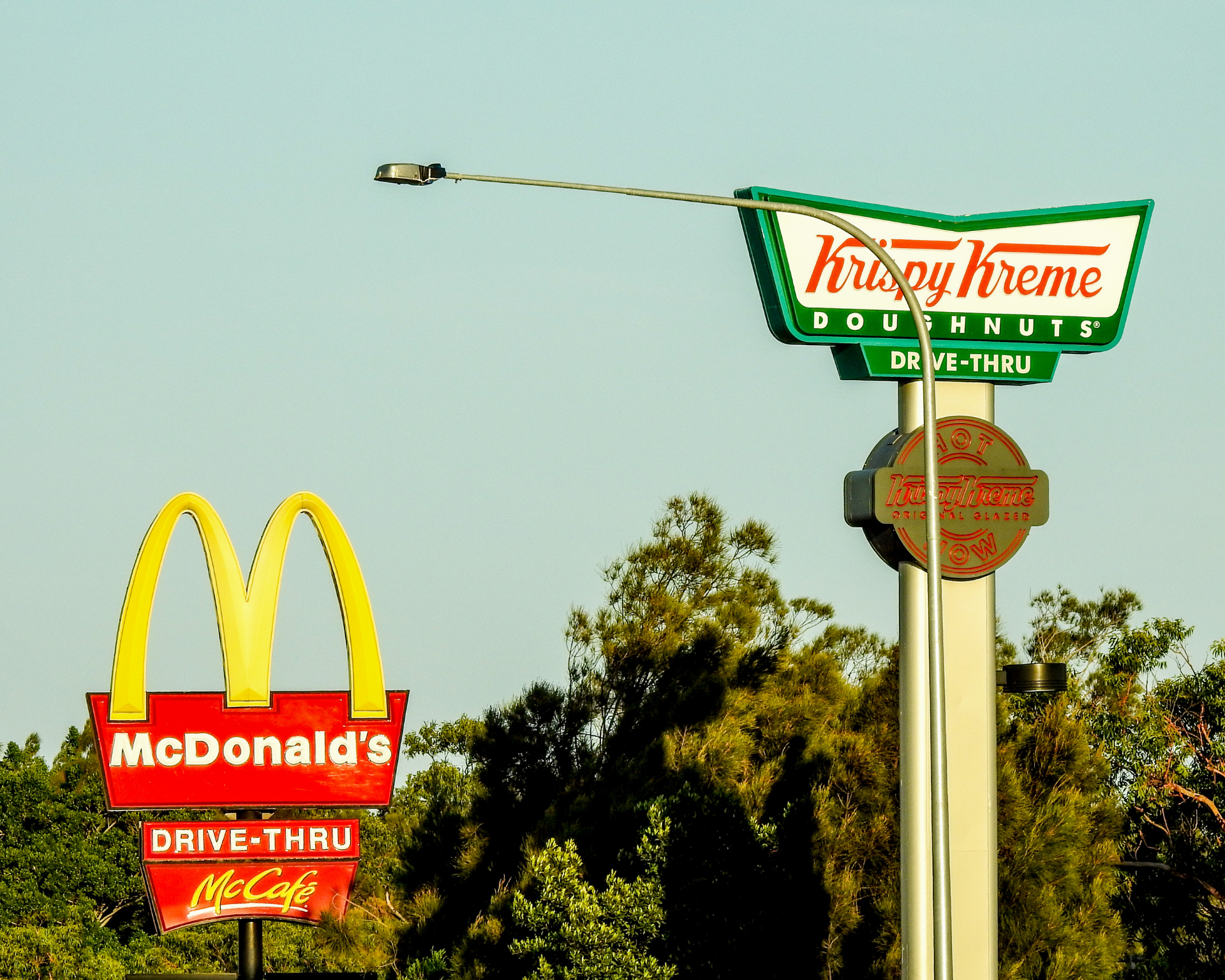
Food swamps, or neighborhoods where unhealthy food outlets outnumber healthy retailers, have exploded across America over the last two decades.
Read Time: 2 minutes
Published:
- Food swamps are areas where locations to buy unhealthy food outnumber healthy food retailers.
- The number of food swamps in the United States has increased substantially over the past two decades.
When discussing food accessibility, many may be familiar with the term “food desert,” used to describe a neighborhood or area lacking grocery stores. The concept of “food swamps” may be less familiar. It means exactly what it sounds like: a place where fast food and convenience or dollar stores that primarily sell candy, chips, and other snacks drown out healthy choices.
Daniel Wiese and colleagues examined changes in the country’s food landscape over 20 years. They examined records of openings and closings of both healthy and unhealthy food retailers in census-designated subdivisions of counties across the United States. A food retailer includes supermarkets, restaurants, and convenience stores. Healthy retailers include markets and department stores that carry fresh produce, and unhealthy retailers include restaurants, bakeries, and convenience stores.
The total number of food retailers steadily increased across the country until 2020, when businesses started to shutter due to the COVID-19 pandemic. Over the two decades examined in the study, healthy restaurants and shops were increasingly submerged in an unhealthy food landscape, as more tracts were considered food swamps.
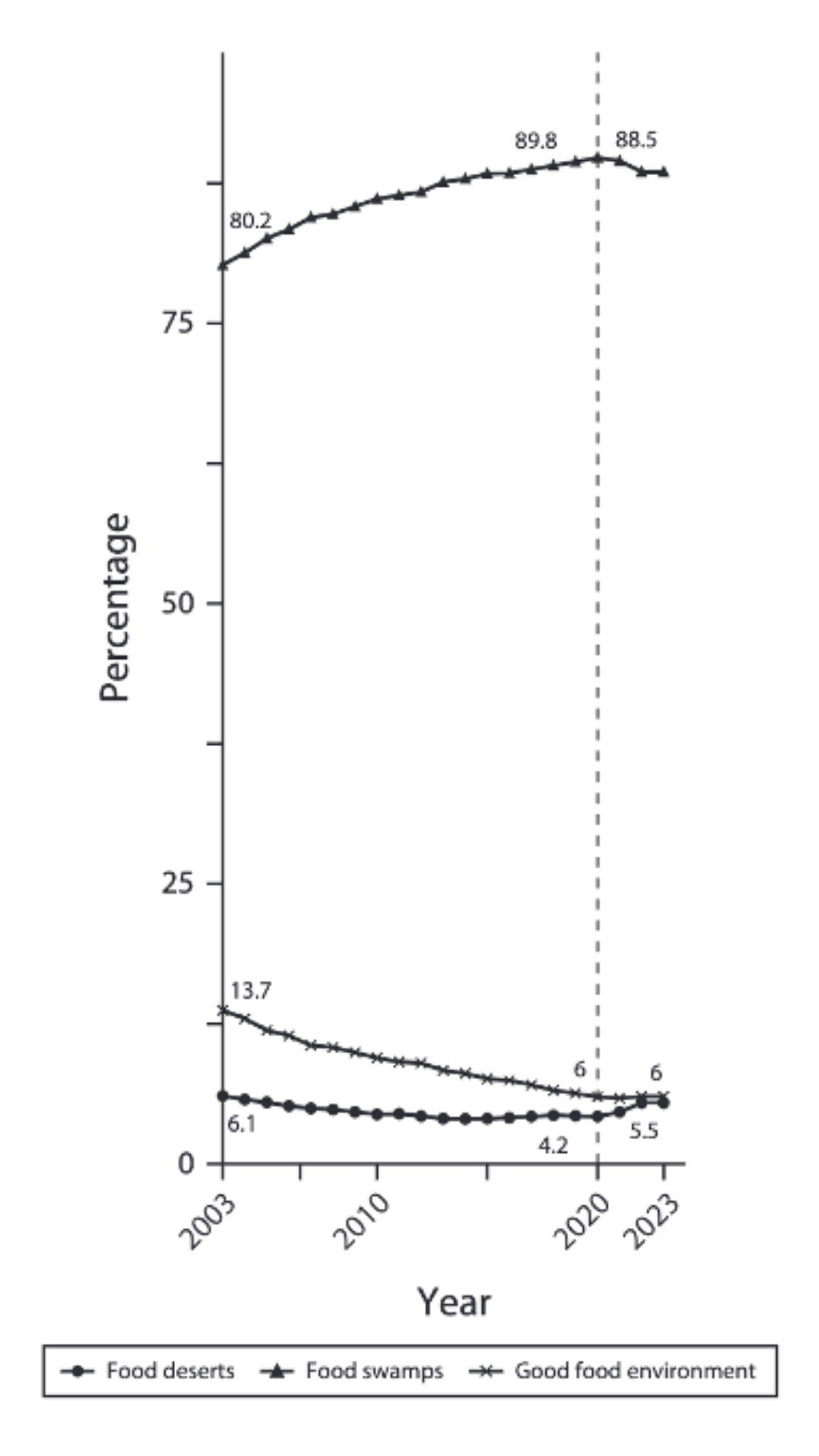
Over the course of two decades, the number of food deserts across the country remained relatively the same. However, food swamps increased substantially, with only a slight decrease towards the end of the study period, as shown in the graph. The regions classified as both food deserts and swamps increased when the researchers changed their accessibility criteria to consider whether a food retailer was accessible through a region’s public transportation system.
A decrease in food deserts in an area was commonly linked to an increase in food swamps, meaning that even when a community does get more accessible food options, they are not necessarily healthy. Previous research has shown that the classification of an area as a food swamp is a better predictor of obesity rates than whether that area lacks grocery stores.
The authors suggest improvements in public transportation and closer monitoring of changes in the country’s food landscape are needed to ensure that communities aren’t submerged in swamps.