Worsening Weather, Worsening Moods
Severe weather events, such as extreme heat, are associated with increases in emergency department visits for anxiety and depression.

Read Time: 2 minutes
Published:
- Extreme weather increases visits to the emergency room.
- Temperature was among the leading predictors of emergency visits for anxiety and depression.
Severe weather poses many physical dangers, such as injury from debris, disruption of medical care, and water contamination. New research shows these meteorological emergencies are often just as harmful to mental health as they are to physical health.
Researchers at the University of Houston evaluated weather data in the greater Houston area from 2019 to 2023, as well as emergency room visits, to examine instances of mental health emergencies in the city.
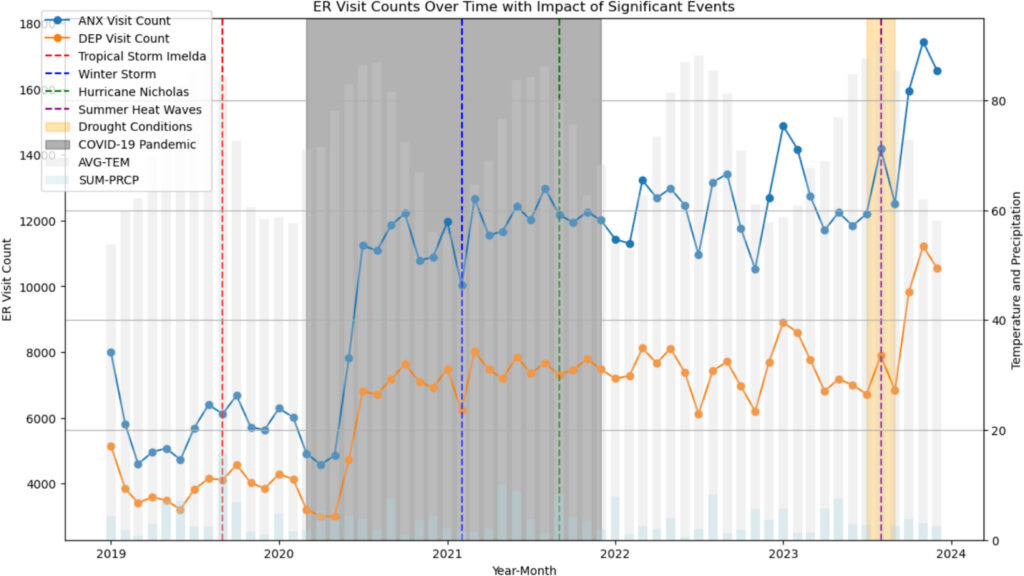
Severe weather events were associated with increases in emergency department visits for anxiety and depression (shown by spikes in the blue and orange lines on the graph above). During weather events that impact travel, such as hurricanes, trips to the ER for anxiety and depression decreased during the storm. Eventually, visits surged in the first few months after the weather event. For example, in the period after Tropical Storm Imelda (the vertical red line on the graph), there was a one-to-three-month delay before a rise in emergency room visits for mood disorders.
During drought and heat emergencies, emergency room visits increased immediately, as shown to the right of the yellow-highlighted stripe in the figure. Peaks in monthly average temperatures were one of the leading predictors of emergency visits for anxiety and depression.
The increase in visits starting in June 2020 and continuing for years can partially be attributed to the COVID-19 pandemic, but also mirrors an upward trend in temperatures in Houston and beyond.
As temperatures continue to break records around the world, the authors emphasize the importance of developing community-based preventive care, better prepared health care systems, and weather-related interventions for a changing climate.