Movement and Mental Health After the Military
Consistently exercising following military service may protect veterans' mental well-being during a challenging transition period.

Read Time: 3 minutes
Published:
The end of military service marks a major life transition for nearly 200,000 United States veterans each year. As service members shift back to more self-directed lifestyles, they leave behind highly structured routines and health services. As a result, veterans encounter substantial health challenges in the first 1-3 years of the transition as they newly face employment hurdles, disrupted social connections, and potential loss of identity.
U.S. veterans are a highly diverse population representing various ranks and roles, from local intelligence personnel to overseas combat troops. While many resume their lives without major health concerns, the transition places veterans at a higher risk for depression, post-traumatic stress disorder (PTSD), and substance use disorder compared to civilians.
Many veterans also experience a sharp decline in physical activity after leaving structured military environments. Because exercise has been proven to help alleviate symptoms of psychological distress, maintaining physical activity after service may play a unique role in the transition to civilian life.
To further explore this relationship, Katrina Waldhauser and associates evaluated health data from 37,464 former U.S. military personnel enrolled in the Millennium Cohort Study. Over a 15-year period, the study surveyed participants who left the service between 2001 and 2016. Participants reported their post-service exercise levels, focusing on activities that induced sweating or increased the heart rate. The researchers also analyzed clinical markers for quality of life, depression, and PTSD, and observed psychological changes over four timepoints.
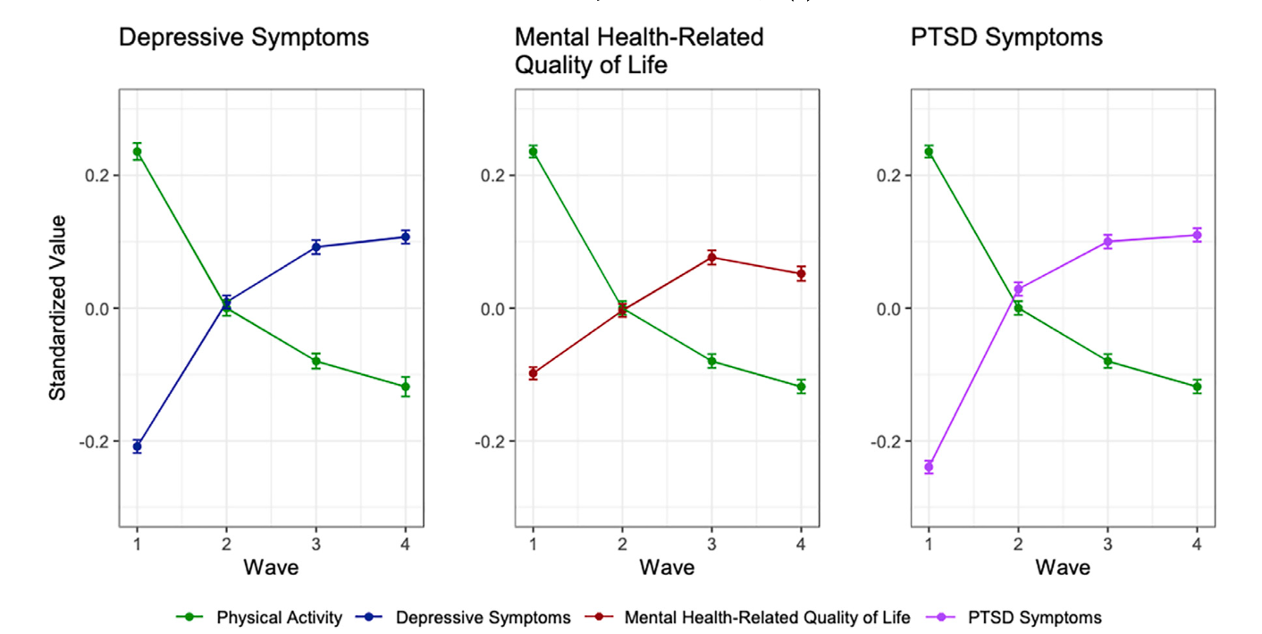
Physical activity declined steadily post-service and participants reported exercising less frequently at consecutive timepoints every 2-3 years. Psychological health also declined during the transition, with veterans reporting lower quality of life and intensified depressive and PTSD symptoms.
Notably, moderate-to-vigorous physical activity during service was not protective during the transition, indicating that continuity, not prior activity, matters. Compared to veterans who did not exercise often while enlisted, those who engaged in demanding exercise during their service faced the steepest decline in both physical and mental health outcomes during the transition.
Exercising regularly after service was more likely to improve psychological outcomes. By tracking specific symptoms like “disturbing memories” or “[feeling] downhearted and blue,” the researchers found that sustained physical activity after separation protected mental health.
Though the findings validate the powerful role of exercise, the authors emphasize how access remains out of reach for veterans without stable housing or employment post-service. With the Department of Veterans Affairs facing historic staff and budget cuts, exercise can offer a low-cost intervention during critical years of reentry. Programs such as MOVE! and Vetsports help promote connection and movement among service members. Allowing veterans to embrace the “movement is medicine” approach and stay active can support their health for a lifetime to come.