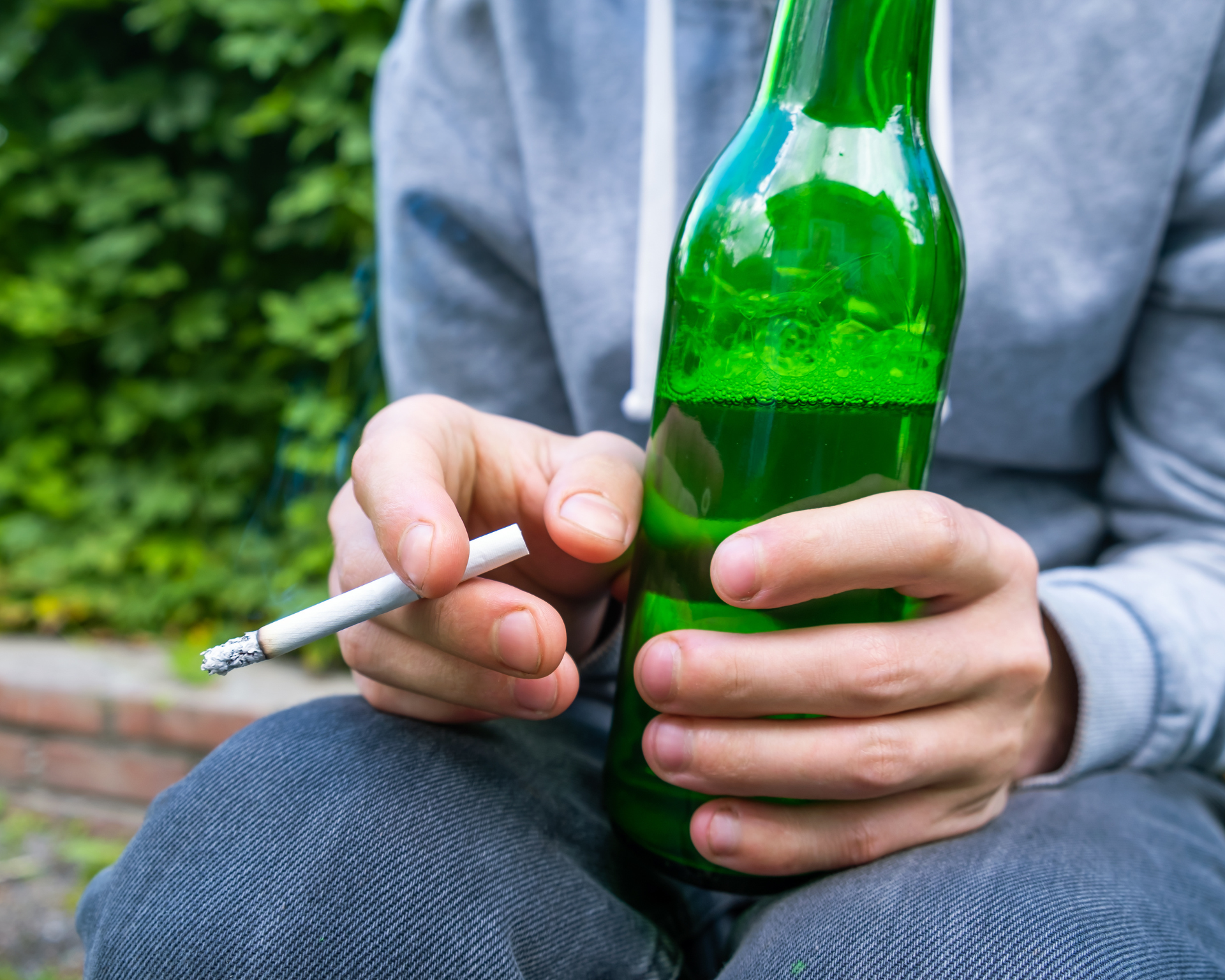
High on Relief, Heavy on Risk
Adolescents with mood disorders were more likely to use cannabis and become dependent on it than their peers without mood disorders.
Read Time: 4 minutes
Published:
Being a teenager today comes with a unique set of challenges. While youths have seemingly unlimited access to knowledge and connections, constant social media comparisons, disrupted sleep, and easy access to instant gratification can turn their minds into a battlefield. In recent years, rates of adolescent mood disorders, including major depressive disorder (MDD) and bipolar disorder, have risen sharply, raising concern about how young people manage emotional distress.
MDD and bipolar disorder are among the most disabling mental conditions affecting adolescents, impacting an estimated 20% and 3% of teens, respectively. Many teens find refuge in cannabis use. Cannabis is the most commonly used drug among teens. By 2020, nearly half of 12th graders had tried cannabis at least once, and by 2022, about one in three reported using it within the past year. Cannabis use is widespread among adolescents with mood disorders. Though often seen as a harmless coping mechanism, it may be adding more fuel to the fire.
Mood disorders frequently co-occur with cannabis use. The relationship between mood disorders and cannabis use is likely a two-way street. Mood disorders might predispose teens to frequent cannabis use, and frequent cannabis use might also influence the onset and severity of mood disorders. Adolescents with mood disorders may be especially vulnerable to the harmful effects of cannabis. Evidence suggests cannabis use can worsen depressive and manic episodes, increase suicidal ideation, and elevate the risk of additional psychiatric co-morbidities.
Adolescents with mood disorders were more likely to use cannabis and had a greater likelihood of meeting criteria for CUD than their peers without mood disorders.
Although self-medicating with cannabis may temporarily blunt negative emotions, prolonged use and withdrawal can unintentionally result in the development of cannabis use disorder (CUD). CUD ranges from mild to severe marijuana addiction or dependency that leads to disruption of everyday life or severe distress.
Adolescence is a critical period for brain development, so cannabis exposure may also impair memory, attention, and learning in the long term. Despite these risks, few studies have specifically examined cannabis use patterns among adolescents with mood disorders, which can alter brain development.
To address this gap, Alysha Sultan and colleagues examined the overlap between non-addicted cannabis use, CUD, and mood disorders in adolescents using data from the Adolescent Supplement of the National Comorbidity Survey, which was conducted between 2000 and 2004. This dataset was selected for its national scope and the rare diagnostic detail it provides on adolescent mood disorders. Rates of non-addicted cannabis use and CUD were compared among teens between the ages of 13 and 18 with MDD, bipolar disorder, and no mood disorder.
Adolescents with mood disorders were more likely to use cannabis and had a greater likelihood of meeting criteria for CUD than their peers without mood disorders. Prevalence of cannabis use was highest in adolescents with MDD (32.9%), followed by those with bipolar disorder (25.6%), both of which were significantly higher than among teens without a mood disorder (16.9%). A similar trend was observed for CUD. The co-occurrence of cannabis use and mood disorders made teens more likely to require hospitalization due to cannabis-induced panic attacks, passing out, cardiac issues, and nausea or vomiting.
As cannabis availability increases, protecting adolescent mental health requires more than improved clinical care—it demands coordinated, upstream prevention that addresses risk before harm occurs.
Both mood disorders and CUD change how the brain processes reward and pleasure and affect many of the same parts and chemical interactions of the brain. Because of this overlap, traits like impulsivity, difficulty regulating emotions, or trouble shifting their thinking are exacerbated. Together, these shared brain and behavioral pathways may be why mood disorders and cannabis use disorder so often occur at the same time. Despite this, mood disorders and CUD are typically treated as separate issues.
There are several opportunities for clinical improvement, such as tailoring prevention efforts for adolescents with mood disorders, implementing routine screening for cannabis use before it progresses to disordered use, and treating mood symptoms and CUD simultaneously rather than individually.
It is important to note that the data from the study predates today’s cannabis markets, and today’s cannabis products have a higher potency and are widely accessible. As cannabis availability increases, protecting adolescent mental health requires more than improved clinical care—it demands coordinated, upstream prevention that addresses risk before harm occurs. Because of the increased potency and availability, teens today may face even greater risks of developing disordered cannabis use and worsening mental health. Adolescent cannabis use is frequently driven by attempts to cope with distress, not by disregard for consequences. Responding with integrated, developmentally informed care is essential in addressing the consequences.