Redefining Disability with Inclusive Sports
Organized sports are one way for adults with disabilities to maintain regular exercise while also building social connections.
Read Time: 4 minutes
Published:
An impromptu ball game, a local sports club, or an intramural league can be transformative for adults with disabilities. Organized sports teams unite players around a shared goal, providing opportunities for camaraderie alongside competition. Nearly one-fifth of the world’s population lives with some form of disability, yet sports participation remains uneven. While people stay active in many ways, adults with disabilities are more likely to be sedentary and experience loneliness than non-disabled adults.
National guidelines recommend at least 150 minutes of exercise per week for disabled adults, particularly to improve heart health, reduce stress, and lower the risk of premature death. However, these numbers can be difficult to reach when living with a chronic disability. Organized sports are one way for people with disabilities to maintain regular exercise while also building social connections.
While recreational play is often unstructured and done for enjoyment, organized sports are more competitive activities with formal rules that require exertion and skill. The structure of organized sports offers a unique blend of routine with community that is often missing from free, recreational play. To better understand the impact of long-term sports participation, Leanne Hassett and colleagues conducted a scoping review of 164 studies, analyzing 11,642 adults with physical or intellectual disabilities across 30 countries.
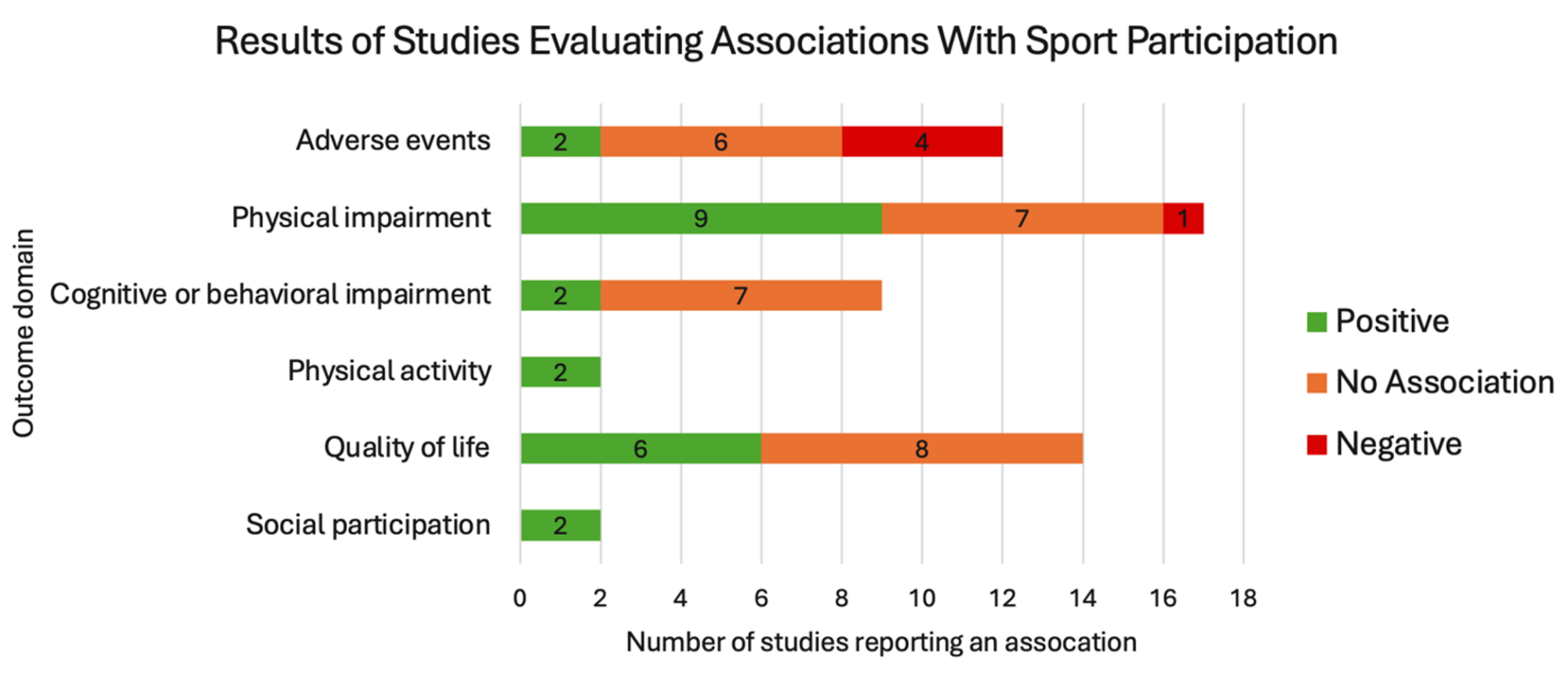
Using six international databases and a clinical trial registry, the researchers extracted health data to compare athletes with disabilities to non-athletes. They explored how sports participation levels influenced 334 outcomes across broad health domains. Metrics such as aerobic fitness and muscle strength measured physical health, while scores for depression and anxiety were used to assess mental health. Each association was then classified as positive, insignificant, or negative to visualize the impacts of sports participation, as shown in the graph below.
Most of the studies involved adults with a physical disability, the most common being spinal cord injury. Men also made up the majority (81%) of athlete participants across all studies, revealing a striking gender imbalance. Women play organized sports far less often than men, largely due to structural barriers and gender stereotypes that limit participation.
Across the 334 health outcomes, more than half (55%) were positive. The clearest benefits appeared in physical health, including greater strength and improved aerobic fitness. Many studies reported mixed results for effects on cognition and behavior, which the authors suggest was likely due to inconsistent outcome definitions or measurement tools across studies. Still, several studies reported improvements in overall quality of life, financial well-being, and community involvement due to sports participation.
Looking more closely at different types of athletes revealed additional patterns. Athletes competing at higher levels often showed better physical function and stronger community connections than recreational athletes, though they also faced significantly more injuries. In general, sports participation was linked to better psychological well-being, but injury risk varied depending on the sport and the type of disability at play. Importantly, no single sport stood out as more beneficial than the others, emphasizing the value of regular participation over the type of sport.
Overall, positive outcomes far outweighed negative ones, and adverse effects such as injury were uncommon. The researchers encourage people with disabilities who are interested in sport to take part in programs that match their interests and abilities. They also highlight important gaps in research, including children, women, and people with intellectual disabilities, which are largely understudied.
They further emphasize that health professionals, like physiotherapists or psychiatrists, serve an important role for patients by identifying safe pathways to sports. Similarly, sports organizations can ensure their programs are accessible and inclusive to people with diverse disabilities. Strengthening these efforts can expand opportunities for healthy movement and offer people with disabilities an avenue for connection and confidence.