Medical Professionals: Not Your Average Influencers
In a recent study, only 20% of the information shared by medical influencers online was supported by strong scientific evidence.
Read Time: 2 minutes
Published:
- Most videos on YouTube made by medical professionals contain content supported by low-quality evidence.
- Current guidelines around digital media for health care professionals focus on patient privacy and professionalism but miss standards for evidence-based claims.
As we scroll through our feeds on TikTok, Instagram, and YouTube, the abundance of information is certain, but the quality of information is questionable. The quality of health information shared on social media platforms is no different. But here, the effects of unverified information presented as facts can cost lives. During the COVID-19 pandemic, an estimated 45,000 people died in 2021 alone, and many more were hospitalized as a result of false information about vaccine protection and risks spreading online.
Medical influencers use their platform to educate their followers about medicine and other public health matters. Many of these individuals hold professional degrees. Others do not. Regardless, they are often perceived by viewers to have expertise by virtue of their credentials, a phenomenon known as the “professional halo effect.” For instance, skincare recommendations coming from a board-certified dermatologist feel more trustworthy than those from other lifestyle or beauty influencers.
To evaluate the quality of evidence supporting claims made by licensed medical professionals on YouTube, EunKyo Kang and colleagues analyzed 309 videos on cancer and diabetes. The researchers searched for videos over a minute long with a minimum of 10,000 views from June 20 to 21, 2025. The evidence supporting medical influencer claims was grouped into 4 levels: A through D. Evidence with a rating of A was the highest quality, while evidence with a rating of D was the lowest.
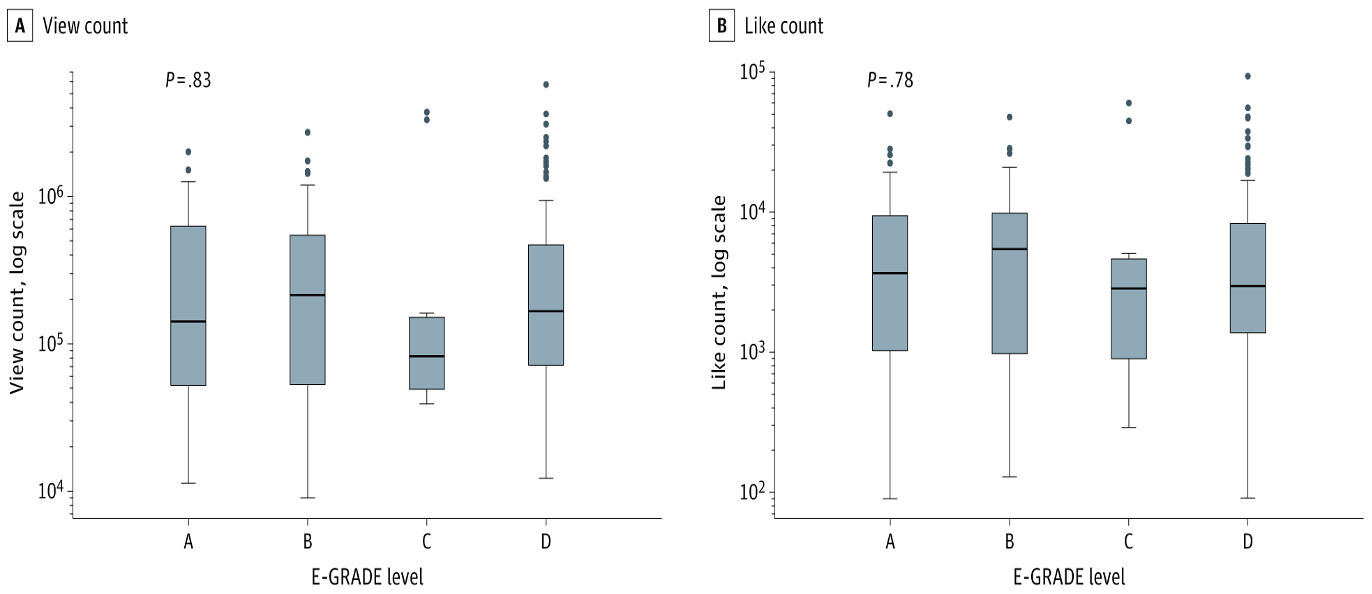
Across the videos, more than 60% received a grade of D, meaning the creator supported their remarks with personal experiences, anecdotes, or claims without clear evidence. Evidence of the highest quality—grade A, meaning content was backed by strong scientific research or official guidelines from major health organizations—accounted for less than 20% of videos. The researchers also compared the ratio of likes per 1,000 views by evidence rating. Videos providing lower-grade evidence received similar likes per view as higher-grade evidence.
The authors recommend evidence-quality guidelines specifically for medical content shared online, with the highest standards applied to medically trained creators. Implementing these standards can help protect the millions whose feeds these videos populate.