Washing Away Climate Promises
Greenwashing allows companies to improve their image without taking any meaningful action to improve their practices.
Read Time: 2 minutes
Published:
- The food production industry is responsible for over half of human-generated greenhouse gas emissions.
- Many of the leading food production companies make promises to be environmentally friendly, but they do little to support their promises.
- This practice is known as greenwashing—when entities claim to be more environmentally friendly than their actions reflect.
The companies that provide our food produce one-third of all toxic, heat-trapping gases that pollute the atmosphere. Animal agriculture is particularly harmful, responsible for over half of global food production greenhouse gas emissions.
A steady rise in greenhouse gas emissions over the past few years has led to an increase in asthma attacks, COPD, and other respiratory conditions. Many companies in the food industry say they are curbing their emissions. But the majority of their claims may be considered “greenwashing,” a term for when companies make misleading claims about how environmentally friendly their practices are.
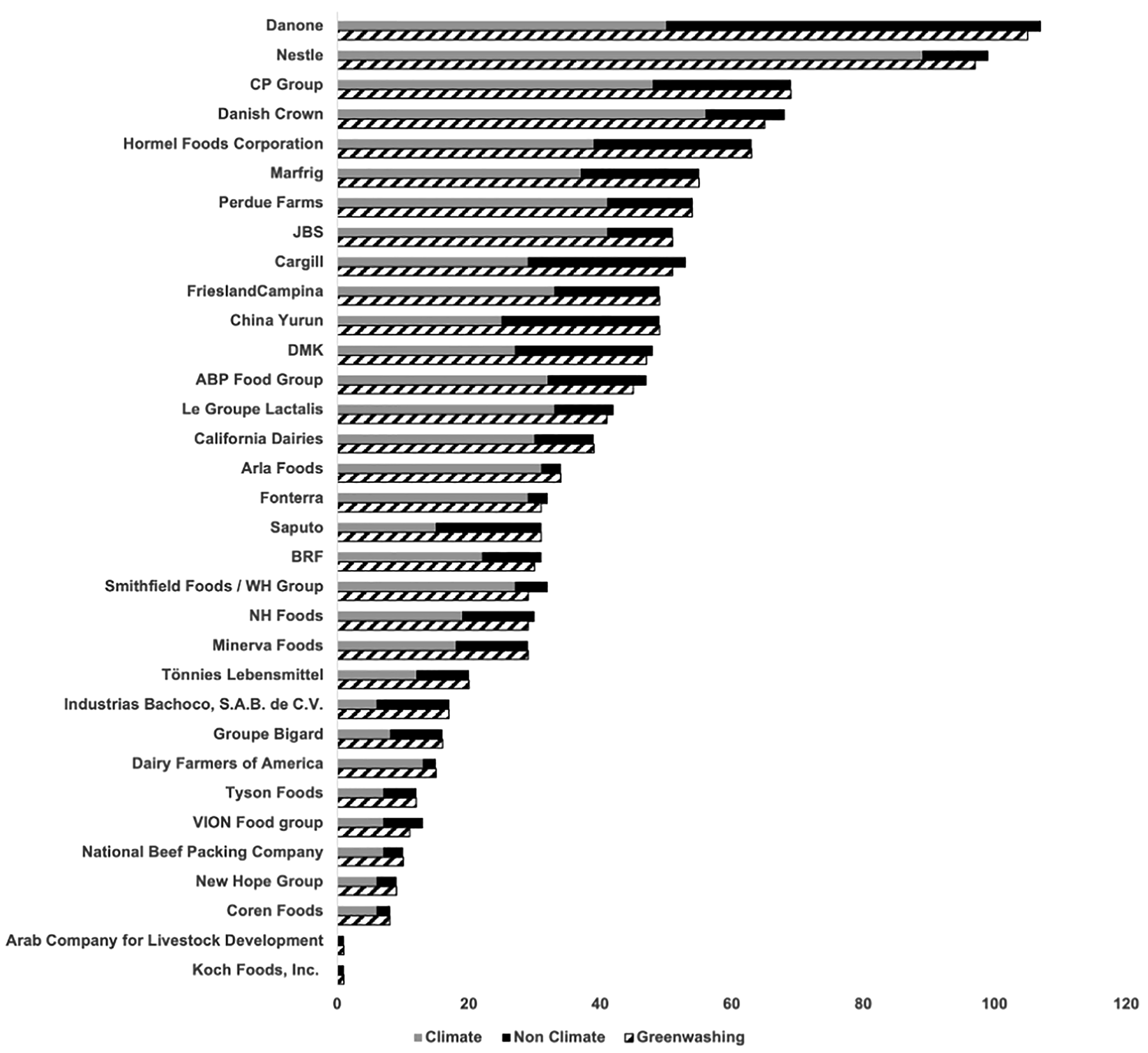
Maya Bach and colleagues investigated environmental and climate action claims in sustainability reports from 33 of the world’s largest meat and dairy producers. Examples of claims included plans to “restore water to water-stressed regions” and produce “climate-neutral dairy by 2050.” They counted the number of environmentally friendly claims made by each company and evaluated whether each claim could be verified using the sources cited in the reports.
Out of over 1,200 claims related to environmentally friendly action, over one-third were unverifiable or offered vague aspirations without clear plans for achieving the stated goals. Only three of the claims were supported by scholarly, scientific evidence, such as one company’s plan to reduce its carbon footprint by improving cow care.
Greenwashing can take many forms. Companies can intentionally use vague language to make their actions seem more eco-friendly than they are, or they can only focus on one environmentally friendly aspect of their business while downplaying other aspects that may cause ecological harm. A company can pledge to become “carbon-neutral by 2030” without offering proof of how they would, or can promise more “sustainable beef production” without any clarification on what the company means by sustainability.
Greenwashing offers a way for animal agriculture companies to help their image without taking any meaningful actions to improve their practices. The researchers urge these companies to be held socially and financially responsible for the promises they make, whether through legislation, lawsuits, or shareholder complaints.