Pauses for Pedestrians
As more cities adopt leading pedestrian intervals at crosswalks, growing evidence shows that pausing traffic for a few seconds saves lives.
Read Time: 2 minutes
Published:
- Leading pedestrian intervals (LPIs) provide a few seconds for pedestrians to start crossing an intersection before the light turns green for turning cars.
- LPIs have been proven to reduce the risk of pedestrian injuries and fatalities in multiple cities across the United States.
Each year, thousands of pedestrians are killed by drivers in the United States. At intersections where walk signals switch on at the same time as green lights, turning cars may not see crossing pedestrians until it is too late. A simple intervention can provide pedestrians with a life-saving head start.
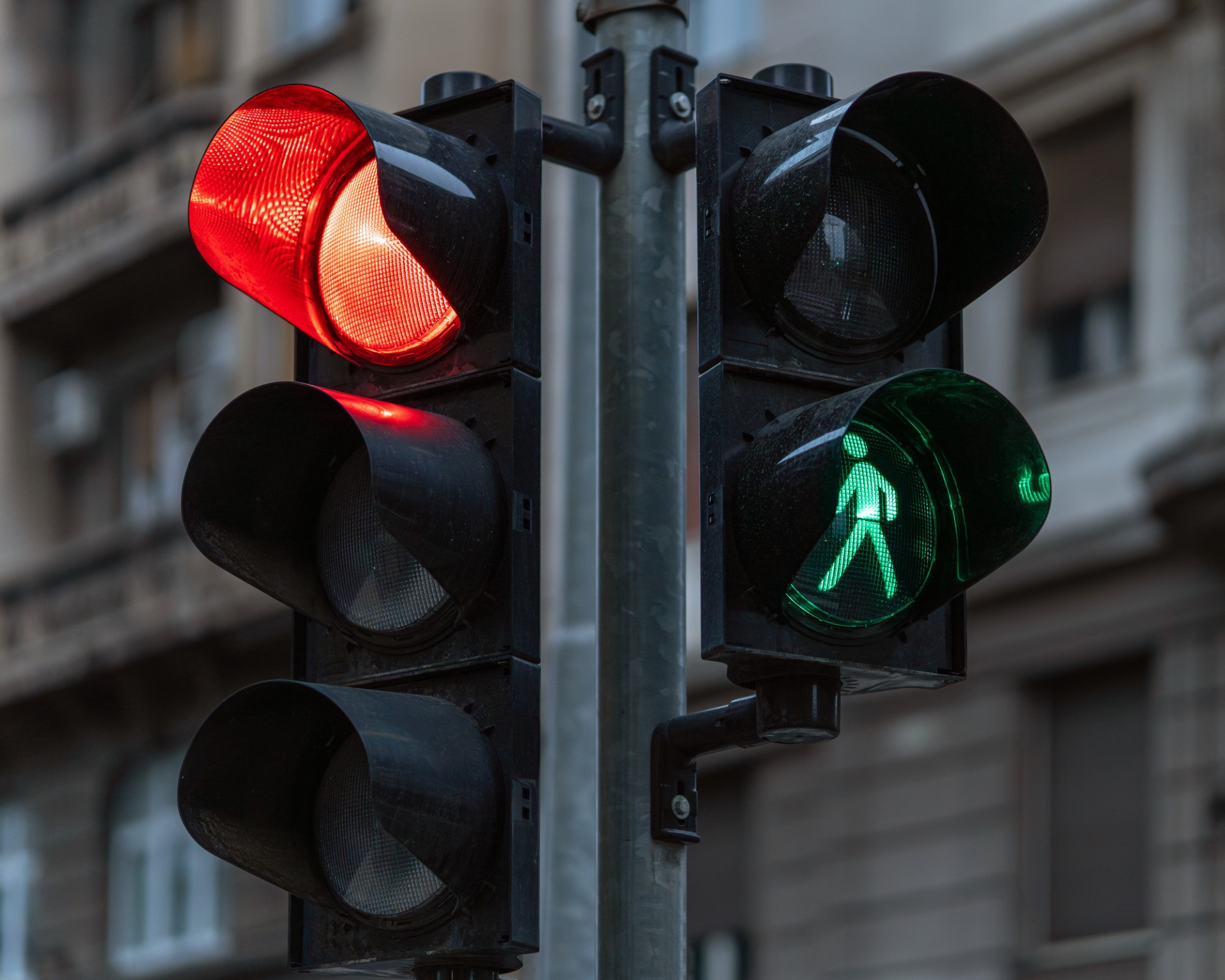
Leading pedestrian intervals (LPIs) set walk signals to invite pedestrians to cross the street a few seconds before the light turns green on the road parallel to the crosswalk. This simple change allows foot travelers to start crossing before any cars are allowed to turn. Even a three-second delay provided by LPIs helps pedestrians become more visible to drivers.
Siddesh Zadey and colleagues examined the effectiveness of LPIs in New York City. They gathered data on over 6,000 of the city’s intersections, nearly half of which had LPIs implemented. They found that LPIs reduced the risk of pedestrian injuries by one-third. The pause for pedestrians helped prevent fatalities during the day and non-fatal injuries in both the day and night.
Another study examining the impact of LPIs in Bellevue, Washington revealed similar benefits. Ashutosh Arun and colleagues studied ten intersections with LPIs in the city and found that a five-second delay between the pedestrian signal and the green light reduced extreme accidents by 42%.
Additional research has proven that the implementation of LPIs does not cause a delay in traffic. Compared to other pedestrian safety interventions that need to be built, such as barriers and medians, LPIs are relatively inexpensive and easy to implement. However, even though the Federal Highway Administration recommends this intervention, it may be difficult to establish LPIs across the country. Depending on what roads intersect, crosswalks can fall under the control of either the state, county, or city governments, where transportation board review or local budgets may limit implementation.
Although implementation across the country is uneven, cities such as Atlanta, Nashville, and Seattle have recently rolled out LPIs at city intersections. These cities are pursuing the goal of “Vision Zero,” which aims to eliminate traffic fatalities and injuries and increase pedestrian safety. As more intersections across the United States adopt this simple public health measure, there is growing evidence that pausing traffic for a few seconds can save lives.