Fighting Fire with Fire
Intentionally burning 500,000 acres of conifer forests each year would reduce air pollution from wildfires by 10% after a decade.
Read Time: 3 minutes
Published:
- Intentionally burning sections of forests can reduce the damage done by future wildfires.
- Prescribed burns can reduce the amount of air pollution created by wildfires.
“Only you can prevent forest fires.”
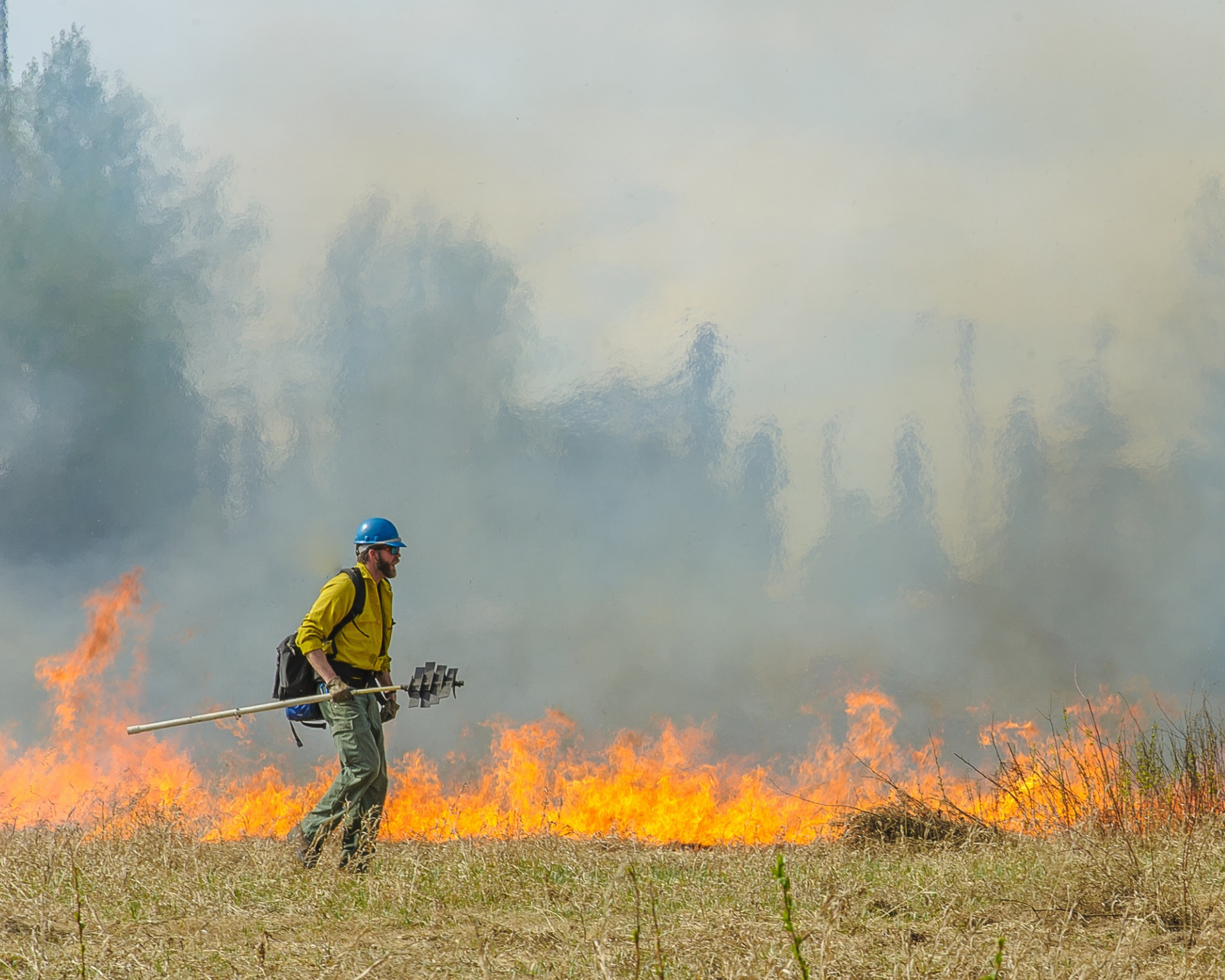
Over 80 years ago, Smokey Bear, a mascot for the United States Forest Service, set out to convince Americans that all forest fires were dangerous and destructive. Smokey’s campaign is still going strong, but he has narrowed his message to focus on preventing wildfires. The switch clarified that “prescribed” forest fires—intentionally planned and controlled fires conducted by firefighters—are a critical tool for preventing wider damage from wildfires that burn through hundreds of communities each year.
The purpose of prescribed burns is to clear out brush and debris. If a wildfire does ignite, these burns ensure it won’t have kindling to feed the flames, ultimately saving lives and limiting property damage. Prescribed burns can also decrease air pollution, reducing the size of later wildfires.
Iván Higuera-Mendieta and Marshall Burke examined the effects of prescribed burns on the contents of wildfire smoke. They estimated wildfire severity and resulting air pollution in California using satellite data. As there wasn’t enough data to examine prescribed burns alone, the team used low-severity fires as a stand-in for the impacts of controlled burns. The study focused on different environments, including conifer forests, which are areas full of evergreen trees with needles instead of leaves. Environments were divided into small areas, and the researchers compared data gathered over decades to track changes in the landscape and pollutants in the air.
Based on their estimates, the authors predict that intentionally burning 500,000 acres of conifer forests a year would reduce air pollution from wildfires by 10% after a decade. The advantages of prescribed burns varied by environment and size. Deliberately burning environments other than forests may not be as helpful, and as prescribed burns increase in size, the cost to the surrounding area could begin to outweigh the benefits.
Wildfire smoke and the resulting pollution can worsen respiratory conditions such as asthma and COPD. Pollution caused by wildfire smoke contains known carcinogens and has the potential to carry microorganisms across great distances, raising alarm about its capability to spread antimicrobial resistance.
In 2025, wildfires devastated Los Angeles, burning through 50,000 acres and directly resulting in the deaths of 31 people, with hundreds more dying from the effects of smoke inhalation. More recently, wildfires in Ontario caused smoke to cover much of the Midwest and East Coast, prompting air quality warnings and darkening skies. The authors recommend sustained treatment with prescribed fires of a set number of forest acres each year to reduce wildfires and the accompanying pollution in the future.