Churning Out of Diabetes Management
Insurance churn leaves diabetic patients uninsured and unmedicated, leading to worse health outcomes and disease management.
Read Time: 2 minutes
Published:
- Insurance churn occurs when patients are forced to switch insurance policies or lose their coverage altogether.
- Churning produces poor health outcomes in people with diabetes.
Fallout from Trump’s One Big Beautiful Bill Act is projected to increase the number of people without health insurance by 16 million over the next eight years. Many people who at first temporarily lose coverage are forced to find new insurance or go without coverage altogether—a process known as churning. When low-income people with diabetes churn, their ability to access insulin and other critical care is put at risk.
Nathalie Huguet and colleagues analyzed the health records of over 300,000 patients at community health centers in 20 states from 2014 to 2019, including over 44,000 patients with diabetes. Their study included patients who visited a health center three or more times within a period of three years. If two or more of those visits were uninsured, that patient was categorized as experiencing churn.
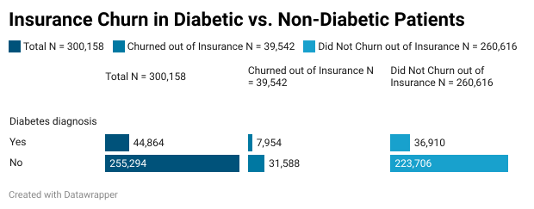
Although most patients at the community health centers retained their insurance coverage, a higher proportion of diabetic patients lost coverage compared to non-diabetic patients, as shown on the graph below. These odds increased for patients who were especially sick or who had complex care routines. Forty-six percent of patients who lost Medicaid coverage and 61% of patients who lost private insurance remained uninsured throughout the remainder of their health center visits.
Patients who experienced insurance churn had worse outcomes in their diabetes management. Those without insurance used more insulin (suggesting their diabetes was out of control) and experienced more severe diabetes complications, such as ketoacidosis (a chemical imbalance resulting from a lack of insulin), than patients who were insured during each of their health center visits. They also had higher levels of blood sugar.
The authors predict that outcomes for people with diabetes will only get worse as recent changes in legislation have decreased access to health insurance nationwide. Ensuring that patients with diabetes are covered during their appointments could prevent even costlier and more dangerous treatments down the line.