A Tricky Battle: The Tobacco Industry vs. Public Health
A statewide ban on flavored tobacco products in California has resulted in a decline in sales of e-cigarettes and cigarettes across the state.

Read Time: 2 minutes
Published:
- Policies that ban flavored tobacco products may help reduce the sale and use of commercial cigarettes.
- Tobacco products with alternative flavorings can slip through policy loopholes, making comprehensive policies critical.
The tobacco industry has long flavored its products to lure in new consumers. One of their most infamous feats was the creation and widespread advertising of menthol cigarettes in the early to mid-1900s. Menthol masks the harshness of tobacco smoke but also enhances the addictiveness of nicotine, which may increase the risk of regular smoking and nicotine dependence. Today, companies apply this practiced tactic to other products, as well. Electronic cigarettes are created with fruit and candy-like flavors to entice youth and first-time users. The intense sensory appeal and targeted marketing make flavored tobacco products a major public health risk.
In December 2022, California became the second state (after Massachusetts) to implement a statewide retail ban on flavored tobacco products. Fatma Romeh M. Ali and colleagues compared e-cigarette and cigarette sales in California and 32 U.S. states with no flavor bans to determine whether the policy affected California’s tobacco product sales.
Average per capita sales for all tobacco products decreased much more in California than in the 32 control states after policy implementation. Specifically, e-cigarette nicotine sales dropped by nearly 37% (top graph), and cigarette pack sales dropped by roughly 11% (bottom graph). The flavor ban also had its intended effect on statewide menthol cigarette sales, which decreased by nearly 95%. Notably, tobacco product sales did not increase in Oregon, Nevada, or Arizona after policy implementation, suggesting California residents are not crossing state lines to make cigarette or e-cigarette purchases.
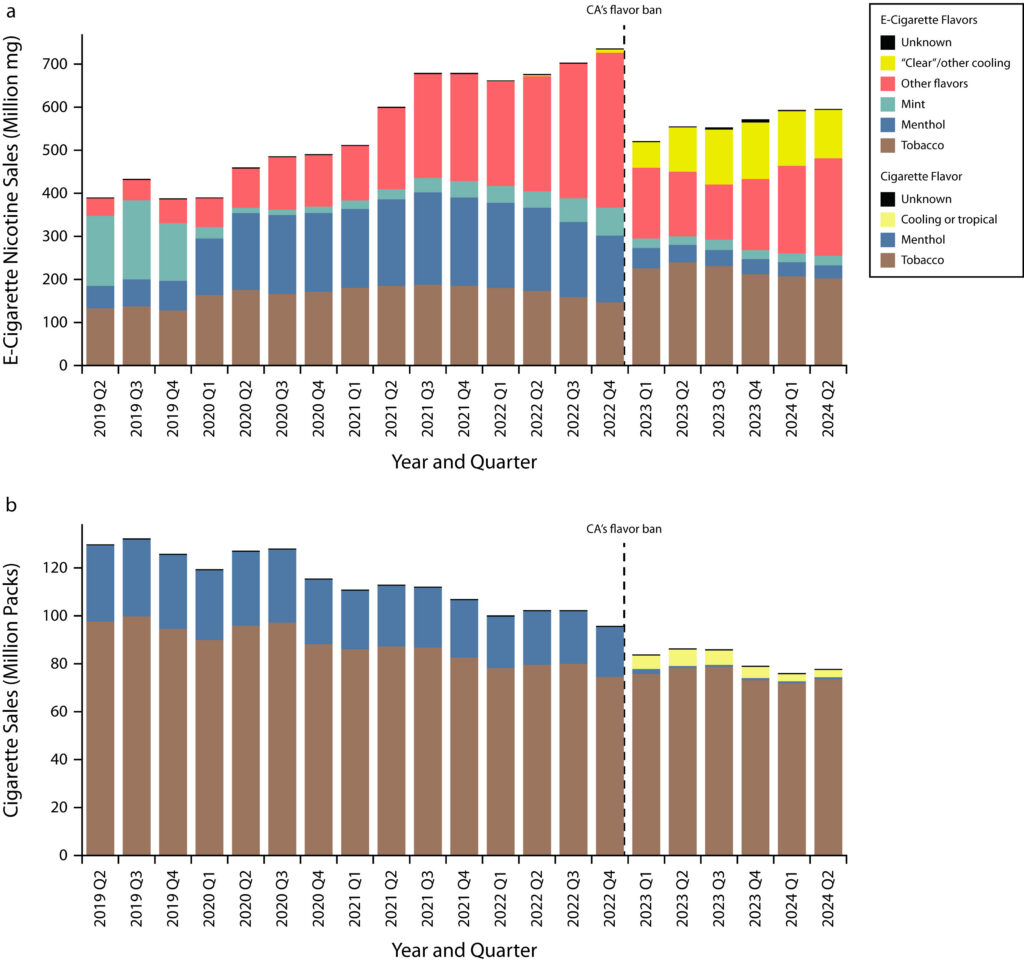
The figure reflects sales declines in “menthol” flavored products but also reveals the tobacco industry’s swift adaptation to the law. Companies ramped up sales of products whose synthetic flavors closely mimic the effects of menthol but do not contain or advertise any prohibited flavors. Products with these alternative flavors escaped the ban and partially offset the otherwise substantial decline in sales of traditional-flavored and menthol tobacco products. California’s law has already been updated to include language that may mitigate such evasive marketing techniques by the tobacco industry.
Overall, California’s policy has largely been successful in reducing statewide sales of flavored cigarettes and e-cigarettes. Comprehensive statewide flavor bans that target both natural and synthetic flavors and keep pace with the tobacco industry’s often covert advertising may be an important step in protecting public health.