Holding On for Deer Life
Research shows a 16% increase in deer-vehicle collisions the week after daylight saving time ends in the fall.
Read Time: 2 minutes
Published:
Deer-vehicle collisions are expensive and dangerous. Around 2.1 million occur annually, racking up over 10 billion dollars in economic losses. These accidents also leave over 350,000 injured and hundreds dead in the process. A recent study led by Calum Cunningham and his team of environmental scientists examined these patterns. Using 96 million hours of hourly traffic observations across 20 states, they found over one million deer-vehicle collisions.
The researchers found that nighttime traffic and deer-vehicle collisions happened 14 times more often in the two hours after the sun went down compared to the previous two hours. This outcome highlighted darker hours as a direct cause of these higher incidents. The team also found a 16% increase in collisions the week after daylight saving time ends in the fall, when clocks are turned back one hour.
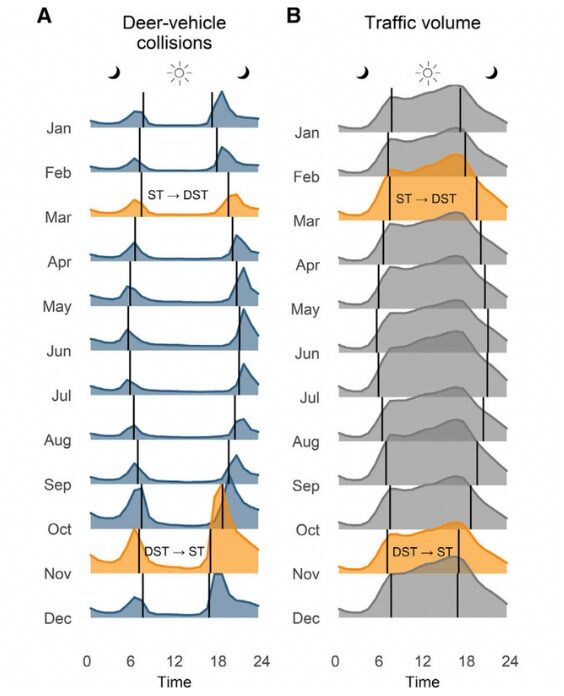
Seasonal shifts in human activity are the cause of this spike, with more drivers frequenting the road in earlier darkness and changing traffic patterns, as shown on the graph above. The weeks surrounding the end of daylight saving time also happen to coincide with a peak breeding period for several deer species, further contributing to the likelihood of collision.
Cunningham and team contend that permanent, year-round daylight saving time would reduce collisions and save over one billion dollars each year. They predict that a reduction in traffic after sunset could spare the lives of nearly 40,000 deer, 33 humans, and avert over 2,000 injuries every year.
While the future of daylight saving time may be blurry, it is clear that traveling in daylight will help drivers effectively steer clear of deer.