2025 Year in Review
Executive Editor Monica Wang reflects on the state of public health over the last year, how PHP met the moment, and where we hope to go next.

Read Time: 6 minutes
Published:
Dear PHP Readers,
This has been a year of profound disruption and heartbreak for public health. What began as political shifts quickly became a cascade of destabilizing events: cuts to federal data systems, uncertainty and loss in scientific funding, rising inequities, and a public conversation increasingly shaped by ideology rather than evidence. It has been, in many ways, an unkind year for health. Discouraging, demotivating, and at times deeply demoralizing for the people who dedicate their lives to this work.
Amidst all the upheaval, it has been a privilege to serve as Executive Editor of Public Health Post. Stepping into this role while Michael Stein served as Boston University School of Public Health dean ad interim offered me an unexpected gift. Weekly immersion in the ideas, analysis, curiosity, and clarity of our student fellows, faculty contributors, and readers. PHP has always been a place where the noise of the moment is met with steady rigor, reflection, and a commitment to making science accessible. I have loved this work, and I am delighted to pass the baton back to Michael next year as I transition into the role of Editor at Large.
[Our fellows’] insight, rigor, and heart have carried PHP through an extraordinarily difficult year for public health.
What We Covered This Year
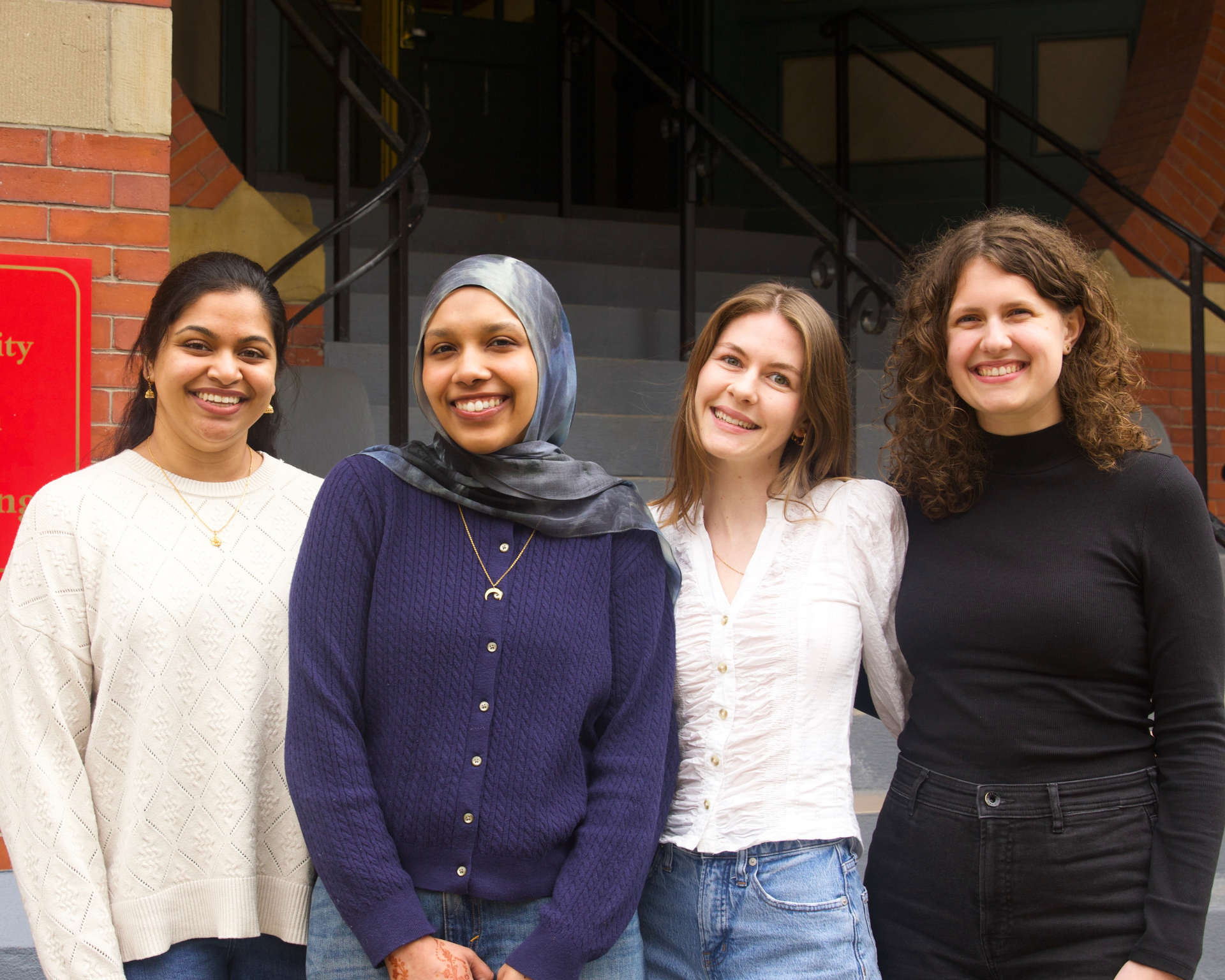
The public health landscape demands breadth and depth in equal measure. Our fellows and guest authors met that challenge. Each PHP fellow produced standout work:
- Bernadette Carter-Salmond illuminated how online subcultures shape political violence in The Manosphere: A Political Force Hidden in Plain Sight and exposed unfair health care pricing structures in Paying More for Less.
- Mallika Chimpiri spotlighted the politicization of science in Why Is Federal Health Data Disappearing? and invited readers to reflect on everyday gambling in Sportsbooks: Gambling the Odds, or Your Health.
- Rowena Lindsay offered a clear-eyed view of global policy consequences in How Foreign Aid Cuts Threaten Global Health Gains.
- Aidan Stotz expanded understanding of equity debates in Most People Support DEI—They Just Don’t Know It and traced the spread of misinformation in When Lies Go Viral, So Does Disease.
- Jack Mellom, our multimedia standout, showed how deeply health themes run through culture in his widely shared video Public Health References in Music.
Our guest authors also delivered some of the year’s most memorable insights, from Ric Bayley’s Food Shopping by Bus: Not a Picnic, which illustrates the real costs of transportation inequity, to this year’s student essay contest winner and runner-up (Isabel Markowski’s The Hidden Power of Difficult Conversations in Public Health and Rasheera Dopson’s The Politics of Care). These pieces remind us that communication itself is a public health intervention, shaping how people understand problems, imagine solutions, and see themselves in the data.
Managing Editor Mallory Bersi and Senior Editor Jen Beard guided every piece and every writer, shaping drafts with remarkable skill, patience, and insight. Their partnership also grounded me as I stepped into the Executive Editor role and is an example of the steady, generous collaboration that defines PHP at its best.
What We Are Carrying Into 2026
Our team shared their hopes for the year ahead: steadier leadership across all levels of government, deeper investment in health equity, strong public health communication, and meaningful pathways into careers after graduation. What gives all of us momentum, as Mallory notes, is our students. Their determination is a daily reminder that public health is forward-facing by definition.
For me personally, this year affirmed something else: that storytelling is not an add-on to public health — it is the connective tissue that links evidence to action, communities to systems, and people to one another. Sharing stories shapes the questions we ask, the voices we amplify, how we make sense of risk and resilience, how we build trust, and ultimately how we act to improve health for all.
Writing my own pieces this year reminded me how vital it is to translate upstream thinking into everyday language, and how powerful our students’ voices are when they do the same. This year also marked the lead-up to my book, The Collective Cure: Upstream Solutions for Better Public Health, a project grounded in stories from people across the country that explore many of the same themes we wrestle with at PHP: the power of communities, structural change, and the narratives that move public health forward.
In 2026, PHP will continue to be bold, evidence-driven, accessible, and imaginative.
Looking ahead, I’m excited to help our current fellows bring their next and final set of pieces into the world in early 2026. Their insight, rigor, and heart have carried PHP through an extraordinarily difficult year for public health. I’m also thrilled to welcome our incoming fellows, Priyanka Athalye, Rylie Lillibridge, Samuel Belmonte, Farah Nimeri, and Kylee Cochran, who will bring fresh perspectives and new energy to PHP’s mission. Watching one cohort finish strong while the next begins is one of the most hopeful rhythms of this work.
In a year when many institutions faltered, PHP remained steady, thanks to our writers, editors, readers, and partners. Thank you for reading us, challenging us, sharing our work, and reminding us that public health writing matters.
In 2026, PHP will continue to be bold, evidence-driven, accessible, and imaginative. We will continue to write for the full nation and world, not just the one we live in, but the one we hope to build. I feel both determined and unsettled about what lies ahead — a mix that feels honest for this moment.
I also remind myself that courage doesn’t arrive when fear leaves; it shows up when we choose to move forward with purpose even when we feel uncertain. It’s the moment we decide to go all in, not because the outcome is guaranteed, but because our values tell us the work matters and is worth doing. And that, more than anything, is the heart of public health.
Here’s to courage, curiosity, and community in the year ahead.
—Monica Wang
Executive Editor, Public Health Post