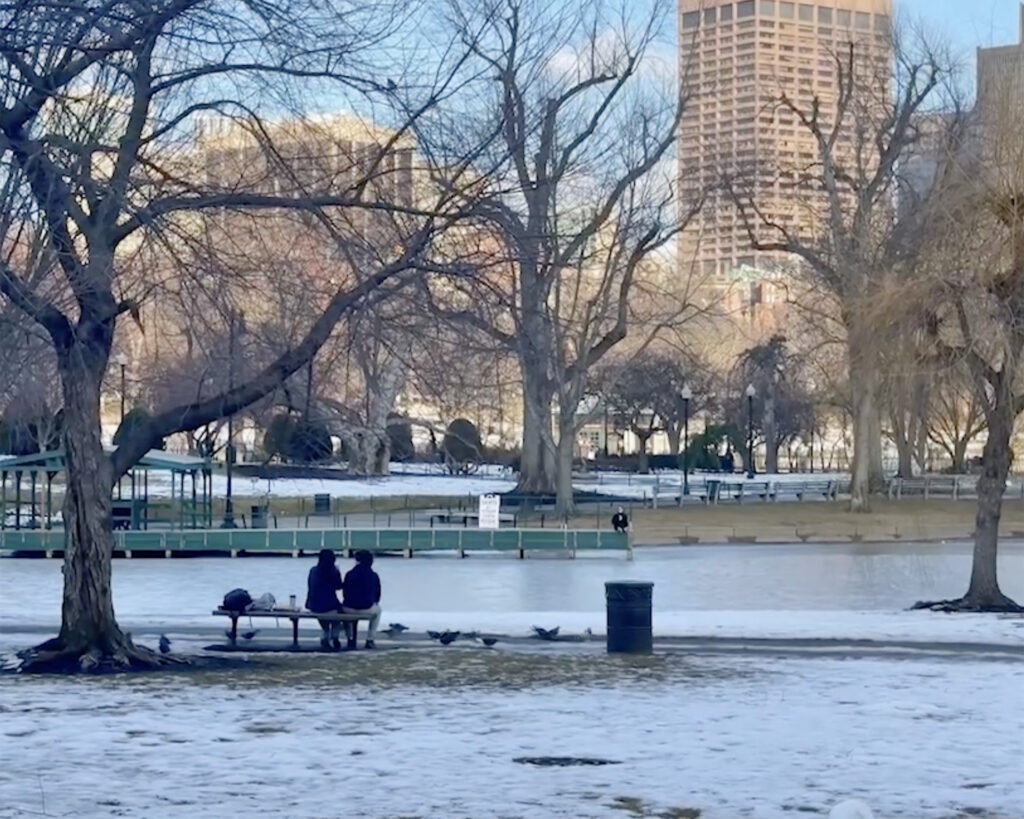
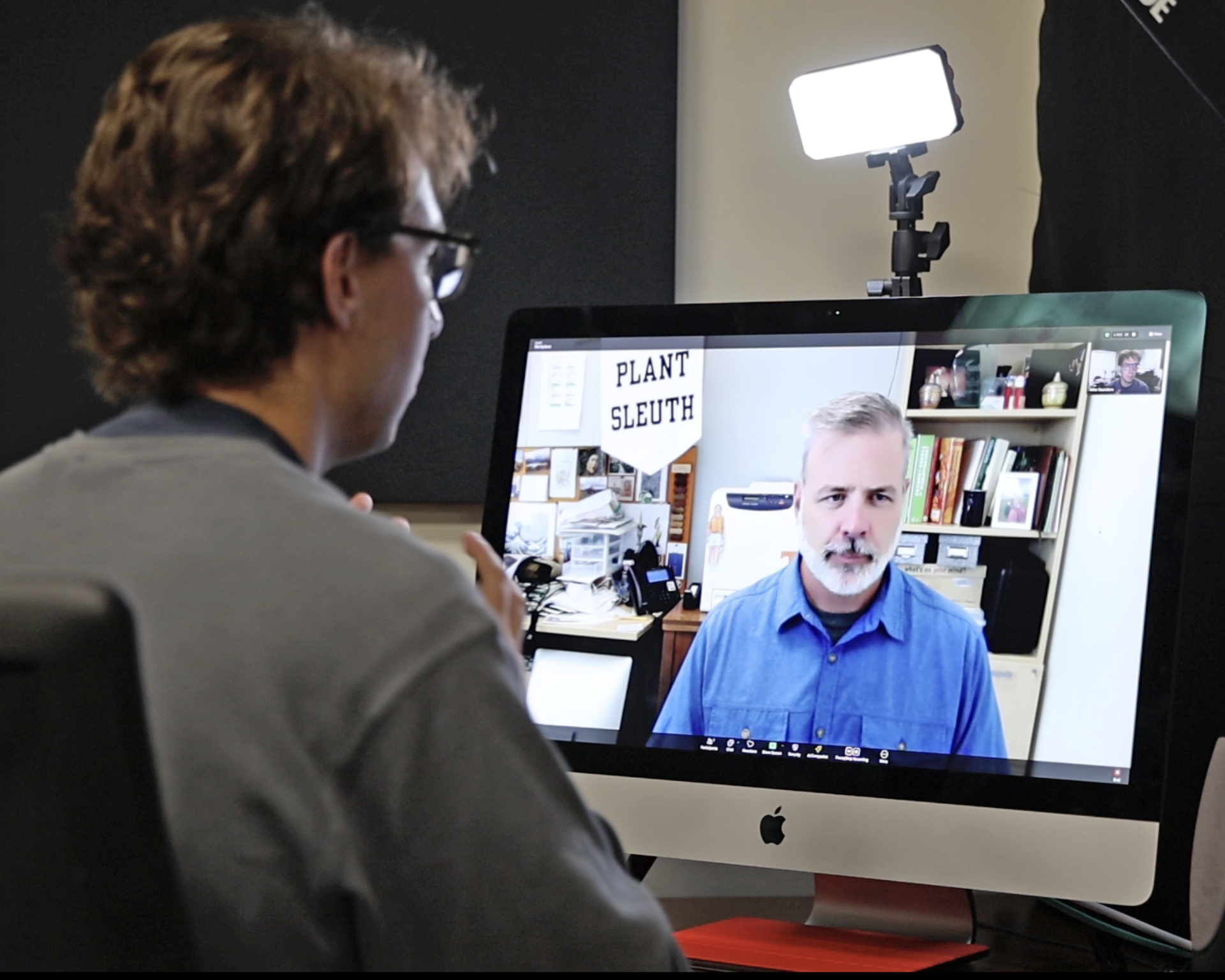
Jack Mellom edits another PHPod episode at a coffee shop.
But Jack, you have cold brew concentrate at home, a brand new space heater, and no good reason not work from your desk. I pretend to ignore my inner thoughts; I pack my things, put on my biggest coat, and head into the city because I’ll have a heck of a time going to that coffee shop.
I meet a lot of people. An iris-scented perfume turns my head, and I sit next to a giggling baby on the train. Snow falls off old houses, and I see some pretty red chairs.
The moral of the story is — as Kurt Vonnegut says — we’re here on earth to fart around.
And, of course, the computers will give us every reason not to. Apps deliver our food, cars drive themselves, and AI answers our questions. But what the computers and computer people don’t realize, or don’t care, is that we’re a bunch of animals wanting to hang out with each other. We all yearn for community, and it’s like we’re not supposed to hang out at all anymore.
Vonnegut’s envelope story and Jack’s coffee shop rendition highlight a key component of humanity: humans interacting with one another. In both stories, the search for community can feel like an inconvenient choice. But, as the saying goes, “the cost of convenience is community,” and the cost of a life lacking community is our health. Social connections and community are vital not only for an enjoyable trip into the city for coffee or envelopes, but also for our mental and physical health. Community is one way to overcome the risks of isolation, which are as dangerous as smoking 15 cigarettes a day.
In this episode of PHPod, Jack talks to Sarah Lipson, associate professor of health law, policy & management at Boston University School of Public Health. They discuss the barriers to finding community, from the residual effects of the COVID-19 pandemic to the realities of life, as well as ways to overcome these barriers, including a really great friend, third places, and how to find courage in trying new things.
Jack Mellom is an MPH candidate at Boston University School of Public Health, studying health communication and promotion. His passions include promoting public health through new mediums in hopes of making its dissemination digestible for all. He has a background in plant sciences, which has given way to his love of public horticulture being used to improve health, as well as his love of plants. His favorite tree is the Live Oak. Outside of his public health work, Jack loves all things music, his favorite artist being Vampire Weekend.