Gentler Parenting, Stronger Minds
Adults who reported being verbally abused as children were 1.5 times more likely to have poor mental well-being than those who did not.

Read Time: 2 minutes
Published:
Words can wound even when no hand is raised. When people trade guidance for mockery or humiliation, the words themselves become the instrument that causes harm. Verbal abuse uses language to tear down a child’s self-worth with insults, taunts, or shaming. A child might remember the message, but their confidence and closeness to others can stay shaken for years.
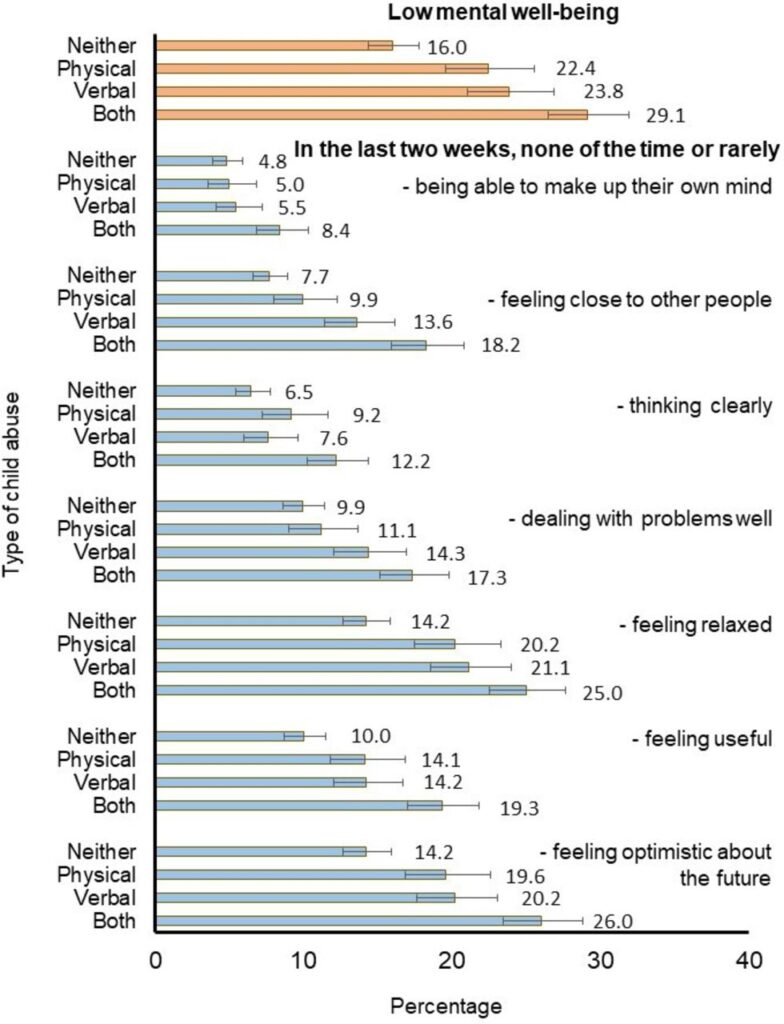
A new study from England and Wales helps measure this damage in clear terms. Mark Bellis and team combined data from seven large cross-sectional surveys conducted between 2012 and 2024, which included data from more than 20,000 adults. Participants reported whether they had experienced physical or verbal abuse as children, using questions from the widely validated Adverse Childhood Experiences (ACEs) questionnaire. Current mental well-being was assessed by measuring optimism, social connection, and the ability to cope with daily problems.
Adults who reported being verbally abused as children were more than one and a half times more likely to have poor mental well-being compared to those who were not verbally abused. That risk doubled for people who endured both physical and verbal abuse. Specifically, verbal abuse was tied to feelings of isolation, with the adults who experienced it being twice as likely to report “rarely feeling close to others,” as shown in the figure below. Taken together, these findings place verbal abuse alongside physical abuse in terms of risk for poorer adult well-being.
Historically, efforts to prevent child abuse have focused on banning corporal punishment and reducing physical violence. But if yelling and shaming replace hitting, harm continues. Prevention should label behaviors like yelling, humiliating, mocking, and threatening as verbal abuse, and then teach parents practical alternative ways to communicate, such as using a calm tone, setting clear limits, and using coaching language.
The recent “gentle parenting” approach sets firm limits with a warm tone and coaching. Positive discipline and collaborative problem solving follow the same steps: Regulate yourself. Name the feeling. State the limit. Practice the skill. Repair the harm. This emotional regulation strategy, backed by research, is often modeled in classroom settings by acknowledging the emotion and offering guidance towards practical solutions.
When adults correct behavior while honoring a child’s dignity, children build resilience after mistakes—and they make plenty of those. Let the words we choose to speak be the first line of care, not the first scar.