Teen Sleep Loss Is a Public Health Problem, Not Just a Phase
The mismatch between adolescents' internal sleep regulation and external expectations reflects a structural problem, not personal failings.
Read Time: 3 minutes
Published:
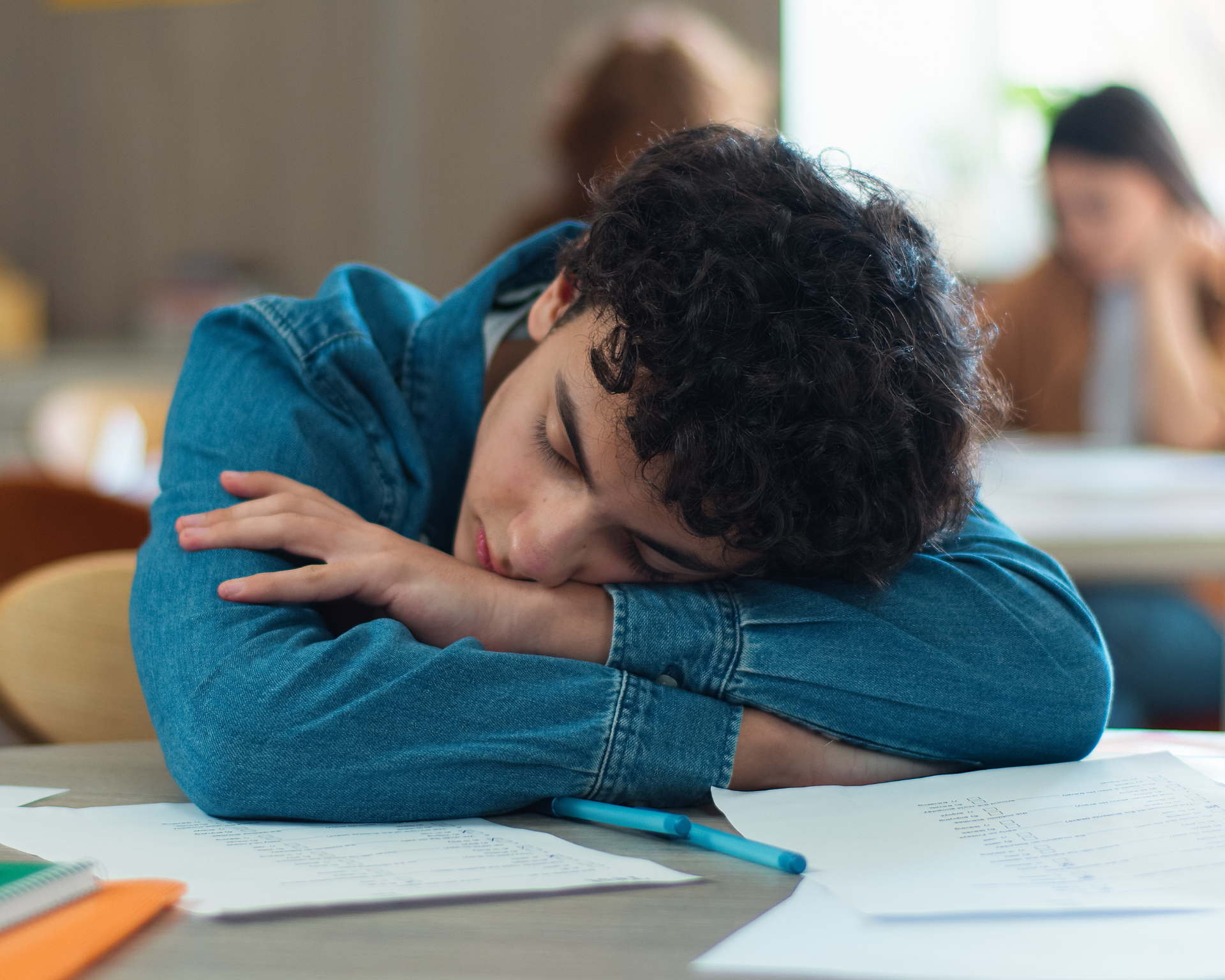
Across the United States, high school students routinely sacrifice sleep. On school nights, homework stretches late into the evening, alarms go off early, and phones keep them connected around the clock. By the time classes begin, many teenagers have already lost hours of sleep that their bodies need. This pattern is so widespread that it can feel normal, but it reflects a structural problem, not a personal failing.
Adolescence is marked by profound biological changes, including a shift in the body’s internal clock. Starting in early adolescence, the body naturally pushes sleep later into the evening by 2-3 hours, making it difficult for teenagers to fall asleep early, even when they try. Meanwhile, high schools in the U.S. start at 8:00 am on average, requiring students to wake up before they have had time to get their recommended 8-10 hours. The result is a chronic mismatch between internal sleep regulation and external expectations.
Inadequate sleep is associated with higher risks of depression, anxiety, substance use, and risky behavior. Cognitively, it impairs attention, memory, and executive function, leading to accidents and poor academic performance. Physiologically, it is linked to metabolic dysfunction, high blood pressure, and weak immune function. Adolescence is also a crucial time for brain maturation, especially the prefrontal cortex, responsible for self-control, planning, and decision-making. This makes adolescents more susceptible to the harmful effects of sleep deprivation than adults.
To understand whether adolescent sleep deprivation has changed over time as academic, social, and digital pressures have grown, Tanner Bommersbach and colleagues analyzed survey data from 120,950 high school students in the U.S. collected over 16 years. Each year, different cohorts of students reported their average sleep time on school nights, with insufficient sleep defined as seven hours or fewer. The study also measured behavioral risks linked to sleep, including electronic media use, depressive symptoms, substance use, sedentary behavior, and exposure to bullying and violence.
From 2007 to 2023, the percentage of teens reporting insufficient sleep increased from 69% to 77%. This trend was driven by a rise in students sleeping 5 hours or fewer, and an accompanying decline in those getting 8 hours or more. Adolescents across grade levels, genders, and racial and ethnic groups all reported insufficient sleep, with non-Hispanic Black students showing the steepest increase in 5 hours or fewer. Notably, insufficient sleep also rose faster among students without behavioral risk factors, such as frequent electronic media use or depressive symptoms.
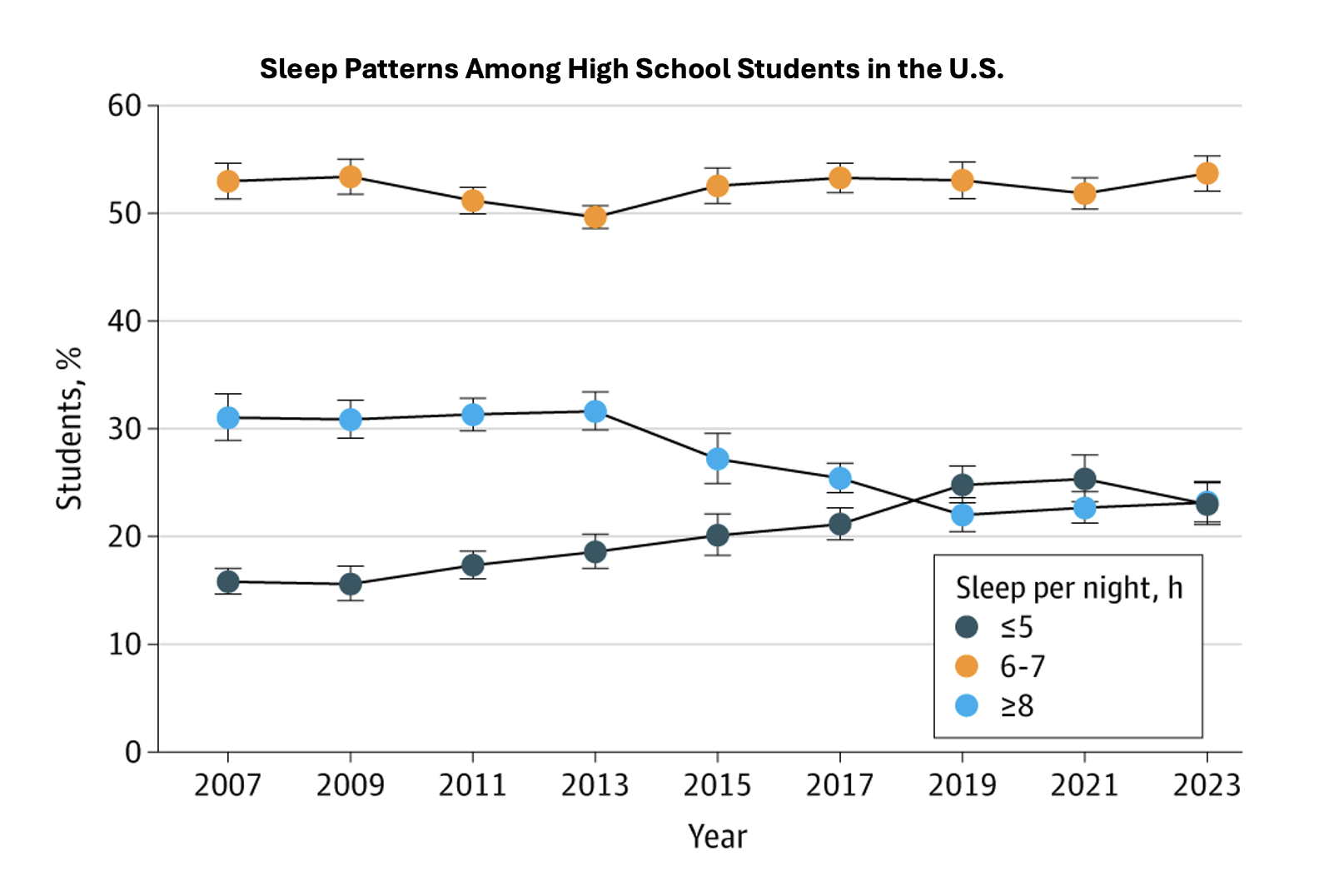
These patterns suggest that factors beyond individual behavior are contributing to adolescent sleep loss. Because increases occurred across groups and among students without behavioral risks, structural and environmental influences (such as early school start times, academic and extracurricular demands, and broader societal pressures) are likely important contributors.
One way to address this at the population level is to delay the time school starts. The authors argue that shifting school start times could address the mismatch between teenagers’ biological sleep patterns and early school start times. And evidence supports that recommendation. When students are given the option to start school later, they use that extra time to get more sleep, which in turn improves mental health, reduces daytime sleepiness, and boosts academic performance.