School Pride
Trans and gender diverse students report having less anxiety when they feel more connected to and supported by their school. (From 2023)

Read Time: 2 minutes
Published:
This piece was originally published in June 2023. It is being republished in honor of Pride Month.
LGBTQ+ youth endure more bullying, harassment, and violence than their peers. Over two-thirds of self-reported trans and gender diverse youth come from homes that do not affirm their gender, and nearly one in five attempted suicide this past year, according to a Trevor Project survey. Given the sharp rise in anti-trans legislation in the United States, spaces where queer youth feel welcome can be life-saving. Now more than ever, school support for these students is crucial.
Katherine Parodi and colleagues explored the mental health of self-reported trans and gender diverse students aged 14 to 18 across the U.S. by asking these teens how they felt about their school environments. They found that queer kids reported less anxiety when they felt more connected to their school and when the school instituted nondiscrimination policies and allyship programs.
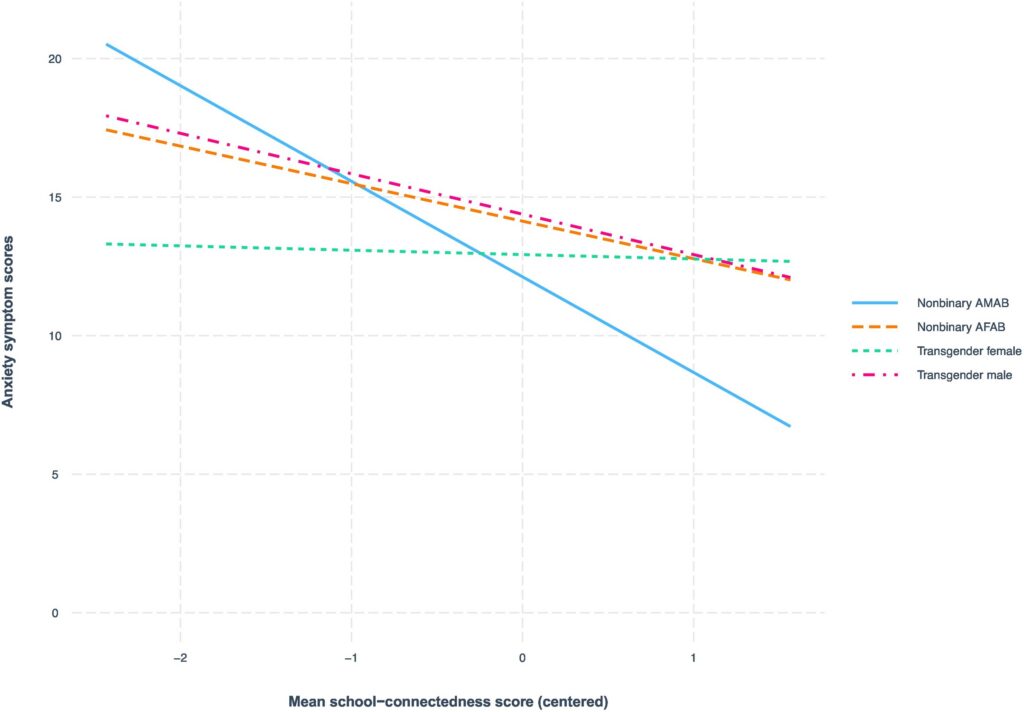
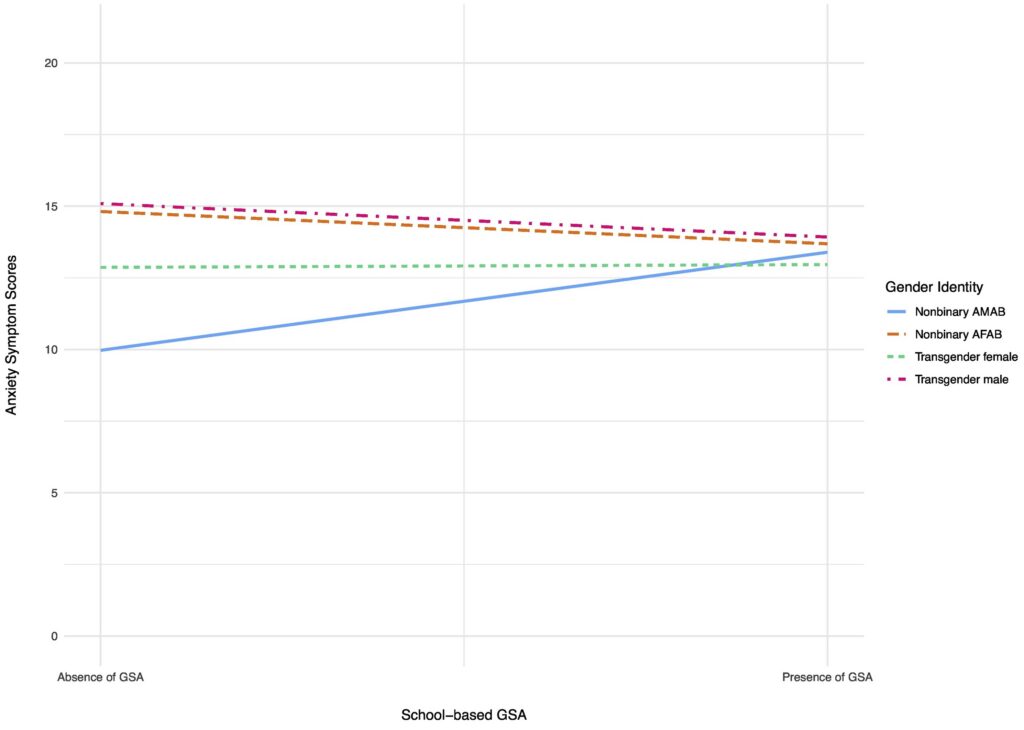
The figure above illustrates lower anxiety with increased school connectedness among students who identify as any of the four trans and gender-diverse identities assessed in the study. Anxiety scores were lowest for nonbinary students who had been assigned male at birth (AMAB, blue line in the graph). Additionally, in the figure below, affinity programs like gay-straight or gender-sexuality alliances lowered anxiety for only some students. Nonbinary students assigned female at birth (AFAB, orange line in the graph) and transgender males reported less anxiety, but nonbinary students assigned male at birth and transgender female students did not. This shows that school affinity groups are not universally helpful for these students.
The researchers suggest a tiered support system to improve LGBTQ+ students’ anxiety: inclusive resources and services for all, with more options available for those with more complicated mental health concerns. This would mean robust training for staff, an expense that would need to be borne by school systems looking to create the best learning environments for this student population.
While the onus falls heaviest on the schools, these measures are essential for providing safe spaces that will support queer students as much as they need and deserve.