How Delays to Therapy Harm Autistic Children
Autistic children who waited over four months for therapy were twice as likely to decline behaviorally compared to peers who waited less time.

Read Time: 3 minutes
Published:
As the name suggests, autism spectrum disorder is characterized by a wide range of symptoms. Core signs include social and communication difficulties, repetitive behaviors called stimming, or significant distress when routines change. Symptoms vary from mild challenges to severe developmental delays, shaping treatment demand, urgency, and quality of life.
Applied behavioral analysis (ABA) is a commonly prescribed intervention for children diagnosed with autism. Grounded in learning theory, ABA uses evidence-based principles to build daily living skills while reducing problematic behaviors in patients. Though widely recommended, critics argue that enforcing neurotypical behaviors can be dehumanizing to patients.
Modern ABA is highly individualized to support neurodiversity. Therapists assess each patient’s unique needs and design personalized reinforcement strategies to shape their behavior over time. Early intervention is especially important, and research suggests that starting ABA in preschool (ages 2-5) improves learning and development in children.
But many families face delays in therapy, and high costs make long-term care challenging. In Michigan alone, the number of patients seeking ABA per available interventionist is approximately 25:1. The gap is even greater in California and Massachusetts, reflecting nationwide provider demand. To understand how delays affect families, Andrea Stephens and associates surveyed 62 parents of children aged 3-12 pursuing ABA in Michigan about their waitlist experiences, behavioral concerns, and barriers to receiving care.
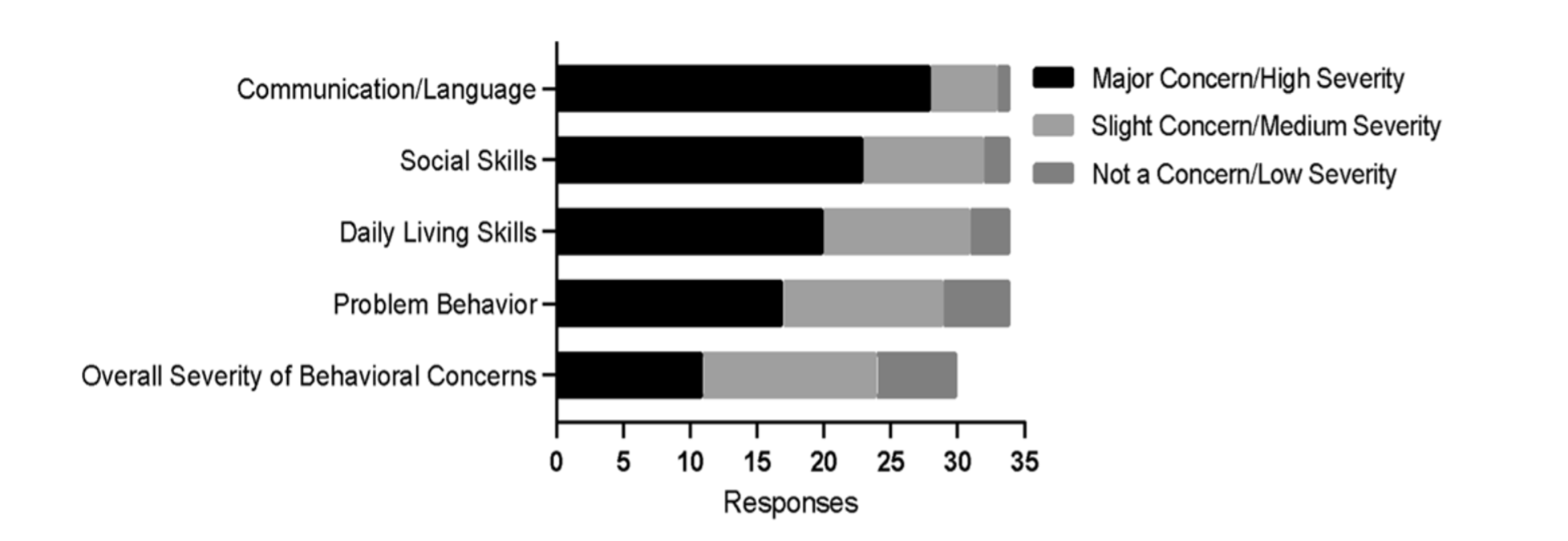
Waitlists were the norm: over 70% of parents reported an average wait time of six months. These delays carried a high cost, particularly for developing children. More than 30% of parents saw their child’s behavior worsen while waiting. Children who waited over four months were twice as likely to decline behaviorally compared to peers who waited less.
While waitlisted, children most frequently experienced declines in communication (82.4%), followed by social skills (67.6%) and daily living skills (58.8%). Most parents rated the behaviors as medium or high severity (shown in the figure above), indicating they happened once a week or resulted in injuries.
Parents were also interested in attending weekly 1-on-1 ABA training sessions with professionals to bridge the service gap but reported time constraints. The authors acknowledge a primarily White middle-class sample is not representative of the country, but the findings offer a roadmap for advocacy and underscore the strain that delayed care places on families.
To streamline treatment access, the study authors advocate for health insurance to cover parental ABA training for waitlisted patients. While most states mandate coverage of autism treatments like ABA, Idaho and Wyoming still lack this reform. Expanding provider capacity and strengthening insurance policies are the first steps to bridge the service gap and ensure families receive timely support for healthy child development.
This is the third part of a three-part series on autism spectrum disorder. Read part one and part two.