Stand Up for Your Health
Sitting less and moving more—even just 30 additional minutes per day—keeps muscles active and helps the body process blood sugar and fat.

Read Time: 3 minutes
Published:
People measure time in hours, but the metabolism measures it in movement. And for many Americans, that clock is not ticking. The CDC estimates that one in four adults spends more than eight hours a day sitting, a habit linked to greater risks of diabetes and heart disease. For many people, sitting is part of daily life due to work, disability, commuting, or caregiving. Even so, long, unbroken stretches of sitting can strain metabolic health. Short movement breaks can help.
Metabolism is how your body turns food into the energy needed to power everything you do. When metabolism works well, your body can shift between using carbohydrates and fat based on what you need. Researchers call this metabolic flexibility. Metabolic flexibility matters for adults because it supports steadier blood sugar and healthier fat use. When flexibility drops, insulin resistance and weight gain become more likely over time.
A team in Turku, Finland, tested a simple idea: sit less and move more often, without turning the plan into a workout routine. They enrolled 64 adults aged 40 to 65 with metabolic syndrome, a cluster of risk factors for cardiovascular disease and type 2 diabetes, like excess belly fat, high blood sugar, abnormal cholesterol, and high blood pressure. Half received coaching from researchers to cut sitting time by about an hour per day by adding standing and light movement into daily routines, such as using stairs, taking short walks, or using a standing desk. The other half maintained their typical habits.
Everyone wore hip accelerometers during waking hours. The devices sorted time into sitting, standing, and different activity levels in short time windows.
After six months, the intervention group reduced sedentary time by about 41 minutes per day on average. In a closer look, participants who cut sitting time by at least 30 minutes per day improved insulin-stimulated metabolic flexibility and burned more fat during light exercise than those who stayed highly sedentary. The graphs below show that less sitting and more standing are linked to larger gains in metabolic flexibility during the insulin clamp. These changes also tracked with better insulin sensitivity.
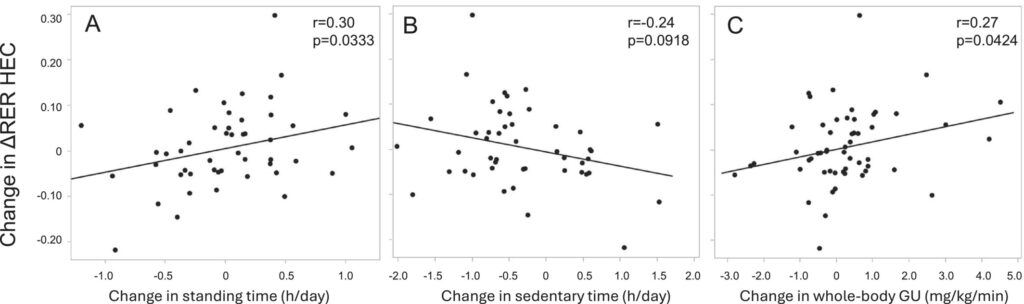
The takeaway is clear: movement does not have to arrive all at once. What matters is how often you interrupt sitting across the day. Standing during a phone call, taking the stairs for a few floors, or building brief walks into your daily routine can keep your muscles active and help your body handle blood sugar and fat more smoothly over time. Small breaks add up, and they can be a realistic starting point for people whose days leave little room for formal exercise.